
Hotels & Hospitality
Section 194D: TDS on Insurance Commission


Section 194D of the Income Tax Act requires tax to be deducted at the source from commission or prize payments made to insurance agents. This rule tries to ensure that taxes are paid on time by removing a percentage of the commission paid to insurance intermediaries at the source.
Insurance plans are the foundation of unforeseen financial expenses. They cushion the blow during difficult times. As a result, every individual should consider purchasing insurance for themselves and their families.
Typically, customers get insurance from an agent or a broker. Section 194D applies TDS (Tax Deducted at Source) to all commissions, payments, and rewards obtained by these agents/brokers. This blog discusses Section 194D of the Income Tax Act and its benefits.
What is Section 194D?
Section 194D of the Income Tax Act addresses the deduction of TDS on insurance commissions. According to this clause, anyone responsible for paying a resident’s income through an insurance commission must deduct taxes at the source. The person deducting tax must pay the deducted amount to the government within the timeframes specified.
This is only required if the total revenue credited or paid throughout the financial year exceeds ₹15,000.
Eligibility for Section 194D
Eligible individuals must have one of the following income categories for TDS deduction:
Income derived from pay, rewards, or commissions.
For requesting or procuring insurance business.
For matters concerning the insurance policy’s continuation, renewal, or revival.
Section 194D is solely applicable to Indian residents who are individuals, Hindu Undivided Families (HUF), businesses, or other taxpayers. Section 195 covers the TDS on insurance commissions paid to non-residents in India.
The two parties eligible under Section 194D are:
Insurance agent: Any inhabitant obtaining a commission or reward for insurance business.
Insurer: The entity (insurance company, etc.) pays a commission to the agent in charge of deducting TDS.
Rate of TDS Deduction Under Section 194D
The rate of TDS deduction under Section 194D is:
5% if the payee is an individual or HUF receiving a commission.
10% – If the payee is a domestic corporation that receives a commission.
20% – If the payee’s PAN is not provided.
When is the TDS deduction applicable under Section 194D?
At the time of crediting commission income to the payee’s account.
If the commission payment to the payee is made in cash, check, draft, or another method.
When is TDS not deductible under section 194D?
TDS is not deductible under section 194d of the Income Tax Act in the following two situations:
Insurance commissions paid or credited to the payee do not exceed ₹15,000 in a fiscal year.
When the payee provides a self-declaration in Form 15G/15H indicating that their total income is less than the taxable limit, no tax is due.
However, under Section 197A(1B), the assessee cannot file Form 15G if the total of various forms of income, including insurance commissions, exceeds the maximum amount not taxable for the relevant assessment year.
Due Date to Deposit TDS Under Section 194D
The due date for deducting and depositing TDS on insurance commissions under Section 194D of the Income Tax Act is the 7th of the following month. This means that if TDS is deducted from the insurance commission in March, the required date to submit the deducted TDS amount with the government will be April 7th of the next fiscal year.
Due Date to Issue TDS Certificates
| Months | Deadline for Issuing the Certificate |
| April – June | August 15 |
| July – September | November 15 |
| October – December | February 15 |
| January – March | June 15 |
Form 13 and 15G
Form 13 allows an individual earning commission to apply to the Assessing Officer for a certificate permitting a lower or no TDS deduction under Section 197. It relieves the applicant of a bigger TDS deduction than is required.
Form 15G, on the other hand, is a self-declaration sent by the payee to the payer indicating that their total income is less than the taxable limit and that no tax is due. Submitting a proper Form 15G exempts the payer from deducting TDS under Section 194D. However, under section 197A (1B), certain conditions must be met, such as the aggregate of incomes, such as commissions, not exceeding the maximum amount not taxable.
Exemptions Under Section 10 (10D)
Any income received under the LIC policy is excluded, including bonus payments. Any funds received under Sections 80DD(3) or 80DDA(3) are exempt. If a LIC policy was obtained before April 1, 2012, and the premium paid is greater than 20% of the total insured, the maturity amount is tax-free. Tax is excluded for insurance purchased after April 1, 2012, if the premium exceeds 10% of the sum guaranteed.
If purchased after April 2013, LIC policies with premiums greater than 15% of the total sum insured are exempt for disabled people as indicated in Sections 80U or 80DDB. As long as the conditions listed above are met, there is no maximum limit to the tax exemption under Section 10(D).
Conclusion
Section 194D of the Income Tax Act addresses the TDS deduction on commissions or awards paid for obtaining insurance business. This rule tries to ensure that taxes are paid on time by removing a percentage of the commission paid to insurance intermediaries at the source. Compliance with Section 194D is critical for both deductors and deductees.

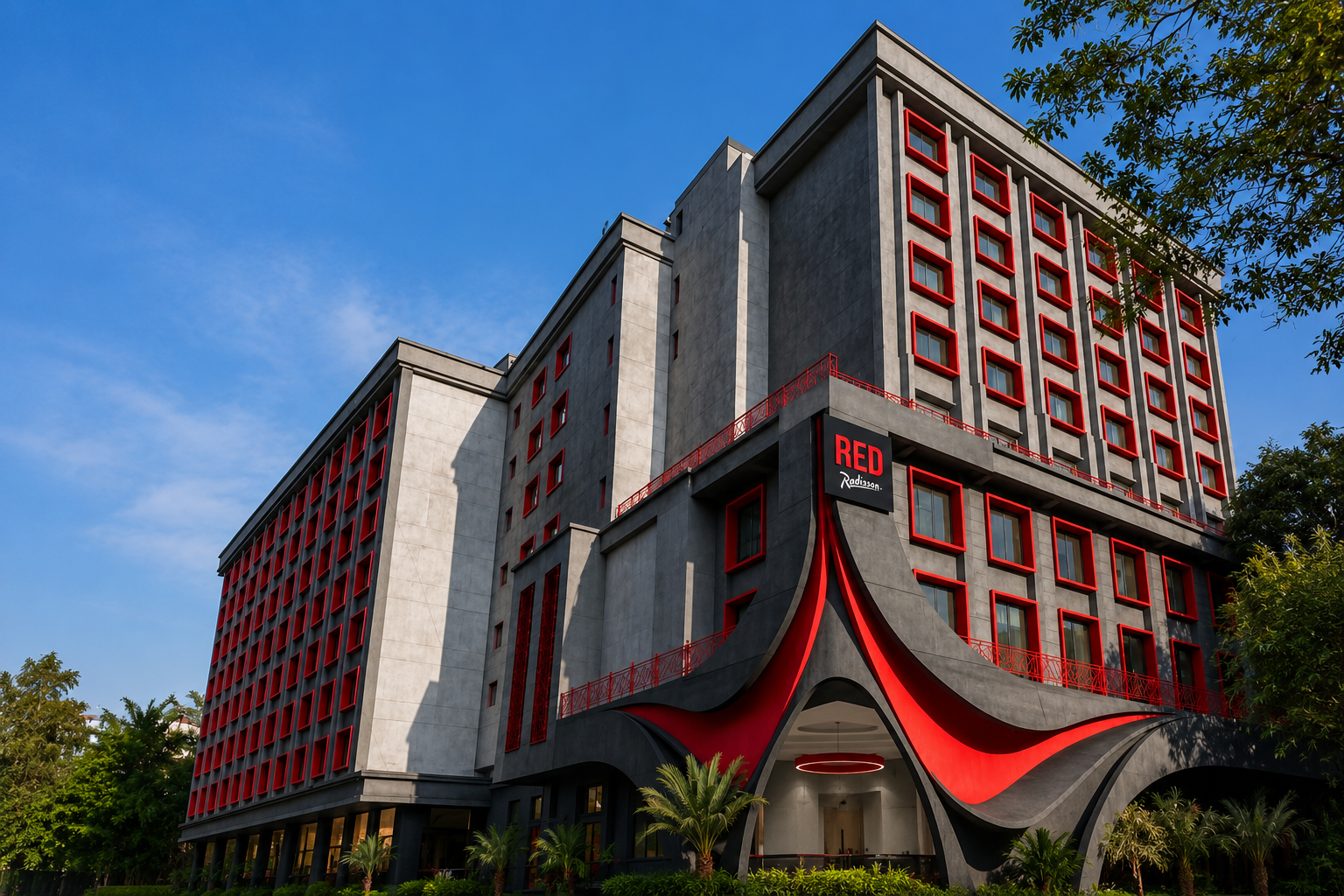
Radisson Hotel Group has inked an agreement to open Radisson RED Mumbai International Airport, a 208-room lifestyle hotel, by December 2026. It will be the group’s eighth hotel in the Mumbai Metropolitan Region (MMR) and the first for the Radisson RED brand in Mumbai.
The hotel will cater to business travelers, airline crews, transit passengers, and MICE demand by offering easy access to important business hubs such as Andheri MIDC, SEEPZ Mumbai, Bandra Kurla Complex (BKC), and the Jio World Convention Center. It is about four minutes from the Chhatrapati Shivaji Maharaj International Airport.
The hotel will be created by renovating and repositioning an existing facility under the Radisson RED brand. It will contain over 1,000 square meters of conference and event space, including a ballroom and banquet halls, as well as 208 bedrooms, an all-day dining restaurant, a bar, a deli, a fitness facility, and a swimming pool.
Nikhil Sharma, Radisson Hotel Group’s Managing Director and COO for South Asia, commented, “Mumbai is one of India’s most vibrant hospitality markets, and the signing of Radisson RED Mumbai International Airport validates our strategy of expanding in high-demand, high-growth areas. Because of its proximity to one of the country’s busiest airports and significant commercial hubs, the hotel is well-positioned to fulfill the evolving needs of business and leisure guests seeking design-led, lifestyle hospitality experiences. With eight hotels currently in our portfolio in the Mumbai Metropolitan Region, this arrangement marks a key milestone in our growth. We remain committed to increasing our presence in key gateway cities and creating enterprises that cater to the tastes of modern tourists.”
Davashish Srivastava, Vise President-Development, South Asia, Radisson Hotel Group, commented, “As we continue to develop our presence in India, we prioritize increasing our portfolio throughout key urban hubs. In a market where demand for business travel, meetings and events, and lifestyle hospitality is ever-changing, the addition of Radisson RED Mumbai International Airport strengthens our network. The hotel is a strong addition to our portfolio, demonstrating our commitment to launching the right brands in places with long-term growth potential.”
Ayon Bhattacharya, Chief Operating Officer of Lateral Hospitality Pvt Ltd, commented, “We are delighted to collaborate with Radisson Hotel Group on this historic development, bringing the Radisson RED brand to one of Mumbai’s most important commercial and hospitality catchments. Our goal is to create a hotel that meets the changing needs of today’s travelers by combining cutting-edge architecture, vibrant social areas, and exceptional service. With its ideal location near Mumbai International Airport and key commercial districts, we believe this hotel will be a popular choice for social events, business travelers, and transit guests alike.”
With a portfolio that includes premium, upscale, and lifestyle brands, the Radisson Hotel Group currently operates and develops over 200 hotels in India. In addition to tier II and tier III areas, the company continues to expand its presence in major cities.
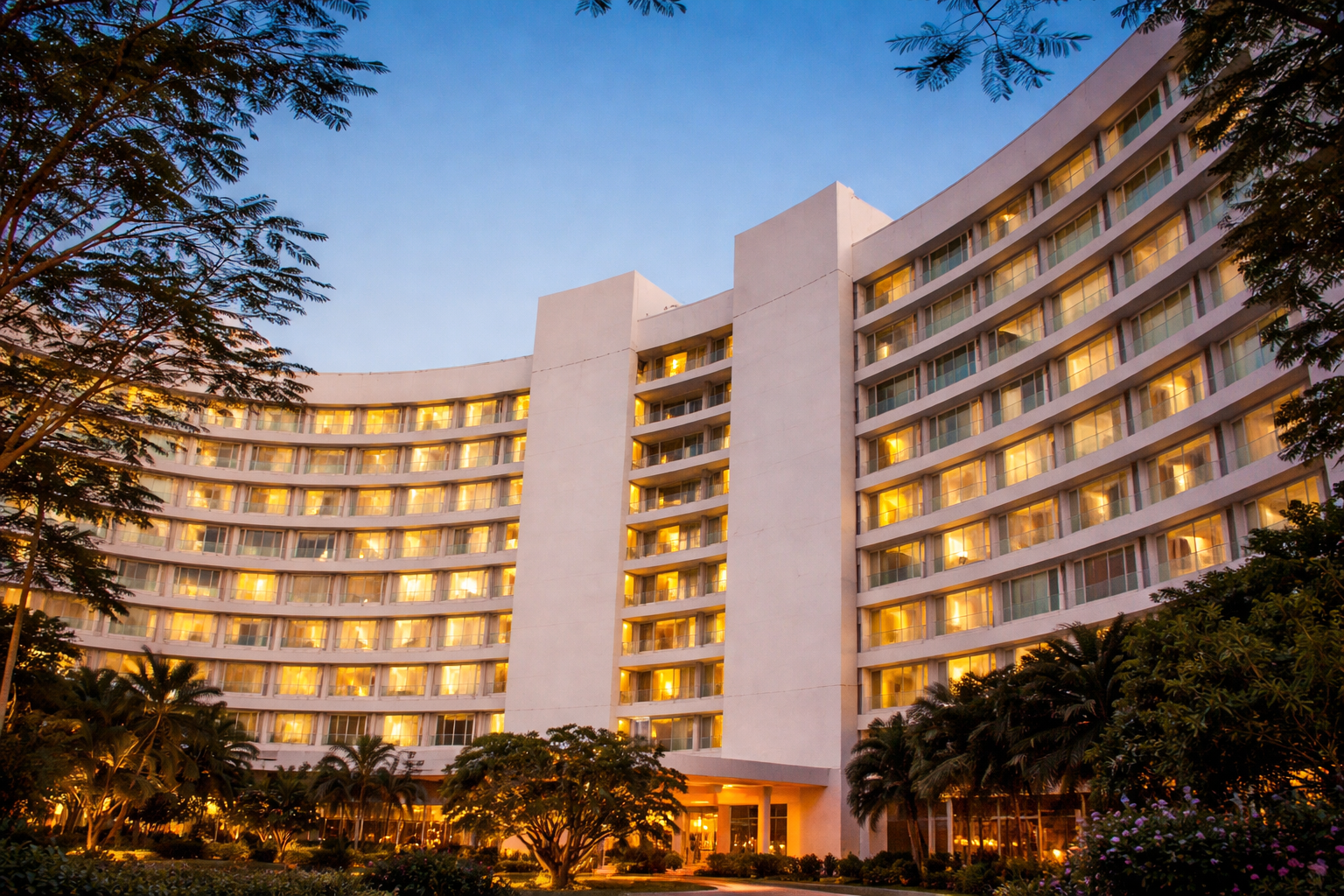
Chalet Hotels, which is owned by K Raheja Corp, is progressively choosing to operate more of its hotels through franchise agreements rather than management partnerships with hotel chains.
While the majority of its properties are now operated by international brands such as Marriott International and Accor, the Mumbai-based hotel developer plans to franchise new hotels such as the Taj Delhi Airport at Terminal 3 and Hyatt Airoli.
“We like the franchise model. We have taken the Taj that’s under construction in Delhi on a franchise model. The Hyatt Airoli that’s under construction will also be franchise,” Shwetank Singh, Managing Director and CEO of Chalet Hotels, told Business Today in an interview.
Chalet develops the facility under a management contract before handing it over to brands such as Marriott or Hilton when it is finished. These hotel chains manage the hotel’s revenue, expenditures, and total profit and loss. At the end of each month, they pass on the leftover profit to the owner after deducting their charge, which is often between 10-12% of overall sales, according to Singh.
with contrast, with a franchise model, the brand does not oversee day-to-day operations. Instead, it shares its name, distribution channels, and access to systems such as its website and reward programs. The owner maintains the hotel independently while paying a franchise fee, which normally ranges between 5-6%. The cost savings, however, are not substantial.
“One of the primary reasons owners favor this arrangement is that worldwide companies might have extremely rigorous standards. It is difficult to persuade them to adjust anything to suit the local environment,” Singh added, noting that their human resource costs are typically higher.
The Taj Delhi Airport, which will open in FY27, is the only Taj in the country that has been offered on a franchise basis, according to Singh. “It demonstrates IHCL’s confidence in Chalet’s capacity to operate it. This shows they trust us with the brand. Taj Delhi, which will cost Rs 500 crore, will feature around 380 rooms, he added.
Chalet Hotels’ portfolio includes 11 functioning hotels with 3,389 rooms. The company is currently constructing approximately 1,500 rooms. About 85% of its revenue comes from hotels, with the other 15% coming from commercial real estate, of which approximately 2.2 million square feet is operational and another 900,000 square feet is under development.
Building a leisure portfolio.
Singh, who became MD and CEO in February 2026, aims to generate 20% of sales from the leisure business, up from 13% today. “We have expanded our leisure hotel portfolio. Leisure offers higher average room rates but lesser profits due to the necessity for more people to operate larger properties,” Singh explained.
“Typically, margins in leisure are slightly smaller than huge boxes in cities. Some of our boxes, such as the JW Marriott Mumbai Sahar, the Westin Powai, the Mariott in Bengaluru, and the two Westin hotels in Hyderabad, have more than 450 rooms, and the unit economics on a larger box are always quite good. “For Chalet Hotels, being able to maintain, if not grow, margins would be an accomplishment,” he said.
The company has also purchased two sites in Goa and is conducting due diligence to build a hotel in Udaipur. “We are now expanding into leisure space and geographically expanding at the same time,” Singh said.
Prior to its listing in 2019, Chalet Hotels’ portfolio was mostly focused on business and lacked leisure offerings. The corporation entered commercial real estate to generate a consistent source of income. “The reason we got into commercial real estate is because we knew a steady income would keep us afloat in the difficult times,” Singh added.

A high-value home acquisition in Mumbai’s Worli neighborhood has once again highlighted the city’s luxury property market, highlighting the ongoing desire for centrally placed, infrastructure-linked neighbourhoods. The ₹29.70 crore purchase for a premium flat illustrates the endurance of Mumbai’s top-end property market and the ongoing appeal of Worli as a high-density urban hub.
The apartment, located in a luxury residential complex, has almost 2,400 square feet of carpeting and several parking spaces, both of which are crucial in land-constrained urban contexts. The purchase also included large transaction costs, such as stamp duty and registration fees, indicating a strong emphasis on formalisation and compliance in high-value real estate transactions. Worli has evolved as a hotspot in Mumbai’s luxury property market, thanks to its strategic location and urban infrastructure. Its proximity to vital commercial districts, combined with easy access via the Bandra-Worli Sea Link, has turned it into a popular residential area for high-income professionals, business leaders, and public personalities. Urban planners see that connectivity-driven expansion is increasingly influencing housing demand in India’s major cities.
The sustained popularity of Mumbai luxury housing reflects a larger structural shift in consumer behaviour. According to industry analysts, affluent purchasers prefer ready-to-move-in or near-completion residences in established neighborhoods with existing social infrastructure such as schools, hospitals, retail, and recreation facilities.
This decreases project risk as well as commute uncertainty, both of which were more prominent following the pandemic. At the same time, the concentration of high-end developments in Worli raises significant concerns about equitable urban expansion. Premium developments contribute to municipal income and formal housing supply, but they also accelerate land value growth, potentially exacerbating affordability gaps throughout the city. Urban economists say that balanced development policies are essential to guarantee that infrastructure investments benefit a broader range of citizens, not simply those with higher incomes. Environmental concerns are also becoming fundamental to talks over Mumbai’s real estate boom.
Coastal and reclaimed areas, such as Worli, are becoming more vulnerable to climate threats including sea-level rise and flooding. According to experts, future luxury home complexes must incorporate climate-resilient architecture, efficient water management systems, and energy-efficient building methods to meet long-term sustainability goals.Despite these concerns, the most recent purchase demonstrates trust in Mumbai luxury homes as a solid asset class. With institutional capital, increased regulatory control, and infrastructure upgrades continuing to alter the sector, premium micro-markets like Worli are expected to continue at the forefront of urban real estate activity.
Moving forward, the crucial test for city planners and developers will be to strike a balance between high-value investments and inclusive and climate-conscious urban development, ensuring that Mumbai’s skyline boom translates into greater civic and environmental resilience.

Mumbai Police Book 2 Goa Residents in ₹41 Lakh Real Estate Extortion Case

Chembur’s ₹142 Crore Deal

SCLR Phase-II

43,000 Homes Unsold in Navi Mumbai Amid Buyer Slowdown

Vijayta Raheja Applauds India’s ₹4 Lakh Crore Urban Vision at ET Maharashtra Business Summit

K Raheja & IHG Team Up to Elevate Powai’s Hospitality Landscape
-
 Real Estate News5 months ago
43,000 Homes Unsold in Navi Mumbai Amid Buyer Slowdown
-
 Real Estate News4 months ago
Vijayta Raheja Applauds India’s ₹4 Lakh Crore Urban Vision at ET Maharashtra Business Summit
-
 New Projects & Launches5 months ago
K Raheja & IHG Team Up to Elevate Powai’s Hospitality Landscape
-
 Real Estate News5 months ago
Mumbai’s Largest MHADA Redevelopment Drive Set to Transform 923 Acres
-
 Global Real Estate5 months ago
Spanish Youth Hostel Group Considers London Real Estate Deals
-

 NRI Real Estate5 months ago
Will NRI Investments Drive Mumbai Housing?
-

 Real Estate News5 months ago
John Abraham Firm Renews Bandra Rent at ₹12L/Month
-

 NRI Real Estate5 months ago
How NRIs Are Driving India’s Property Market?