
Infrastructure
SCLR Phase-II

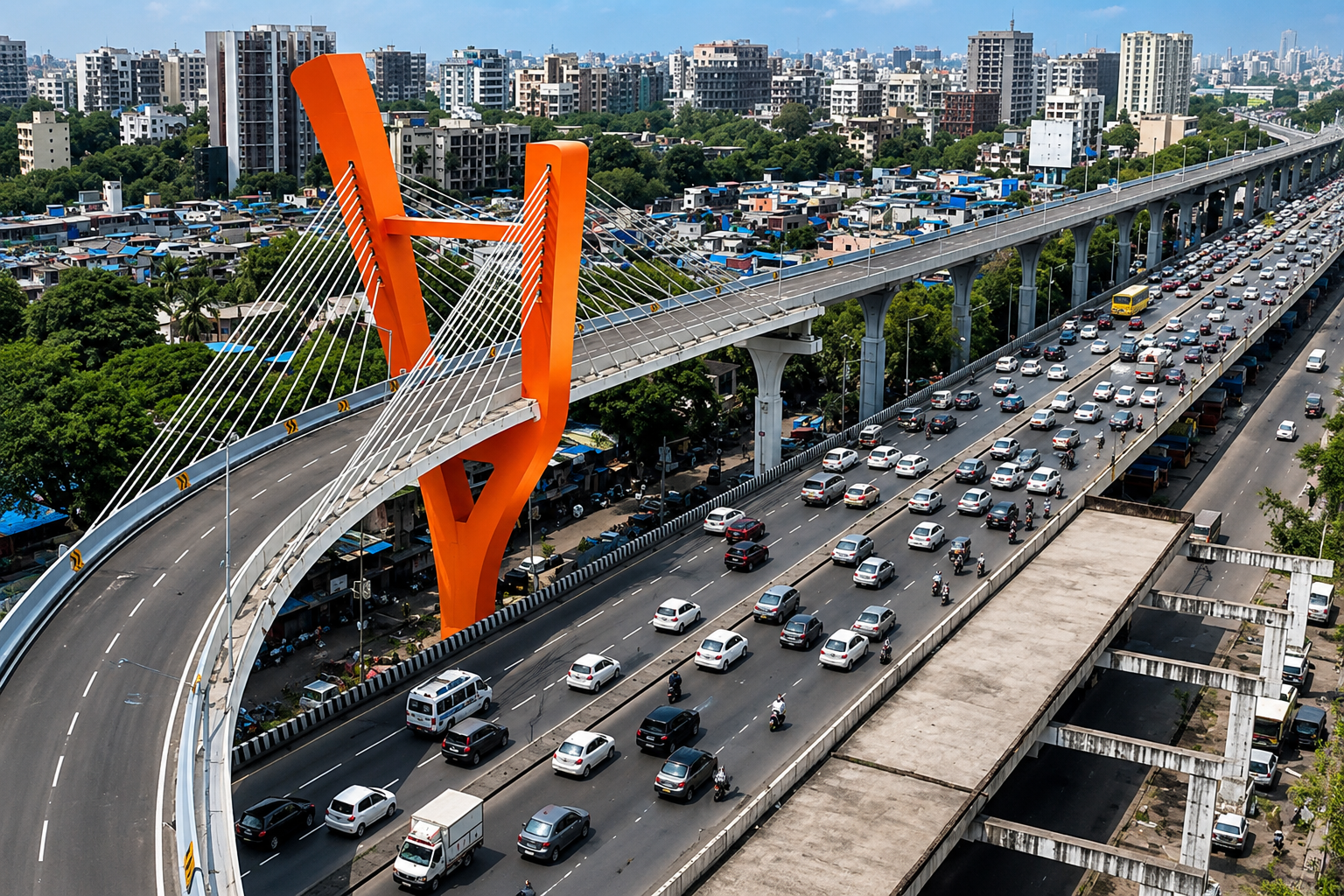
Mumbai’s road connectivity has received a major boost with the inauguration of Santacruz-Chembur Link Road Phase-II.
The Mumbai Metropolitan Region Development Authority (MMRDA) announced the inauguration of SCLR Phase-II on August 14, 2026, as part of a broader push to strengthen Mumbai’s integrated transport network.
For Mumbai’s real estate market, infrastructure projects like SCLR matter because connectivity is one of the most important factors influencing where people choose to live and work.
But the bigger question is:
Will better connectivity actually increase property demand and prices?
The answer is potentially—but it depends on the micro-market.
What Is SCLR?
The Santacruz-Chembur Link Road is one of Mumbai’s important east-west road corridors.
The broader objective is to improve connectivity between the eastern and western parts of the city and reduce dependence on congested routes.
The Phase-II component strengthens the network around important locations including Vakola and the Bandra-Kurla Complex.
For commuters, the importance is straightforward: better road connections can potentially reduce travel friction between residential areas and employment hubs.
Why Is BKC Important?
Bandra-Kurla Complex is one of Mumbai’s most important commercial districts.
Thousands of employees travel to BKC every day.
As employment concentration increases in a particular business district, nearby residential markets can benefit from demand from workers who want shorter or more predictable commutes.
This is where infrastructure and real estate intersect.
If a road project reduces the difficulty of travelling between a residential locality and BKC, that locality may become more attractive to some homebuyers.
Which Areas Could Benefit?
The potential impact should be viewed across a corridor rather than a single neighbourhood.
Areas around:
- Chembur
- Kurla
- Vakola
- Sion
- Santacruz
- BKC
- surrounding eastern and western suburban corridors
could potentially see changes in commuting patterns.
However, the actual impact will differ from one locality to another.
Does Better Connectivity Mean Higher Property Prices?
Not necessarily immediately.
Infrastructure can influence property markets through several stages.
Stage 1: Announcement
The project is announced.
Investors begin discussing its potential.
Stage 2: Construction
People start seeing the infrastructure physically develop.
Market expectations can change.
Stage 3: Opening
The infrastructure becomes usable.
Actual travel-time benefits can now be measured.
Stage 4: Long-Term Impact
Residents and businesses gradually adjust their location decisions.
This is when the deeper property-market effect may emerge.
Therefore, buyers should not assume that a property will automatically appreciate simply because it is located near an infrastructure project.
SCLR and Chembur
Chembur is particularly interesting because it is already an established residential market.
It has schools, hospitals, retail, employment access and established housing communities.
Infrastructure improvements therefore add to an existing ecosystem rather than trying to create demand from scratch.
The locality is also seeing redevelopment activity.
For example, Mahindra Lifespaces recently entered into a reported ₹142.72 crore redevelopment agreement involving Twinkle Star Co-operative Housing Society.
The combination of redevelopment and infrastructure makes Chembur a market worth monitoring.
SCLR and Kurla
Kurla has become strategically important because of its position between major business and residential districts.
Its location provides access to BKC, the airport, eastern suburbs and major transport corridors.
However, Kurla is also a highly complex micro-market.
Property buyers should not assume that every part of Kurla will benefit equally.
Building quality, road access, redevelopment potential, surrounding infrastructure and project-specific factors remain important.
SCLR and BKC
The biggest long-term significance of improved connectivity may be its effect on the BKC commuter ecosystem.
As BKC expands, demand for residential locations with efficient access to the business district could increase.
This could benefit both premium and mid-market housing depending on the transport options available.
But again, the relationship between connectivity and prices is not one-to-one.
Road Connectivity vs Metro Connectivity
Mumbai’s property market increasingly depends on a combination of transport systems.
Road infrastructure can be particularly important for people travelling between locations that do not have direct metro connectivity.
Metro systems can provide predictable public transport.
Railways remain critical for suburban travel.
The strongest real estate locations are often those where multiple transport options overlap.
This is why the SCLR story should not be viewed separately from Mumbai’s expanding metro network.
MMRDA reported that Metro Line 2B’s Phase I became operational in April 2026, while an additional section reaching Chembur station became operational in August.
What Should Homebuyers Look For?
If you’re considering buying near a major infrastructure project, don’t ask only:
“Is the metro/road nearby?”
Ask:
- How far is the actual entrance?
- How much time does it save?
- Is the route usable during peak hours?
- Is the area pedestrian-friendly?
- What public transport is available?
- Are schools and hospitals nearby?
- What new projects are coming?
- Is redevelopment changing the neighbourhood?
- What is the current property price?
- Is the price already factoring in the infrastructure?
That last question is especially important.
If the market has already priced in the expected benefit, buyers may not receive the same upside that an early investor might have expected.
Infrastructure Can Also Create Challenges
More connectivity can bring more development.
More development can increase:
- Traffic
- Construction activity
- Population density
- Parking pressure
- Demand for civic infrastructure
Therefore, infrastructure-led growth should be evaluated from both sides.
A new road may improve connectivity but also change traffic patterns around certain neighbourhoods.
What Does SCLR Mean for Investors?
For investors, SCLR can be considered one component of a larger investment thesis.
A stronger thesis would combine:
Connectivity + employment + residential demand + infrastructure + redevelopment + limited land supply.
If only one factor exists, the investment case may be weaker.
Bottom Line
SCLR Phase-II represents an important addition to Mumbai’s transport infrastructure.
MMRDA has confirmed the inauguration of the project, strengthening the city’s east-west connectivity network.
For real estate, the biggest potential impact is not simply that a road has opened.
It is the possibility that improved connectivity changes where people choose to live, work and invest.
Chembur, Kurla, Vakola and surrounding markets are therefore worth monitoring—but buyers should evaluate individual properties rather than assuming automatic price appreciation.

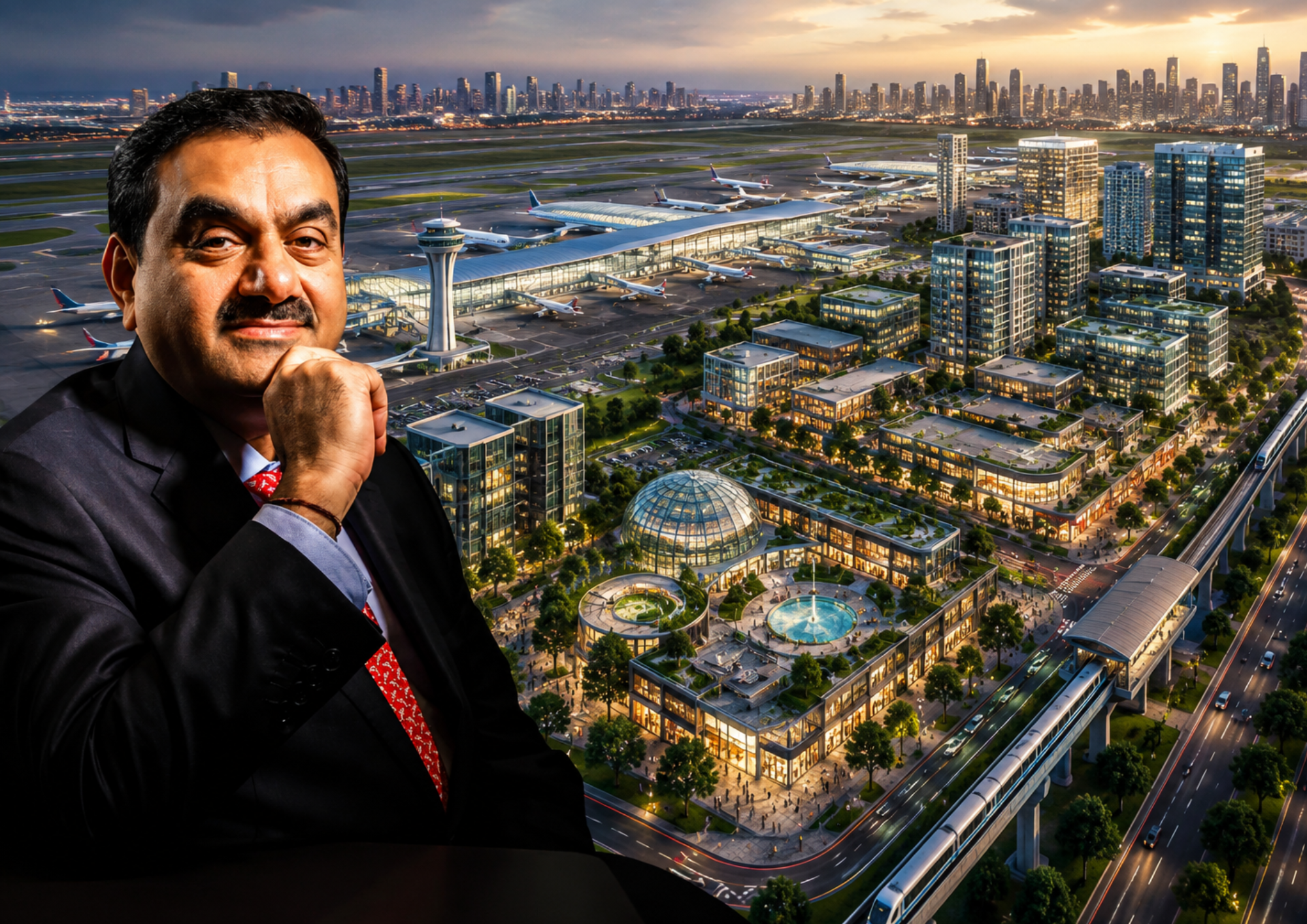
Adani Airport City Limited (AACL), a wholly-owned subsidiary of Adani Airport Holdings Limited (AAHL), India’s largest private airport operator, has unveiled a bold plan to create integrated airport cities across its network, combining hospitality, retail, entertainment, convention, and commercial infrastructure in seamlessly connected, walkable urban districts.
The initial phase of the development will cost about ₹20,000 crore. Approximately 22 million square feet would be created in Mumbai, Navi Mumbai, Ahmedabad, Lucknow, Jaipur, and Guwahati.
The proposal includes a land bank of over 655 acres spread across six airports in five states, including nearly 440 acres in Mumbai and Navi Mumbai alone. Almost 70% of the projected investment would be concentrated in Mumbai and Navi Mumbai, highlighting the Mumbai Metropolitan Region’s (MMR) status as India’s premier commercial, financial, and aviation gateway.
The developments are intended to be integrated, walkable urban districts where visitors, businesses, and residents can access hotels, offices, retail, dining, entertainment, and convention facilities in environments that are seamlessly integrated with airport, Metro, and city transportation infrastructure.
Mr. Jeet Adani, Director of AAHL, stated, “Around the world, the most successful airport districts have become centers of commerce, tourism, and urban growth.” As India’s aviation business grows, airports have the opportunity to produce value that extends beyond aviation. We are developing a network of integrated urban destinations in which airports serve as catalysts for investment, employment, improved passenger experiences, and the long-term growth of the cities they serve.”
The development draws inspiration from globally successful airport districts such as Singapore’s Changi, Dubai International, Amsterdam’s Schiphol, and Seoul’s Incheon, bringing an airport-led development model to India’s fast developing aviation market.
“These developments are being designed with leading global design and engineering partners and informed by emerging trends in hospitality, retail, workplaces and entertainment,” Adani said. “Our objective is to create vibrant districts that combine connectivity with experience, generating economic activity, employment and long-term value for the communities around them.”
Unlike traditional real estate developments, the Airport City strategy focuses on connectivity and experience. The districts are designed to be natural extensions of the airport ecology, rather than isolated projects. By combining hotels, offices, retail, entertainment, and convention facilities in a single master-planned setting, the developments want to create dynamic, walkable destinations that contribute to the economic viability of the surrounding communities.
As part of the plan, AAHL has secured hotel management agreements with IHG Hotels & Resorts for five luxury and premium properties, including the launch of the Kimpton brand in India. The organization is also collaborating with top local and international partners in hotel, food and beverage, retail, and entertainment.
Sustainability is a critical component of the plan. The United States Green Building Council (USGBC) has pre-certified all Airport City developments as Leadership in Energy and Environmental Design (LEED) Gold, indicating an emphasis on resource efficiency, sustainable design, walkability, and high-quality public areas.
At the launch event today, AACL felicitated its partners in master planning and architecture, including Kohn Pedersen Fox (KPF), Benoy, and Znera Space; construction, design, and build, including Larsen & Toubro (L&T), Tata Projects Ltd, and PSP Projects Ltd; and consulting and project management, including CBRE, JLL, and Cushman & Wakefield.
Adani Airports Holdings Limited
Adani Airport Holdings Limited (AAHL) is India’s largest operator of public-private partnership airports, committed to reshaping the country’s aviation landscape through creative, sustainable, and customer-centric solutions. Adani Airports is a subsidiary of the Adani Group’s main firm, Adani Enterprises Ltd., and intends to expand the company’s goal as a global integrated leader in infrastructure and transportation. AAHL operates eight airports: Mumbai, Ahmedabad, Lucknow, Mangaluru, Jaipur, Guwahati, Thiruvananthapuram, and the recently completed Navi Mumbai airport.
AAHL aims to provide world-class passenger experiences, increase connectivity, and promote economic progress. AAHL is defining the future of air travel by committing to operational excellence, technology advancement, and stakeholder involvement, as well as contributing to India’s global aviation sector. As part of its larger goal to reimagine airport-led urban development in India, AAHL is creating integrated, hospitality-led Airport City destinations that combine hotel, retail, entertainment, commercial, and lifestyle infrastructure around important aviation hubs.
About Adani Enterprises Ltd.
Adani Enterprises Limited (AEL) is the flagship company of the Adani Group, one of India’s largest corporate entities. Over the years, Adani Enterprises has concentrated on developing emergent infrastructure firms, contributing to national development, and divesting them into independent publicly traded entities. With our solid businesses such as Adani Ports & SEZ, Adani Energy Solutions, Adani Power, Adani Green Energy, Adani Total Gas, and Adani Wilmar, we have contributed to India’s self-reliance. This has also resulted in huge profits for our stockholders over the last three decades.
The next generation of its strategic business investments will focus on green hydrogen ecosystems, airport management, data centers, roads, and primary industries such as copper and petrochem, all of which have considerable potential for value creation.
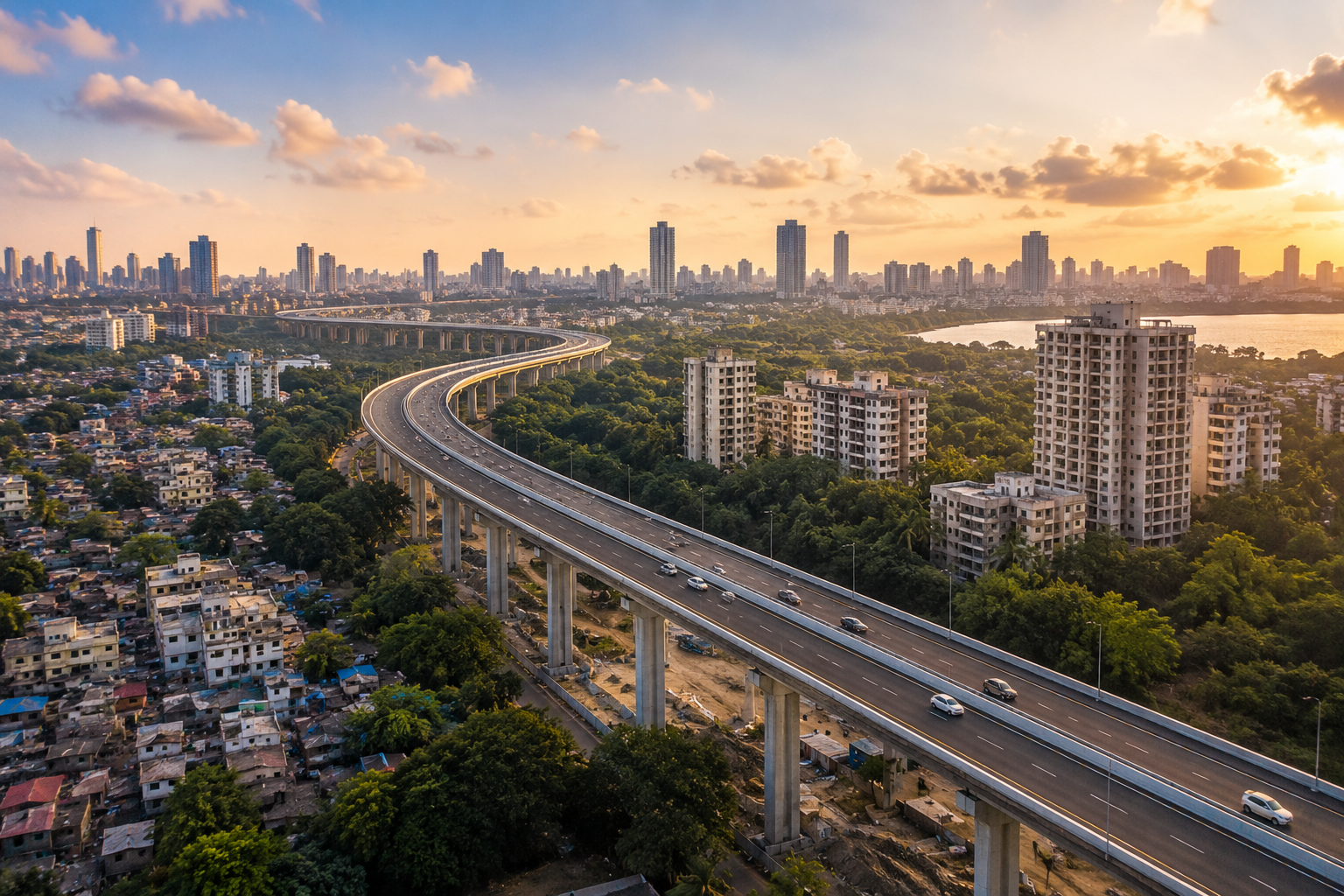
Although the Bandra-Versova Sea Link (BVSL) is nearly two years away from completion, Mumbai’s real estate market is already experiencing increased activity along the corridor. Bandra, Juhu, Versova, and Madh Island are seeing an increase in new project launches as well as the redevelopment of older buildings, owing to the Mumbai Coastal Road Project (MCRP) infrastructure that is now being constructed.
The projected Mumbai Coastal Road (North) will cover roughly 60 kilometres, including interchanges and connecting roadways. Once completed, it is expected to cut the travel time between Bandra and Versova to approximately 15-20 minutes. The project is scheduled for completion in December 2028.
What is the Mumbai Coastal Roads Project?
The Mumbai Coastal Road Project intends to connect South Mumbai and the northern suburbs. The corridor begins at Nariman Point, where land has been reclaimed from the Arabian Sea and extends to Worli.
Commuters can use the existing Worli-Bandra Sea Link to connect to the Bandra-Versova Sea Link, which is now under development. The project will continue northward from Versova to Dahisar via land acquisition. Beyond Dahisar, a separate road is being built to Bhayandar in Thane district, which is part of the Mumbai Metropolitan Region.
According to real estate experts, while the Nariman Point-to-Bandra connectivity boosted the luxury housing market in areas such as Nariman Point, Walkeshwar, Malabar Hill, Worli, and Bandra, the Bandra-Versova Sea Link, which is currently under construction, is expected to extend this real estate momentum even further into the western suburbs.
The four regions listed below are experiencing increased real estate activity as a result of the Bandra-Versova Sea Link construction.
1) Bandra.
According to local brokers, neighbourhoods such as Bandstand, Carter Road, and the area around the Otters Club in Bandra have seen significant growth over the last two years, owing partly to the forthcoming sea link.
“The Bandra-Versova Sea Link, combined with the relaxation of Coastal Regulation Zone (CRZ) regulations, has prompted the reconstruction of various ancient buildings over the previous two years. Many developers are offering 100-150% more space to existing homeowners, anticipating higher prices in the coming years due to proximity to important infrastructure,” claimed a Bandra-based developer who declined to be identified.
Local brokers estimate that apartments in the Bandra area cost between ₹50,000 and ₹1 lakh per square foot, depending on the building and amenities.
2) Juhu
According to real estate specialists, the infrastructure drive has pushed some independent homeowners to sell their bungalows and villas to private developers for high-rise construction.
“In recent times, at least two bungalows have come up for sale in and around Juhu.” While height limits exist due to the area’s closeness to a defence installation, several redevelopment projects have become possible as a result of the ongoing infrastructure push, which is projected to have a huge influence on Juhu,” said Vishal Arora, a Juhu-based real estate expert.
Arora said that sea-facing homes in Juhu have sold for more than ₹1 lakh per sq ft in the past year. “This price momentum is being driven by two key factors, redevelopment activity and the broader infrastructure-led transformation of the area,” he stated.
Local brokers say that the average price of apartments in Juhu currently ranges between ₹60,000 and ₹70,000 per square foot. Select sea-facing units attract premiums of over ₹1 lakh per square foot.
3) Versova.
In Versova, the impact of the Bandra-Versova Sea Link is similar. According to experts, the proposed Sea Link link at Versova has prompted calls for the reconstruction of ancient structures.
“Several ancient buildings have been redeveloped as part of the infrastructure drive, and during the last two years, listed real estate firms have competed vigorously for renovation tenders. While Versova already has Metro access, the forthcoming road infrastructure is projected to relieve congestion on the Western Express Highway, greatly lowering travel time. “This has sparked strong interest among developers looking to launch projects in this densely populated micro-market,” said Manhendra Varma, a local real estate consultant.
Apartments in Versova typically cost between ₹35,000 and ₹45,000 per square foot.
4) Madh Island.
According to real estate analysts, Madh Island is likely to benefit significantly from the Bandra-Versova Sea Link.
Once the water link is constructed, a projected bridge connecting Versova and Madh Island, which would eventually be part of the Coastal Road, will improve connectivity even further. According to experts, this will benefit areas of Malad and Madh Island by enhancing access and increasing real estate opportunities.
According to a local broker, Madh Island continues to be primarily an investment destination, with some Bollywood superstars having apartments and villas there. “With the Bandra-Versova Sea Link and the proposed Versova-Madh Island motor bridge, investors are likely to see significant upside,” the broker stated.
Madh Island is a neighbourhood in Malad that borders Versova in Mumbai. Actors Kartik Aryan, Ronit Roy, Vivek Agnihotri, and Ayushmann Khurrana own houses in the Versova district of Andheri, while actor Sanjay Mishra and playback singer Jubin Nautiyal made headlines last year for owning an apartment in Madh Island.
Madh Island apartments typically cost between ₹25,000 and ₹35,000 per square foot.
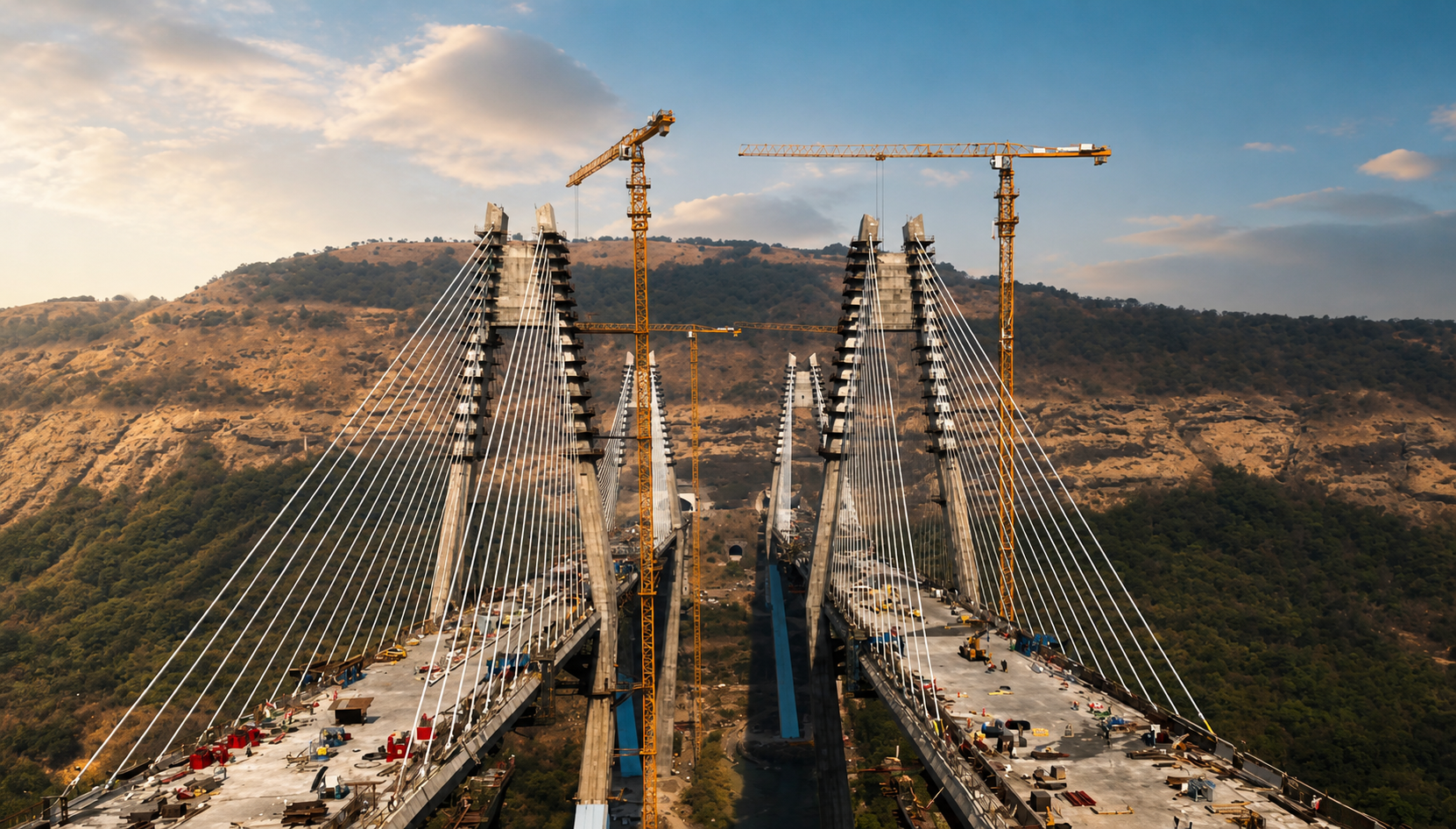
On May 1, Maharashtra Chief Minister Devendra Fadnavis launched the 13.3-kilometer Mumbai-Pune Expressway ‘Missing Link’ project, which coincided with Maharashtra Day. The project, which connects Khopoli to Kusgaon near Lonavala, is intended to reduce travel time between Mumbai and Pune by 20-30 minutes by avoiding the crowded Khandala Ghat region, while also making the expressway fully access controlled.
The improved connectivity is expected to boost real estate potential in emerging Mumbai 3.0 corridors such as Karjat, Neral, and Lonavala, which are gaining popularity as residential and second-home destinations, while experts point out that the warehousing and logistics sector will benefit significantly once the route is opened to heavy vehicles.
The Maharashtra State Road Development Corporation (MSRDC) has opened the project to the public. The Mumbai–Pune Expressway is India’s first expressway.
The’missing link’ begins near the Khalapur Food Plaza on the Mumbai Pune Expressway and connects to the expressway between Lonavala and Talegaon via a cable-stayed bridge and tunnels.
It is now only open to light motor cars and buses; freight and heavy vehicles will be permitted after six months, the Maharashtra government announced earlier this week.
The ‘Missing Link’ project is expected to be a game changer for the expanding Mumbai Metropolitan Region (MMR), greatly increasing real estate potential along the growing corridors known as Mumbai 3.0.
Experts believe that Karjat, Neral, Khopoli, and Lonavala are well-positioned to benefit from the next wave of growth, particularly among second-home purchasers and long-term investors. Lower entry pricing than in Mumbai and Navi Mumbai, combined with rising lifestyle ambitions, are driving demand in these micromarkets.
Gautam Thacker, founder, president, and chairman of NAREDCO Raigad, stated, “Infrastructure projects like the Missing Link are critical in unlocking the potential of regions like Neral and Karjat.” It efficiently connects Pune with the Neral-Karjat belt and the wider Mumbai 3.0 region. This enhanced connection has already sparked interest among Pune-based developers and purchasers, who now regard the region as more accessible and appealing.”
He went on to say that if enough policy support is provided, seamless transport between key cities might boost real estate activity and generate chances for planned development, assisting the region in evolving into a balanced urban extension of Mumbai.
How does it impact the real estate market?
Experts predict that opening the’missing link’ to heavy vehicles will greatly assist the warehousing and logistics sector.The opening of the Pune Missing Link is a huge improvement to one of India’s busiest transportation corridors. This bypass on the Mumbai-Pune Expressway addresses a long-standing congestion, cutting travel time by roughly 30 minutes and directing traffic away from the dangerous Ghat portion, thereby enhancing both safety and efficiency. The incorporation of India’s longest and tallest road cable-stayed bridge across Tiger Valley adds to the project’s size,” said Gulam Zia, International Partner, Senior Executive Director, Research, Advisory, Infrastructure and Valuation, Knight Frank India.
“From a real estate standpoint, such infrastructure is an important accelerator for market evolution. According to Zia, improved connectivity between Mumbai and Pune will boost integration and create chances for residential and commercial development along the corridor.The warehouse and logistics sector stands to benefit greatly. Faster, more dependable travel and the elimination of a difficult terrain segment will improve turnaround times and operating efficiency. This is anticipated to increase demand for Grade A warehousing and encourage the establishment of larger logistics hubs, benefiting industries such as e-commerce, manufacturing, and third-party logistics,” Zia stated.
Does the opening of the ‘Missing Link’ of the Mumbai-Pune Expressway have an influence on the residential sector?
However, other analysts believe that the time savings from the ‘Missing link’ will have little impact on the property market.
“The missing link may save 15-30 minutes on the Pune-Mumbai commute, especially given the expressway’s existing heavy traffic and frequent accidents. However, from a real estate standpoint, such minor time reductions are unlikely to have a significant impact on either city,” said Rahul Ajmera, developer at Vasupujya Corporation in Pune.
He noted that the proposed Mumbai-Pune bullet train might be a much bigger game changer. “It would allow individuals to work in Mumbai while living in Pune, which has better weather and lower housing prices. With Mumbai’s real estate prices roughly four times higher than Pune’s, daily commuting by bullet train may be more cost effective than paying hefty EMIs in Mumbai,” he said.
Local brokers report that average apartment prices in Pune range from ₹10,000 to ₹15,000 per sq ft, whereas in Mumbai they are much higher at ₹40,000 to ₹50,000 per sq ft. However, peak benchmark prices in premium micro-markets are far higher than the averages.

Red-Light to High-Rises: Kamathipura Redevelopment

BMC OC Amnesty: Key Documents Needed

Moving Into a PG? 5 Red Flags You Must Check Before Moving In

43,000 Homes Unsold in Navi Mumbai Amid Buyer Slowdown

Vijayta Raheja Applauds India’s ₹4 Lakh Crore Urban Vision at ET Maharashtra Business Summit

K Raheja & IHG Team Up to Elevate Powai’s Hospitality Landscape
-
 Real Estate News6 months ago
43,000 Homes Unsold in Navi Mumbai Amid Buyer Slowdown
-
 Real Estate News6 months ago
Vijayta Raheja Applauds India’s ₹4 Lakh Crore Urban Vision at ET Maharashtra Business Summit
-
 New Projects & Launches6 months ago
K Raheja & IHG Team Up to Elevate Powai’s Hospitality Landscape
-
 Real Estate News6 months ago
Mumbai’s Largest MHADA Redevelopment Drive Set to Transform 923 Acres
-

 NRI Real Estate6 months ago
Will NRI Investments Drive Mumbai Housing?
-
 Global Real Estate6 months ago
Spanish Youth Hostel Group Considers London Real Estate Deals
-

 NRI Real Estate6 months ago
How NRIs Are Driving India’s Property Market?
-

 Real Estate News6 months ago
John Abraham Firm Renews Bandra Rent at ₹12L/Month