
Commercial Real Estate
Mumbai’s Commercial Real Estate Outlook 2026


Mumbai has long been the hub of India’s financial and business economy. Over the last two decades, the city’s commercial real estate market has transformed from a classic office environment to a sophisticated institutional asset class that draws worldwide investors, multinational occupiers, and long-term capital. As the market approaches 2026, various structural factors are influencing the next phase of expansion, ranging from capital inflows and occupier preferences to the emergence of new commercial micro-markets throughout the city.
At the heart of Mumbai’s commercial real estate business is robust and consistent demand from occupiers. Financial services, consulting organizations, global capability centers, technology enterprises, and flexible workspace providers are still driving leasing activity. The city recorded approximately 12 million square feet of office leasing in 2024, demonstrating corporate demand’s endurance in the face of changing work styles.
Changing priorities.
While hybrid work has changed how businesses use office space, it has not lessened the value of physical workspaces. Organisations are increasingly valuing high-quality workplace settings that promote collaboration, creativity, and employee engagement.
This transition has hastened the trend towards institutional-grade developments. Companies are becoming more choosy in their real estate decisions, preferring Grade A office buildings with good connections, sustainability features, modern facilities, and efficient floor plans. In an environment where attracting and maintaining people is critical, the workplace has become an integral part of a company’s brand and culture.
Institutional capital flows.
Another defining trend in Mumbai’s commercial real estate sector is the ongoing influx of institutional finance. Over the last decade, multinational investors, private equity funds, sovereign wealth funds, and real estate investment trusts have increasingly seen India’s office market as a secure long-term investment opportunity. Institutional investments in Indian real estate have achieved new highs in recent years, with office properties accounting for a sizable portion of the capital deployed. Mumbai, the country’s financial metropolis, remains an important gateway market for such investments.
The development of India’s regulatory environment has also contributed significantly to an increase in investor confidence. The introduction of real estate legislation, increased transparency, and the expansion of the REIT ecosystem have resulted in a more structured investing environment. These improvements have given developers access to new sources of funding while also providing investors with better visibility and security in their commercial real estate investments.
Infrastructure development
Infrastructure development is another important aspect influencing the future of Mumbai’s commercial real estate sector. Large-scale developments including metro expansions, increased road connectivity, and airport access are steadily altering the city’s office demand landscape. Enhanced connection not only enhances employee accessibility, but it also opens up previously underutilized growth corridors.
Within this changing backdrop, Mumbai’s commercial real estate market is becoming more multi-nodal, with various micro-markets playing important roles in the city’s growth story. Established business districts, such as Lower Parel and Worli, continue to attract financial services and media firms due to their central location and mature ecosystem, whereas corridors like Andheri-Kurla Road and Powai are in high demand from technology companies, global capability centres, and flexible workspace providers. At the same time, Navi Mumbai is developing as a cost-effective alternative, thanks to infrastructure enhancements and enhanced connectivity.
Despite this diversity, the Bandra Kurla Complex continues to set the standard for institutional-grade commercial development in Mumbai. Its concentration of global financial institutions, premium office assets, and strategic linkages have elevated it to the city’s most significant commercial district. As BKC evolves, developing precincts within its broader ecosystem are influencing the next stage of commercial expansion, attracting both developers and occupiers looking for high-quality office settings in a well-established corporate core.
New opportunities.
This tendency represents a longer-term change in how business districts develop. Mature commercial hubs frequently spread outward as demand rises and land availability within the core precinct is restricted. The resulting micro-markets provide prospects for new developments that incorporate modern design, sustainability standards, and advanced workplace amenities appropriate for today’s corporate requirements.
Another key factor influencing Mumbai’s commercial real estate picture is the changing nature of work. Hybrid models have prompted firms to reconsider their workplace policies. Instead of just increasing office footprints, businesses are focusing on places that encourage collaboration and create a positive workplace experience. This has fueled interest in flexible offices, collaborative environments, and office buildings with retail, leisure, and wellness features.
Developers are responding to changing tenant expectations by building projects that exceed standard office forms. Integrated business environments that include high-quality infrastructure, sustainability elements, and employee-centric facilities are becoming the new standard for commercial developments.
Looking ahead to 2026 and beyond, Mumbai’s commercial real estate market remains positive. The city’s status as India’s financial center, combined with its broad corporate base and developing infrastructure network, keeps it one of the most appealing sites for commercial real estate investment in the country.
For investors, long-term opportunities exist not just in established commercial districts, but also in rising micro-markets that are benefiting from infrastructural expansion and corporate demand. As Mumbai’s commercial environment evolves, these new areas will play a critical part in the city’s next phase of economic development.
In many ways, the future of Mumbai’s commercial real estate market will be determined by its capacity to adapt to changing work cultures, capital flows, and urban development patterns. If the previous two decades established the city as a significant commercial hub, the next decade is expected to cement its status as one of Asia’s most dynamic and resilient office markets.


According to Colliers India’s APAC survey study, India and Southeast Asia are the most growth-oriented clusters in the Asia Pacific region (APAC), with occupiers prioritizing portfolio resilience, talent acquisition, and future-ready facilities. According to the report, 47% of surveyed occupiers believe artificial intelligence (AI) would increase demand for a variety of developing formats.
According to the report, artificial intelligence is becoming a major driving force in workplace decision-making. Every surveyed respondent expects AI to generate new specialized professions that require distinct skills, competences, and collaboration models. Occupiers believe AI will have the largest impact on production and output, followed by skills, job positions, and workforce structures.Importantly, the study questions the premise that AI will result in widespread office closures. According to the poll research, nearly half of respondents (47%) believe AI will increase demand for various office forms and space kinds, including more collaborative, tech-enabled workspaces.
According to the report, 82% of APAC occupiers use office-centric models with a greater emphasis on efficiency and creativity, and 80% predict no significant changes to their workplace regulations in the next 12 months.
The 2027 Colliers Asia Pacific Workplace Insights report is based on a proprietary Colliers survey of 313 corporate office occupiers conducted in August 2026 in 11 Asia Pacific markets: Australia, China, Hong Kong, India, Indonesia, Japan, New Zealand, the Philippines, Singapore, South Korea, and Taiwan. The poll integrated digital replies with one-on-one client encounters and included organizations from a variety of industries and company sizes.
The book outlines the major topics that will impact workplace strategies and decisions in 2027 and beyond, drawing on information from over 300 office occupier clients in 11 important APAC markets.
India and Southeast Asia prioritize expansion, talent, and future-ready workplaces.
The research highlights India and Southeast Asia as the region’s fastest growing cluster, with occupiers focusing on portfolio resilience and future preparation.While occupants in the cluster continue to be highly sensitive to geopolitical concerns, 34% are actively seeking development and expanding their activities. According to the survey, cost efficiency and skill availability continue to be the most influential variables in location decisions, emphasizing the importance of combining expansion with operational efficiency and access to talent.
According to the research, India has emerged as a particularly attractive growth market for most multinational firms, with occupiers continuing to spend in workspaces that improve talent attraction and performance. Compared to many regional rivals, occupiers have a better appetite for upgrading to higher-quality office space and redesigning workplaces, indicating a shift toward value creation rather than cost reduction.
“India remains a high-growth office market in APAC, supported by a strong economy and continuous occupier development. Aside from high demand prospects, occupiers increasingly see the office as a strategic enabler of corporate performance, talent attraction, and collaboration,” stated Arpit Mehrotra, Managing Director, Office Services, Colliers India.
“This movement is echoed in the APAC survey, which shows that 21% of occupiers in India and Southeast Asia prioritize upgrading to higher-quality office premises, while the same proportion focus on rearranging their offices. These trends highlight an increasing emphasis on value creation, as organizations invest in workspaces that support changing workstyles and long-term success. Mehrotra believes that this flight to quality will become increasingly prominent in occupier decisions across the area.
The survey also demonstrates that, despite persistent cost concerns, occupiers across APAC are prioritizing value generation over footprint reduction. Three-quarters of respondents (75%) identified occupancy costs as an important factor affecting workplace decisions. Rather than reduce space, 40% aim to extend existing leases, while 29% intend to keep their current footprint.
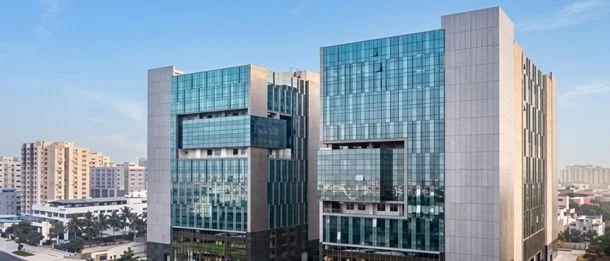
Mindspace Business Parks REIT (BSE: 543217 | NSE: MINDSPACE) has acquired 100% equity shareholding in Sycamore Properties Private Limited and Content Properties Private Limited, totaling approximately 26 lakh sq ft at Commerzone Pallikaranai on the Pallavaram-Thoraipakkam Road (PTR) in Chennai, for ₹2,541 crore. Mindspace Business Parks REIT’s Board of Managers has approved a transaction involving a preferential issue of up to ₹675 crore, subject to unitholder and regulatory approval.
Portfolio Expansion
This is Mindspace REIT’s second acquisition in Chennai since its listing, and the fifth asset acquisition from its sponsor pipeline. The sponsor is K Raheja Corp. This acquisition brings total expansions since listing to about 66 lakh sq ft and ₹8,800 crore in Gross Asset Value (GAV). The REIT’s overall leasable portfolio will expand from 390 lakh sq ft to 416 lakh sq ft, with a GAV of around ₹46,760 crore, up from ₹44,130 crore. Chennai’s part of the portfolio rises from around 3% to about 9% by area.
The purchasing price of ₹2,541 crore is a 3.4% decrease from the average of two independent valuations. The preferential issue of units costs ₹484.89 per unit. Proforma Net Operating Income (NOI) growth is expected at 10.2%, with NAV accretion of around ₹2.2/unit. The Loan-to-Value (LTV) ratio will rise slightly from around 25.6% to 28.0%.
Asset Overview
Commerzone Pallikaranai is a Grade-A office campus encompassing 12.4 acres on PTR with IGBC Platinum and WELL Platinum certifications. It presently has around 14 lakh sq ft of completed office space across two blocks, with the remaining roughly 12 lakh sq ft under development, with delivery scheduled for March 2027. The completed portfolio’s committed occupancy rate is roughly 70%. In-place rent is around ₹63 per sq ft per month, with recent deals reaching ₹85 per sq ft. Shell, a Fortune Global 500 business, occupies about 55% of the leased space.
Ramesh Nair, MD and CEO of Mindspace REIT, stated that Commerzone Pallikaranai was a strategic addition that strengthened the REIT’s footprint in Chennai, one of India’s office markets with the lowest vacancy rate. He stated that PTR was a well-established office corridor where demand continued to outperform supply, and that the acquisition would position the REIT to capture future leasing demand, rental upside, and long-term value for unit holders.

Hero Realty, Hero Enterprise’s real estate subsidiary, purchased an 18,215 sqm land parcel in Sector MU, Greater Noida, during an auction held by the Greater Noida Industrial Development Authority (GNIDA). The property is zoned for residential construction. This is the company’s introduction into the Greater Noida market.
Location advantage
The property parcel is bordered by a 60-metre-wide road that connects to the Noida-Greater Noida Expressway and the Noida International Airport in Jewar, which Prime Minister Narendra Modi opened on March 28. Sector MU additionally benefits from its closeness to the FNG Expressway, potential metro routes, schools, hospitals, and commercial centers.
Rohit Kishore, CEO of Hero Realty, stated that the acquisition in Sector MU occurred at a time when the Jewar airport was poised to redefine the region as NCR’s next growth hub, enabling connectivity, economic activity, and real estate appreciation. He stated that it capitalized on the success of the company’s project, The Palatial, in Sector 104, Gurugram, and was consistent with NCR’s infrastructural growth.
NCR Portfolio
Hero Realty has launched The Palatial by Hero Homes in Gurugram’s Sector 104 on the Dwarka Expressway. The project, which spans around 11 acres, includes over 680 residential units as well as retail and leisure services. The company has announced a collaboration with Panasonic Electricals to provide AI-enabled smart homes with indoor air purification technology to The Palatial.
Hero Realty also developed a plotted development vertical, Hero Earth, under which it unveiled The Ark in Sector 85, Gurugram, a 5-acre development with all 77 plots sold. The company has entered the Sonipat market through a partnership with the Spiti Group, offering plots in Sector 33 ranging in size from 1,115 to 1,615 square feet.
Expanding footprint.
Hero Realty is developing more than 60 lakh square feet in NCR, Punjab, Uttarakhand, and Uttar Pradesh. The company has also created 230 acres of industrial parks in Haridwar and more than 80 lakh sq ft of property around India.

Ranbir Kapoor Rents Pune Trump Towers Flat for ₹4.63 Lakh/Month

AI to Drive APAC Office Demand Growth

MahaRERA Recovers ₹369 Crore from Developers, Mumbai Leads

43,000 Homes Unsold in Navi Mumbai Amid Buyer Slowdown

Vijayta Raheja Applauds India’s ₹4 Lakh Crore Urban Vision at ET Maharashtra Business Summit

K Raheja & IHG Team Up to Elevate Powai’s Hospitality Landscape
-
 Real Estate News6 months ago
43,000 Homes Unsold in Navi Mumbai Amid Buyer Slowdown
-
 Real Estate News6 months ago
Vijayta Raheja Applauds India’s ₹4 Lakh Crore Urban Vision at ET Maharashtra Business Summit
-
 New Projects & Launches6 months ago
K Raheja & IHG Team Up to Elevate Powai’s Hospitality Landscape
-
 Real Estate News6 months ago
Mumbai’s Largest MHADA Redevelopment Drive Set to Transform 923 Acres
-

 NRI Real Estate7 months ago
Will NRI Investments Drive Mumbai Housing?
-
 Global Real Estate7 months ago
Spanish Youth Hostel Group Considers London Real Estate Deals
-

 NRI Real Estate7 months ago
How NRIs Are Driving India’s Property Market?
-

 Real Estate News7 months ago
John Abraham Firm Renews Bandra Rent at ₹12L/Month