
Home Guides
First-Time Homebuyer Tips: A Guide to Buying Your Dream Home.


Get professional advice and a step-by-step guide for first-time homebuyers in India, covering everything from budgeting and finance options to selecting the right home and finishing the transaction.
Many people dream of buying their first home. However, if not properly prepared, the process can be extremely complicated. Knowing what to expect from the home-buying process and being well prepared are critical for making educated decisions and avoiding frequent pitfalls. From assessing your financial situation to selecting the ideal property, you must remain focused throughout the process. In this blog article, we’ll walk you through the home-buying process, providing helpful suggestions and insights.
Financial Preparation
Assess your financial health.
Before buying a home, you should assess your financial situation. Begin with your present budget and what you can afford. To determine how much you can realistically budget for your monthly mortgage payment, you must first know your take-home salary, how much you spend each month, and how much debt you are currently paying down. Your credit score is an equally essential concern. Your credit score will have a significant impact on the mortgage rate you can qualify for. Check your credit report for inaccuracies and enhance your credit score by paying off your obligations and making on-time payments.
Investigate Mortgage Options.
Once your finances are in order, you can look into other mortgage possibilities. There are numerous options available, each with advantages and disadvantages. Common mortgage alternatives include fixed-rate mortgages, adjustable-rate mortgages, and government-backed loans. You should also consider the interest rate as well as the Annual Percentage Rate (APR), which is the sum of the interest rate plus any fees or expenditures associated with the loan.
Save for a downpayment.
Saving for a down payment is perhaps the most critical step in becoming a homeowner. There are several ways to save money. A savings account can be established particularly for this reason. Your funds can be set up for automatic deposit, and unnecessary costs can be decreased or eliminated. To avoid private mortgage insurance (PMI) and achieve a good interest rate on your loan, make a down payment of at least 20% of the house’s selling price. Also, look into any down payment help programs available in your state.
Choosing the Right Property.
Identify your needs and wants.
Most importantly, before you begin looking for property, determine what you need and want. Include must-haves on this list, such as the number of bedrooms and bathrooms, proximity to work or school, and other criteria, and rate them to help limit down where to seek for a house.
Research Locations
Your new home’s location may be as essential as the property itself. Investigate all of the neighborhoods and look for ones that meet your requirements. Evaluate the quality of schools, travel duration, infrastructure, and overall location in terms of shopping, restaurants, and playgrounds.
Evaluate Property Types.
Understanding the various property types can help you make an informed decision. For example, a single-family home typically provides greater privacy and space but is more expensive to maintain. Others provide condominiums with shared amenities and less upkeep duty for you, but with likely higher association fees.
Working With Professionals
Choosing a Real Estate Agent
A skilled real estate agent who knows his trade inside and out can be extremely helpful when purchasing a home. Look for someone who understands the local market and is responsive to your demands. Friends and family can be excellent sources of recommendations, or look for evaluations of possible agents to see who you can find that will support you throughout the process.
Understanding the Legal Requirements
To legally purchase a home, a person must understand the documents and compliance requirements. This might include writing or reviewing contracts and legal papers that need disclosures. Ensure accuracy and thoroughness to avoid future legal issues. It is also recommended to obtain the assistance of a real estate attorney to verify that all legal formalities are completed correctly.
Home Inspections
A house inspection identifies any problems within the property. You can engage a professional inspector to check the house’s foundation, roof, plumbing, and electrical systems. Take note of the results and be prepared to negotiate with the vendor if you want repairs or revisions. This will protect you from unexpected expenses and provide a legitimate motive to invest your money.
Navigating the Purchase Process
Making an Offer.
To make a fair offer, you should look into previous comparable sales, examine the property’s condition, and take note of the market’s trajectory. Your agent can assist you in developing a strong offer based on these variables.
Negotiating With Sellers
Good negotiation abilities might help you get the greatest deal on your new house. Make sure you fully negotiate terms with the seller or his representative, and go as far as you can on relevant issues.
Securing Financing
Prepare for total expenditures, which may include appraisal, title insurance, and loan origination fees. Before you sign anything, carefully review your loan documentation and ensure that you understand the terms.
Common Pitfalls To Avoid
Here are some common traps to avoid while buying your ideal home:
Avoiding overextension
Many people fall into the trap of straining their budget to buy a more expensive home. Simply stick to your financial plan and avoid extending your budget to fit into a more expensive home. Make sure it works within your budget to cover your mortgage and other home-related obligations.
Understanding Hidden Costs
The cost of owning a house is far greater than the real property. There are hidden fees such as property taxes, house insurance, and upkeep costs. Plan these fees into your budget so that you are financially prepared for any responsibilities that may emerge while owning a home. Read Also: 10 Common First-Time Home Buyer Mistakes to Avoid.
Long-Term Considerations
Maintenance and upkeep
Implementing a thoughtful long-term home maintenance strategy will protect the value of your property. Perform frequent inspections on major systems such as HVAC, plumbing, and roofing. Set up an annual budget for maintenance and repair to avoid costly repairs and keep your house in good condition.
Resale Value
Several things may influence how your home’s value will vary in the future. These include location, property condition, and market trends. Making the correct upgrades to your home while preserving it ensures an increase in resale value and, as a result, a higher return on investment. Purchasing your first house is an important milestone in anyone’s life. You can work with professionals with confidence if you have done your financial research and choose the suitable property. Long-term planning is required to ensure a smooth transition into homeownership.

Introduction
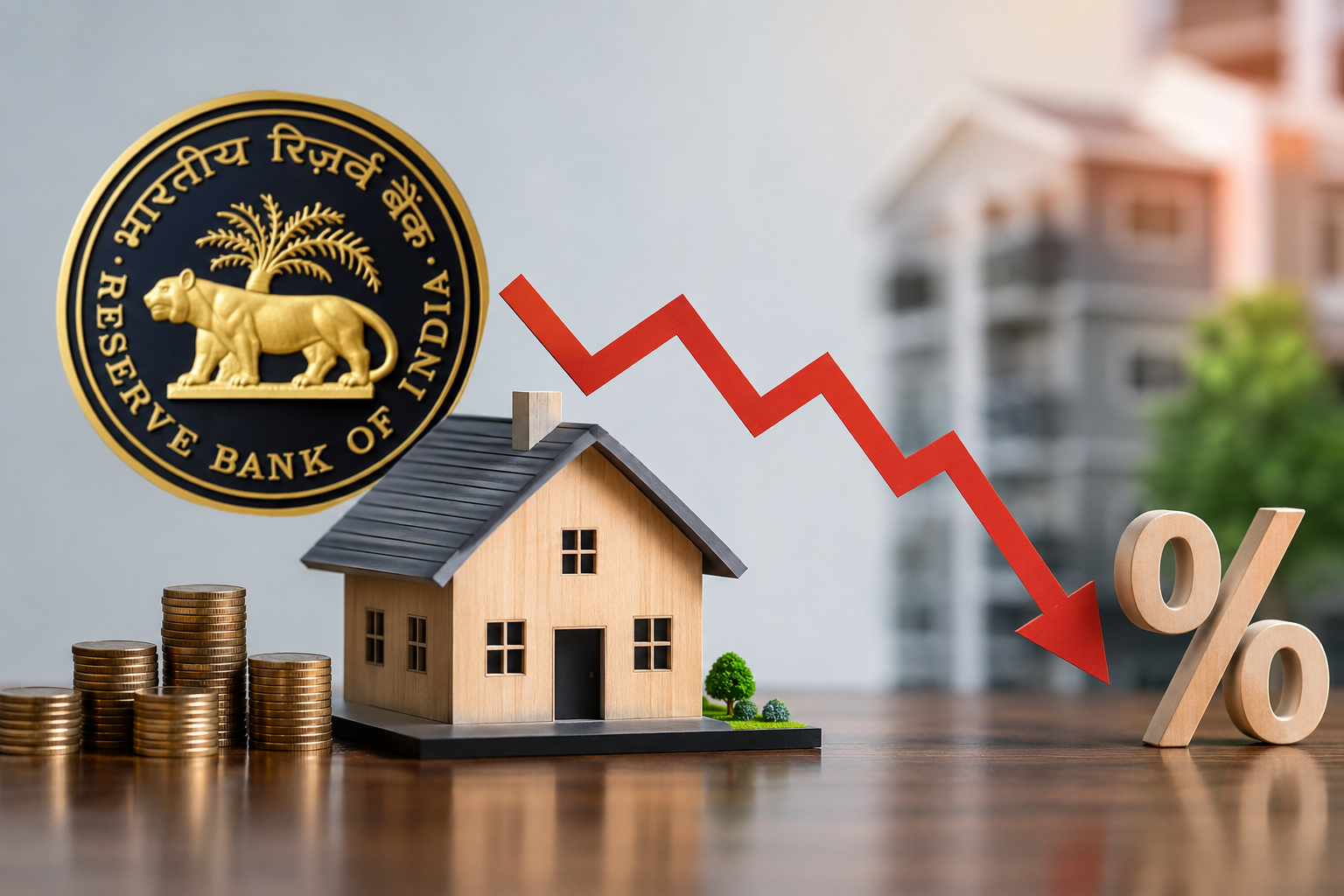
Whether you’re planning to buy your first home or already paying a home loan, one financial term you should always keep an eye on is the RBI Repo Rate. Even a small change in the repo rate can significantly affect your monthly EMI, total interest paid, and overall loan affordability.
Since most banks in India now offer repo-linked floating home loans, RBI’s monetary policy decisions directly influence millions of borrowers. Understanding how the repo rate works can help you make smarter financial decisions and save money over the life of your loan.
What is the RBI Repo Rate?
The Repo Rate is the interest rate at which the Reserve Bank of India (RBI) lends short-term funds to commercial banks.
Banks borrow money from the RBI whenever they face liquidity shortages. The RBI uses the repo rate as a monetary policy tool to:
Control inflation
Manage liquidity
Encourage or slow economic growth
Influence borrowing costs across the banking system
When the RBI changes the repo rate, banks generally adjust their lending rates accordingly.
How Does the Repo Rate Affect Home Loans?
The impact is straightforward:
When RBI Increases the Repo Rate
Banks borrow at a higher cost.
Home loan interest rates may increase.
Floating-rate loan EMIs become more expensive.
Homebuyers pay more interest over time.
When RBI Reduces the Repo Rate
Borrowing becomes cheaper for banks.
Home loan interest rates may fall.
Monthly EMIs reduce or loan tenure becomes shorter.
Buying a home becomes more affordable.
This is especially relevant for floating-rate home loans, whose interest rates are linked to external benchmarks such as the RBI repo rate.
Floating vs Fixed Home Loans
Floating Rate Home Loan
Interest changes with the RBI repo rate.
EMI or tenure can increase or decrease.
Best during falling interest-rate cycles.
Fixed Rate Home Loan
Interest remains constant for the agreed period.
EMI stays unchanged.
Offers stability but may be slightly more expensive initially.
Example: How a Repo Rate Change Impacts EMI
Suppose you have:
Loan Amount: ₹60 lakh
Loan Tenure: 20 years
Interest Rate: 8.5%
If the interest rate rises by 0.5% following a repo rate hike:
Your monthly EMI increases.
Alternatively, your lender may keep the EMI unchanged and extend the loan tenure, resulting in higher total interest over the life of the loan.
Latest RBI Repo Rate Trend
The RBI reviews the repo rate during every Monetary Policy Committee (MPC) meeting based on:
Inflation
GDP growth
Global economic conditions
Liquidity in the banking system
Changes in the repo rate are closely watched because they influence borrowing costs across sectors, including housing finance.
How Homebuyers Can Prepare
- Choose the Right Loan Type
Select a floating or fixed-rate loan based on your financial goals and market conditions.
- Make Part Prepayments
Reducing the principal lowers future interest costs.
- Maintain a Good Credit Score
A strong credit profile can help you negotiate better interest rates.
- Compare Multiple Lenders
Interest rates, processing fees, and reset periods vary between banks and housing finance companies.
- Track RBI Announcements
Knowing upcoming policy decisions helps you plan refinancing or prepayments effectively.
Who Benefits Most from a Repo Rate Cut?
A reduction in the repo rate is particularly beneficial for:
First-time homebuyers
Existing floating-rate borrowers
Buyers upgrading to larger homes
Real estate developers, as improved affordability can stimulate housing demand.
Final Thoughts
The RBI repo rate is one of the most important factors influencing home loan costs in India. While you cannot control interest rate movements, understanding how they affect your loan allows you to make better borrowing decisions.
If you’re planning to purchase a home or refinance an existing loan, keep an eye on RBI policy announcements, compare lenders, and review your repayment strategy regularly. Staying informed can reduce your borrowing costs and improve your long-term financial health.

Would you buy a compact apartment today if it meant owning a much larger home a few years later? As redevelopment gathers pace in cities such as Mumbai and Pune, an increasing number of homebuyers are betting on ageing housing societies instead of brand-new projects. The attraction is compelling: buy an older flat at a lower price, receive a larger apartment after redevelopment, and potentially unlock significant value without paying current market prices for a bigger home.
Shirish Tandel (name changed) has a budget of ₹1 crore, but finding a spacious 2 BHK in his preferred locality in Pune has proved difficult. A 750 sq ft apartment there costs around ₹1.40 crore, well beyond his budget.
During his search, Tandel came across an alternative: a 500 sq ft 1 BHK with a 200 sq ft balcony, priced at ₹92 lakh, in a housing society slated for redevelopment next year. The society has already signed a development agreement (DA) with the developer.
Under the redevelopment plan, the existing flat would be upgraded to a 745 sq ft 2 BHK. Tandel also intends to purchase an additional 200 sq ft from the developer at the prevailing rate of ₹10,000–11,000 per sq ft, allowing him to eventually own a nearly 1,000 sq ft 3 BHK.
His other option is a ready-to-move-in 590 sq ft 2 BHK priced at ₹95 lakh. However, he believes the apartment would be too small for his family of four in the long run. Rather than stretching his finances to buy a ₹1.40 crore home today, Tandel is considering the redevelopment property, which could give him a significantly larger apartment for a total investment of about ₹1.2 crore.
The trade-off is time. He is unlikely to receive possession of the redeveloped 3 BHK for another three to five years. During the redevelopment period, once residents vacate the building, the developer will pay monthly rent to homeowners. Tandel plans to use this rental compensation to cover the rent of temporary accommodation until his new home is ready.
Should homebuyers purchase an apartment in an old building?
Property consultants say redevelopment projects can make financial sense, particularly in land-constrained cities such as Mumbai and Pune, where buying a larger apartment in an established locality may otherwise be unaffordable.
However, experts suggest that prospective buyers should thoroughly verify the redevelopment agreement, approvals, the developer’s financial strength and track record, timelines for completion, corpus and rental compensation, and whether the society has obtained the required consent from members.
Developers say opportunity is lucrative, but homebuyers must remain cautious
But the strategy is not without risks. Redevelopment projects are often delayed by approvals, funding constraints, legal disputes and disagreements within housing societies. While some buyers emerge with substantially larger homes and handsome capital appreciation, others can find themselves waiting years beyond the promised completion date. Before buying into a redevelopment project, it is essential to understand the legal, financial and practical considerations that could determine whether the investment pays off.
According to real estate developers, while purchasing an old apartment in a building slated for redevelopment is a lucrative opportunity, homebuyers must remain cautious and do their homework.
“Buying an apartment in the redevelopment-going building is a good investment in the long run, but homebuyers must exercise caution and do their homework before going ahead and not just look at the purchase price,” said Anuj Mehta, Director, Dhuleva Group.
“In some of Mumbai’s mature micro-markets, large-scale redevelopment projects have fetched returns of 20-40% during the project life cycle owing to better infrastructure, facilities, and building features. But the returns depend on certain parameters that need to be checked. Homebuyers must evaluate the builder’s financial strength and experience, the status of approvals from authorities, the project completion timelines, and the redevelopment agreement to finalise their decision,” Mehta said.
According to Ram Raheja, Managing Director, S Raheja, homebuyers should carefully assess two key risks before purchasing an apartment in a building slated for redevelopment.
“First, evaluate the redevelopment timeline, as such projects depend on regulatory approvals and adequate funding. A developer with limited financial strength is more likely to face delays. Buyers should assess the developer’s execution track record rather than relying on projects in the pipeline. Second, scrutinise the society’s paperwork, including the title, members’ consent and the development agreement. Internal disputes within the society are often the biggest hidden risk and the most difficult to resolve,” Raheja said.
Mumbai redevelopment: Numbers tell the story
Mumbai’s redevelopment market continued to gather pace in 2025, with the number of redevelopment agreements rising 16% year-on-year, reflecting growing momentum in the transformation of the city’s ageing housing stock. According to Knight Frank India, 229 development agreements (DAs) for the redevelopment of old buildings were signed in 2025, compared with 196 in 2024.
The trend has continued into 2026. Nearly 70 redevelopment agreements, around 30% of the total signed in 2025, were executed in the first 74 days of the year, up to March 15, according to Knight Frank India. Overall, 1,094 redevelopment agreements were signed between January 2020 and March 15, 2026, unlocking approximately 432 acres of land for redevelopment across Mumbai.

Every year, many homebuyers postpone property visits during the monsoon, assuming it’s better to wait for clear skies. However, experienced buyers and real estate experts often do the opposite—they inspect homes during the rainy season.
Buying a property during the monsoon offers a realistic picture of its quality, construction, and surrounding infrastructure. If a home performs well in heavy rains, it’s more likely to remain comfortable and durable throughout the year.
Why Monsoon is the Smartest Time to Buy a Home
- Check for Water Leakage and Dampness
The monsoon exposes issues that remain hidden during dry weather.
Look for:
Water seepage on walls and ceilings
Damp patches
Leaking balconies and terraces
Moisture around windows and doors
These signs can save buyers from expensive repairs after possession.
- Assess Drainage Around the Property
Heavy rainfall is the perfect opportunity to evaluate drainage systems.
Check whether:
Water accumulates near entrances
Parking areas flood
Roads outside remain accessible
Society drains function properly
Good drainage is a strong indicator of quality planning.
- Understand the Local Infrastructure
Rain reveals how well an area is equipped to handle adverse weather.
Observe:
Traffic congestion
Waterlogging on roads
Public transport accessibility
Condition of nearby streets
A location that functions smoothly during heavy rains generally offers better long-term livability.
- Inspect Construction Quality
Monsoon weather puts a building’s construction standards to the test.
Pay attention to:
Cracks in walls
Roof waterproofing
Basement leakage
Exterior finishing
These issues are much easier to identify during active rainfall.
- Evaluate Natural Ventilation and Lighting
Cloudy weather helps buyers understand how much natural light enters the home.
Check:
Cross ventilation
Indoor humidity
Room brightness without artificial lighting
Well-designed homes remain airy and comfortable even during the rainy season.
- Test Society Amenities
Rain can affect common facilities significantly.
Inspect:
Clubhouse roofs
Basement parking
Children’s play area
Walking tracks
Lift lobbies and common passages
A well-maintained society continues to operate efficiently despite heavy rainfall.
- Better Negotiation Opportunities
The monsoon is traditionally a slower season for property transactions.
Buyers may benefit from:
Better pricing
Flexible payment plans
Festival offers
Additional discounts from developers
This can improve overall value for money.
Monsoon Home Inspection Checklist
Before finalizing your purchase, inspect:
✔️ Roof and ceiling for leaks
✔️ Walls for seepage and dampness
✔️ Balcony drainage
✔️ Window sealing
✔️ Basement parking
✔️ Society drainage system
✔️ Road connectivity during rains
✔️ Waterlogging in surrounding areas
✔️ Power backup availability
✔️ Elevators and common area maintenance
Expert Tip
Visit the property during or immediately after heavy rainfall instead of relying solely on brochures or virtual tours. Real-world conditions reveal the true quality of construction and neighbourhood infrastructure.
Conclusion
The monsoon offers one of the best opportunities to evaluate a property’s structural integrity, location, and long-term livability. While many buyers avoid site visits during the rains, informed homebuyers use the season to uncover hidden issues and negotiate better deals.
In real estate, a home that withstands the monsoon is often a home built to last.

Mumbai Police Book 2 Goa Residents in ₹41 Lakh Real Estate Extortion Case

Chembur’s ₹142 Crore Deal

SCLR Phase-II

43,000 Homes Unsold in Navi Mumbai Amid Buyer Slowdown

Vijayta Raheja Applauds India’s ₹4 Lakh Crore Urban Vision at ET Maharashtra Business Summit

K Raheja & IHG Team Up to Elevate Powai’s Hospitality Landscape
-
 Real Estate News5 months ago
43,000 Homes Unsold in Navi Mumbai Amid Buyer Slowdown
-
 Real Estate News4 months ago
Vijayta Raheja Applauds India’s ₹4 Lakh Crore Urban Vision at ET Maharashtra Business Summit
-
 New Projects & Launches5 months ago
K Raheja & IHG Team Up to Elevate Powai’s Hospitality Landscape
-

 Real Estate News5 months ago
Mumbai’s Largest MHADA Redevelopment Drive Set to Transform 923 Acres
-

 Global Real Estate5 months ago
Spanish Youth Hostel Group Considers London Real Estate Deals
-

 NRI Real Estate5 months ago
Will NRI Investments Drive Mumbai Housing?
-

 Real Estate News5 months ago
John Abraham Firm Renews Bandra Rent at ₹12L/Month
-

 NRI Real Estate5 months ago
How NRIs Are Driving India’s Property Market?