
Hotels & Hospitality
Scholarships that make studying in Canada possible


Have you ever wanted to study in Canada? You are not alone! One of the most popular foreign student destinations is Canada. It’s simple to see why, given the country’s world-class colleges, safe environment, and welcoming culture. But many students are concerned about one thing: the expense.
Good news! There are numerous Canadian scholarships available to help you realize your dreams. Let’s look at how you can study in Canada with scholarship funding.
Why Choose Canada for Your Studies?
Before we get into scholarships, let’s discuss why Canada is such an excellent choice:
High-Quality Education: Canadian degrees are recognized internationally.
Safe and Friendly: Canada is known for embracing international students.
Work Opportunities: Students may work part-time while studying.
Post-Study Options: Excellent opportunities to stay and work following graduation.
Multicultural Society: Meet individuals from around the world.
Available Scholarships
There are several sorts of scholarships available to assist you study in Canada:
1. Government Scholarships.
The Canadian government provides scholarships to international students from many countries. These scholarships benefit students at all levels of study, from undergraduate to doctoral programs.
2. University Scholarships.
Almost every Canadian university offers its own scholarship program. These are supplied according to:
Academic performance.
Leadership skills
Community participation
Special talents
3. Province-based scholarships
Different provinces in Canada provide their own scholarships to recruit brilliant overseas students to their local universities.
4. Subject-Specific Scholarships
Some scholarships are provided for specific areas of study, such as:
Engineering
Medical sciences
Business Arts and Humanities
Environmental studies.
5. Country-Specific Scholarships
Some programs are tailored exclusively to students from particular nations. This makes it easier for students from underdeveloped countries to pursue an education in Canada.
Popular Scholarship Programs
Below are some well-known scholarship opportunities:
Vanier Canada Graduate Scholarships: For PhD candidates who demonstrate leadership abilities and academic excellence.
The University of Toronto offers the Lester B. Pearson International Scholarship to exceptional international students.
Scholarships at the University of British Columbia include a variety of programs for undergraduate and graduate students.
York University International Student Scholarships: Available to students who demonstrate academic excellence.
Carleton University Awards: There are numerous scholarship opportunities for international students.
McGill University Entrance Scholarships: For students beginning their undergraduate studies.
How To Find the Right Scholarship
Finding the proper Canada scholarship requires some study, but here’s how you get started:
Visit University Websites: Every university lists its scholarship offerings online.
Check Government Portals: Visit official Canadian education websites.
Talk to Our Consultants: As a study abroad consultancy, we help you find scholarships that match your profile.
Search by Your Field: Look for scholarships in your chosen field of study.
Check Eligibility Early: Before you apply, be sure you meet all the conditions.
How to Win Scholarships
Want to improve your chances? Follow these tips:
Start early.
Do not wait until the last minute. Many scholarship deadlines occur months before the semester begins.
Maintain good grades.
Most scholarships demand an excellent academic record. Your marks are important!
Write a Strong Personal Statement.
Here’s your chance to share your story. Explain why you earned the scholarship and what you hope to achieve.
Get good references.
Request letters of recommendation from professors or mentors who are well-known to you.
Showcase Your Achievements.
Highlight your extracurricular activities, volunteer work, and leadership positions.
Be honest and genuine.
Do not exaggerate. Scholarship committees can sense when applicants are acting authentically.
Proofread everything.
Check your application several times for spelling and grammar errors.
Documents You Will Need
When applying for scholarships, be prepared with the following documents:
Academic transcripts and certifications.
Language test results (IELTS or TOEFL)
Letter of Acceptance from a Canadian University
Statement of purpose, personal essay
Letter of recommendation
Resume or CV
Proof of extracurricular activity.
Portfolio (for art and design programs)
Common Mistakes To Avoid
Don’t let these mistakes harm your chances.
Missing deadlines: Mark all key dates on your calendar.
Incomplete applications: Fill out all sections completely.
Generic Essays: Customize each application to the appropriate scholarship.
Not following instructions: Read all prerequisites carefully.
Ignoring small scholarships: Even partial scholarships assist save costs.
Applying to the wrong programs: Make sure you’re eligible before applying.
Beyond Full Scholarships
Remember that studying in Canada with financial support does not always require a full scholarship. Consider:
Partial scholarships: Cover a portion of your tuition.
Fee waivers: Reduce application or tuition fees.
Living Allowances: Assistance with housing and food costs.
Travel Grants: Help with flight expenditures.
Book Allowances: Pay for studying materials.
Many students use multiple smaller scholarships to offset their fees.
How Can We Help You?
As a dedicated study abroad consultancy, we recognize that locating and applying for scholarships can be difficult. That is where we come in!
Our services include:
Scholarship Search: We assist you in finding scholarships that are appropriate for your profile, course of study, and aspirations.
Application Assistance: Our team helps you prepare strong scholarship applications that stand out.
Document Preparation: We assist you in compiling and arranging any necessary documentation.
Essay Review: Receive expert comments on your personal statements and writings.
University Selection: We recommend universities that offer the finest scholarship options for you.
Timeline Management: We make sure you never miss an important deadline.
Interview Preparation: If your scholarship includes an interview, we will help you prepare.
The Application Journey
Here’s how a typical timeline looks:
12-18 months before: Begin exploring universities and scholarships.
10-12 Months Prior: Take language tests (IELTS/TOEFL) and prepare documents.
8-10 months ahead: Apply to universities and scholarships.
6-8 months prior: Wait for responses and acceptance letters.
4-6 Months Ahead: Apply for a study permit and organize lodging.
2-3 Months Before: Book flights and prepare for travel.
Success Stories
Every year, thousands of overseas students receive scholarships to study in Canada. Many of them began exactly like you, wondering if it was feasible. They succeeded thanks to proper coaching, preparation, and determination.
Students from diverse backgrounds and nations have been awarded scholarships to Canadian universities. Your story might be next!
Take the first step today!
Don’t let finances prevent you from seeking a decent education in Canada. With so many Canada scholarship opportunities available, studying in Canada is more accessible than you might imagine.
The key is to begin early, keep organized, and seek expert advice. As your study abroad consultation partner, we are here to help you every step of the journey.
Are you ready to begin your journey?
Contact us today at:
Discuss your study goals.
Investigate scholarship opportunities.
Receive tailored guidance.
Start your application procedure.
Your ambition of studying in Canada is attainable. Let us make it happen together!

Hotels & Hospitality
Shree Naman Group Acquires JW Marriott Bengaluru and Crowne Plaza Pune for ₹1,800 Crore

Shree Naman Group has completed the acquisition of JW Marriott Bengaluru for ₹1,611 crore and Crowne Plaza Pune City Centre for ₹189 crore, expanding its hospitality portfolio to five operating hotels with approximately 1,000 rooms across three Indian cities.
Mumbai-based Shree Naman Group has strengthened its presence in India’s hospitality industry by completing a ₹1,800 crore acquisition of two prominent hotels: JW Marriott Bengaluru in Karnataka and Crowne Plaza Pune City Centre in Maharashtra.
The transaction, completed on October 1, 2026, follows approval from the National Company Law Tribunal (NCLT) on September 3, 2026, after a competitive bidding process. The acquisition marks a significant step in the group’s expansion beyond Mumbai and supports its ambition to build a pan-India portfolio of premium hospitality assets.
According to the company’s announcement reported by ETHospitalityWorld, the group plans to combine acquisitions of existing hotels with new developments and mixed-use projects to achieve long-term growth.
₹1,800 Crore Deal: Breaking Down the Acquisition
The acquisition comprises two hotel-owning companies and their respective hospitality assets. JW Marriott Bengaluru accounts for the larger share of the transaction, while Crowne Plaza Pune adds another established property to the group’s portfolio.
| Hotel | Acquisition value |
|---|---|
| JW Marriott Bengaluru | ₹1,611 crore |
| Crowne Plaza Pune City Centre | ₹189 crore |
| Total transaction value | ₹1,800 crore |
The acquisition was completed within 30 days of NCLT approval, according to the reported announcement.
The hotels were acquired through the corporate insolvency resolution process, following a competitive bidding exercise. The transaction also highlights how established hospitality assets can attract investors seeking operational properties in strategic urban locations.
JW Marriott Bengaluru: A Premium Hospitality Asset in the Heart of the City
JW Marriott Bengaluru is located near Cubbon Park and UB City, within Bengaluru’s central business district. Its location gives the property access to major commercial destinations, corporate offices, retail establishments and the city’s premium business and lifestyle districts.
Bengaluru is an important market for business travel, technology companies, corporate meetings and premium leisure stays. A centrally located luxury hotel can serve several customer segments, including corporate executives, international visitors, business delegations and leisure travellers.
The acquisition gives Shree Naman Group an entry into Bengaluru’s established premium hotel market. Rather than building an entirely new property from the ground up, the group gains control of an operating hospitality asset with an existing market presence.
The group has also indicated that it sees opportunities to improve the hotel’s appeal through potential enhancements to accommodation, dining, wellness facilities and events. The announcement does not specify a detailed renovation schedule or investment budget for these upgrades.
Crowne Plaza Pune City Centre Joins the Portfolio
The second acquisition is Crowne Plaza Pune City Centre, located on Bund Garden Road in Pune.
The hotel’s central location provides access to commercial districts and important transport connections, making it relevant to corporate travellers, meetings, conferences and leisure visitors.
Pune has a diverse economic base spanning information technology, manufacturing, education, automotive businesses and other corporate sectors. This creates demand for hotels that can accommodate business visitors as well as social functions and leisure stays.
The addition of Crowne Plaza Pune gives Shree Naman Group another operating property in a major business market in western India. The group can potentially build on the hotel’s existing location and facilities while exploring improvements to guest accommodation, food and beverage offerings, wellness services and event spaces.
Together, the Bengaluru and Pune acquisitions diversify the group’s hotel portfolio beyond its established Mumbai presence.
Shree Naman Group’s Hotel Portfolio Expands to Five Properties
Before completing the acquisitions, Shree Naman Group’s operating hotel portfolio included three properties in Mumbai:
- Sofitel Mumbai BKC
- Lemon Tree Hotel, Kalina BKC
- ibis Mumbai BKC
With JW Marriott Bengaluru and Crowne Plaza Pune City Centre joining the portfolio, the group now operates five hotels across Mumbai, Bengaluru and Pune, with approximately 1,000 rooms.
The expansion gives the company a presence in three major Indian urban markets with different business and travel demand drivers.
Mumbai remains a key market for corporate travel, financial services, luxury hospitality and international business. Bengaluru offers exposure to the technology and corporate travel ecosystem, while Pune provides access to a combination of industrial, technology, educational and business activity.
This geographic diversification can help the group spread its hospitality operations across multiple markets instead of relying entirely on a single city.
Target of 2,500 Hotel Rooms Over the Next Five Years
Shree Naman Group has set a target of expanding its hotel portfolio to at least 2,500 rooms over the next five years.
With approximately 1,000 rooms across its five operating hotels, the group aims to increase its portfolio by roughly 1,500 additional rooms to reach that target. The final number will depend on future acquisitions, new developments and the completion of projects currently in the pipeline.
The company plans to pursue two complementary expansion strategies.
1. Acquiring existing operating hotels
Buying established properties can provide immediate entry into a market, along with existing facilities and an operating business. Such transactions may also create opportunities to improve operational performance and reposition assets, depending on their condition and market potential.
2. Developing new hospitality projects
The group also intends to develop hotels on existing land parcels and through mixed-use projects. This approach gives it the opportunity to create new hospitality assets while using land and development opportunities already available to the business.
The combination of acquisitions and new construction provides flexibility as the group evaluates opportunities in different cities and hospitality segments.
Development Pipeline: 650–700 Rooms Across Three Projects
In addition to the five operating hotels, Shree Naman Group has a development pipeline of approximately 650–700 rooms across three projects.
The announced pipeline includes:
- Goa: A planned hotel development that would expand the group’s exposure to a major leisure and tourism destination.
- Pavana Lake: A resort project near the lake, adding a leisure-oriented destination to the portfolio.
- Sofitel Mumbai BKC: An expansion of the existing Mumbai hotel.
These projects indicate that the group’s strategy is not limited to acquiring established city hotels. It is also looking at leisure hospitality and expanding existing assets.
However, the announced room pipeline should be viewed separately from the operating inventory. The 650–700 rooms represent projects under development and should not be counted as already operational.
Why This Acquisition Matters for India’s Hospitality Sector
The ₹1,800 crore transaction is significant because it combines established hotel assets, strategic urban locations and a long-term expansion plan.
1. Growing investor interest in established hotel assets
Operating hotels in major cities can offer investors an alternative to developing properties from scratch. Acquisitions may provide access to existing facilities, established locations and an operating platform, although financial performance and future returns depend on the individual asset.
The Shree Naman transaction illustrates how established hospitality properties can attract buyers through a structured resolution and competitive bidding process.
2. Geographic diversification beyond Mumbai
The acquisition takes Shree Naman Group into Bengaluru and Pune, expanding its footprint across three significant business and hospitality markets.
A wider geographic presence can create opportunities to serve different categories of travellers and reduce dependence on one local market, although performance will still depend on demand, costs and competition in each city.
3. Opportunities to improve existing hotels
Both properties are established hotels in central locations. The group has identified accommodation, dining, wellness and events as areas where it sees opportunities to strengthen their appeal.
Any resulting improvements could help the properties remain competitive, but the scale, timing and financial impact of such changes have not yet been detailed publicly.
4. Hospitality and mixed-use development
Shree Naman Group’s strategy also includes greenfield hotel projects and mixed-use developments, particularly in Mumbai.
Mixed-use developments combine different uses, such as hospitality, commercial space, retail or other real estate components, within a broader development. For real estate groups, this approach can create additional ways to use land and develop complementary businesses, depending on project design and market demand.
What Shree Naman Group Plans Next
Harsh J Shah, director of Shree Naman Group, described the acquisition as an important step towards building a pan-India portfolio of hospitality assets.
The group’s stated priorities include strengthening the two newly acquired hotels, continuing to acquire operating properties and progressing its development pipeline.
Mumbai will remain an important focus market, particularly for new hospitality developments on existing land parcels and mixed-use projects. At the same time, the acquisitions demonstrate the group’s willingness to expand into other major business and leisure destinations.
The company’s target of at least 2,500 rooms over five years will depend on how successfully it executes this combination of acquisitions and new development.
Conclusion
Shree Naman Group’s ₹1,800 crore acquisition of JW Marriott Bengaluru and Crowne Plaza Pune City Centre represents a major expansion of its hospitality business.
The transaction brings two established hotels into a portfolio that now includes five operating properties and approximately 1,000 rooms across Mumbai, Bengaluru and Pune. With an additional 650–700 rooms in its development pipeline and a five-year target of at least 2,500 rooms, the group is pursuing a combination of operating hotel acquisitions, new developments and mixed-use projects.
For India’s hospitality and real estate sectors, the deal highlights the strategic importance of established hotel assets in major business destinations and the role of acquisitions in expanding a hospitality portfolio.
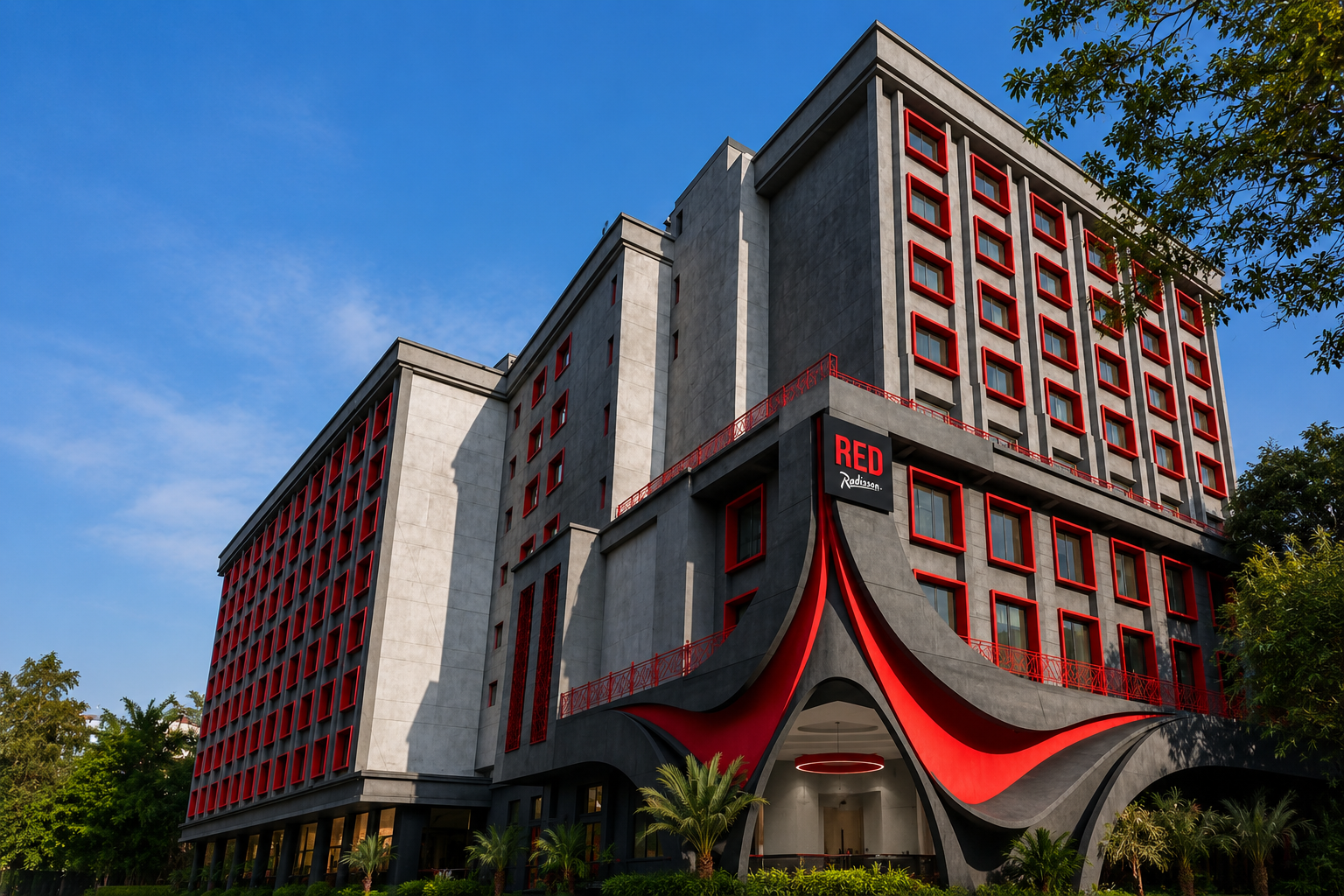
Radisson Hotel Group has inked an agreement to open Radisson RED Mumbai International Airport, a 208-room lifestyle hotel, by December 2026. It will be the group’s eighth hotel in the Mumbai Metropolitan Region (MMR) and the first for the Radisson RED brand in Mumbai.
The hotel will cater to business travelers, airline crews, transit passengers, and MICE demand by offering easy access to important business hubs such as Andheri MIDC, SEEPZ Mumbai, Bandra Kurla Complex (BKC), and the Jio World Convention Center. It is about four minutes from the Chhatrapati Shivaji Maharaj International Airport.
The hotel will be created by renovating and repositioning an existing facility under the Radisson RED brand. It will contain over 1,000 square meters of conference and event space, including a ballroom and banquet halls, as well as 208 bedrooms, an all-day dining restaurant, a bar, a deli, a fitness facility, and a swimming pool.
Nikhil Sharma, Radisson Hotel Group’s Managing Director and COO for South Asia, commented, “Mumbai is one of India’s most vibrant hospitality markets, and the signing of Radisson RED Mumbai International Airport validates our strategy of expanding in high-demand, high-growth areas. Because of its proximity to one of the country’s busiest airports and significant commercial hubs, the hotel is well-positioned to fulfill the evolving needs of business and leisure guests seeking design-led, lifestyle hospitality experiences. With eight hotels currently in our portfolio in the Mumbai Metropolitan Region, this arrangement marks a key milestone in our growth. We remain committed to increasing our presence in key gateway cities and creating enterprises that cater to the tastes of modern tourists.”
Davashish Srivastava, Vise President-Development, South Asia, Radisson Hotel Group, commented, “As we continue to develop our presence in India, we prioritize increasing our portfolio throughout key urban hubs. In a market where demand for business travel, meetings and events, and lifestyle hospitality is ever-changing, the addition of Radisson RED Mumbai International Airport strengthens our network. The hotel is a strong addition to our portfolio, demonstrating our commitment to launching the right brands in places with long-term growth potential.”
Ayon Bhattacharya, Chief Operating Officer of Lateral Hospitality Pvt Ltd, commented, “We are delighted to collaborate with Radisson Hotel Group on this historic development, bringing the Radisson RED brand to one of Mumbai’s most important commercial and hospitality catchments. Our goal is to create a hotel that meets the changing needs of today’s travelers by combining cutting-edge architecture, vibrant social areas, and exceptional service. With its ideal location near Mumbai International Airport and key commercial districts, we believe this hotel will be a popular choice for social events, business travelers, and transit guests alike.”
With a portfolio that includes premium, upscale, and lifestyle brands, the Radisson Hotel Group currently operates and develops over 200 hotels in India. In addition to tier II and tier III areas, the company continues to expand its presence in major cities.
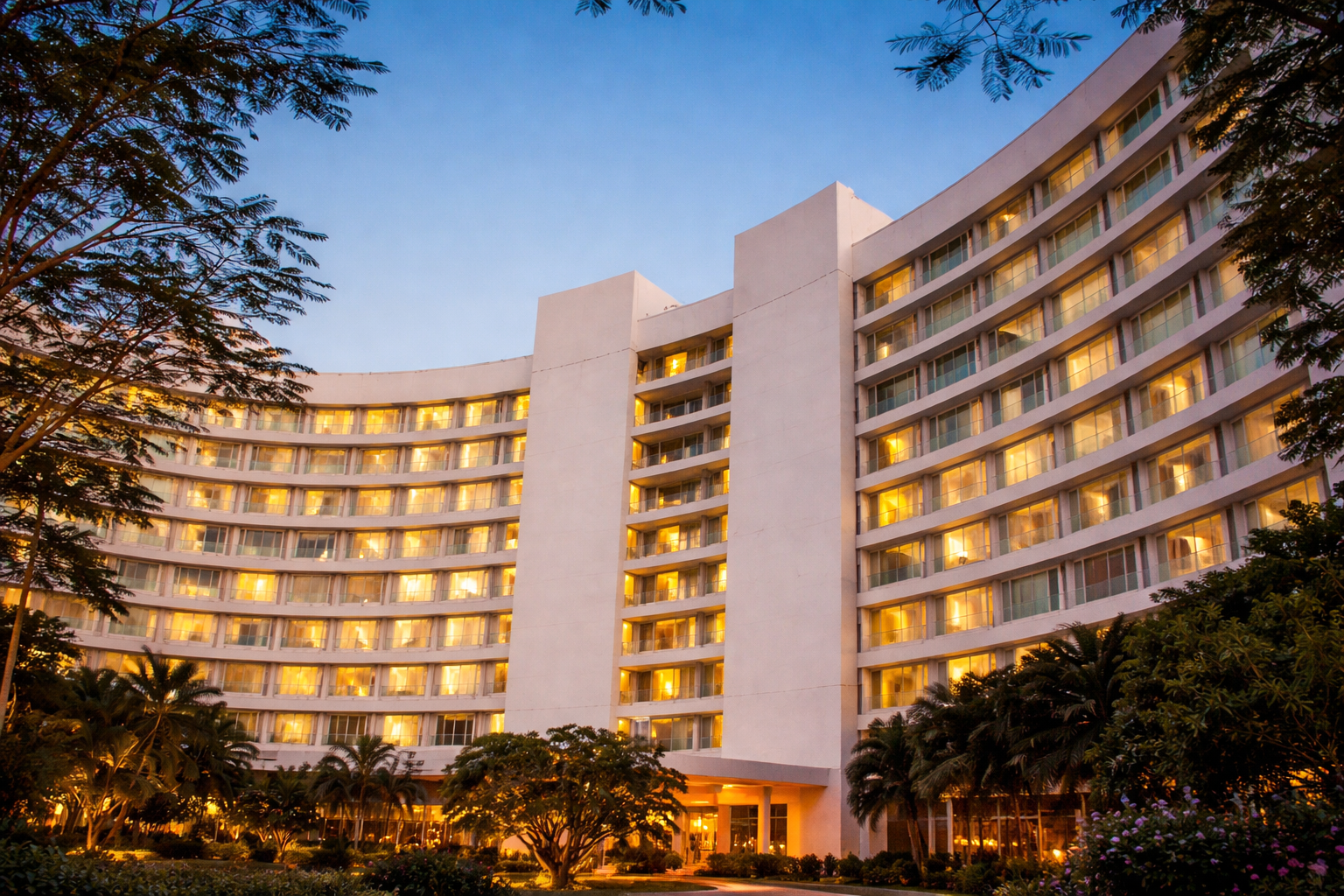
Chalet Hotels, which is owned by K Raheja Corp, is progressively choosing to operate more of its hotels through franchise agreements rather than management partnerships with hotel chains.
While the majority of its properties are now operated by international brands such as Marriott International and Accor, the Mumbai-based hotel developer plans to franchise new hotels such as the Taj Delhi Airport at Terminal 3 and Hyatt Airoli.
“We like the franchise model. We have taken the Taj that’s under construction in Delhi on a franchise model. The Hyatt Airoli that’s under construction will also be franchise,” Shwetank Singh, Managing Director and CEO of Chalet Hotels, told Business Today in an interview.
Chalet develops the facility under a management contract before handing it over to brands such as Marriott or Hilton when it is finished. These hotel chains manage the hotel’s revenue, expenditures, and total profit and loss. At the end of each month, they pass on the leftover profit to the owner after deducting their charge, which is often between 10-12% of overall sales, according to Singh.
with contrast, with a franchise model, the brand does not oversee day-to-day operations. Instead, it shares its name, distribution channels, and access to systems such as its website and reward programs. The owner maintains the hotel independently while paying a franchise fee, which normally ranges between 5-6%. The cost savings, however, are not substantial.
“One of the primary reasons owners favor this arrangement is that worldwide companies might have extremely rigorous standards. It is difficult to persuade them to adjust anything to suit the local environment,” Singh added, noting that their human resource costs are typically higher.
The Taj Delhi Airport, which will open in FY27, is the only Taj in the country that has been offered on a franchise basis, according to Singh. “It demonstrates IHCL’s confidence in Chalet’s capacity to operate it. This shows they trust us with the brand. Taj Delhi, which will cost Rs 500 crore, will feature around 380 rooms, he added.
Chalet Hotels’ portfolio includes 11 functioning hotels with 3,389 rooms. The company is currently constructing approximately 1,500 rooms. About 85% of its revenue comes from hotels, with the other 15% coming from commercial real estate, of which approximately 2.2 million square feet is operational and another 900,000 square feet is under development.
Building a leisure portfolio.
Singh, who became MD and CEO in February 2026, aims to generate 20% of sales from the leisure business, up from 13% today. “We have expanded our leisure hotel portfolio. Leisure offers higher average room rates but lesser profits due to the necessity for more people to operate larger properties,” Singh explained.
“Typically, margins in leisure are slightly smaller than huge boxes in cities. Some of our boxes, such as the JW Marriott Mumbai Sahar, the Westin Powai, the Mariott in Bengaluru, and the two Westin hotels in Hyderabad, have more than 450 rooms, and the unit economics on a larger box are always quite good. “For Chalet Hotels, being able to maintain, if not grow, margins would be an accomplishment,” he said.
The company has also purchased two sites in Goa and is conducting due diligence to build a hotel in Udaipur. “We are now expanding into leisure space and geographically expanding at the same time,” Singh said.
Prior to its listing in 2019, Chalet Hotels’ portfolio was mostly focused on business and lacked leisure offerings. The corporation entered commercial real estate to generate a consistent source of income. “The reason we got into commercial real estate is because we knew a steady income would keep us afloat in the difficult times,” Singh added.

Pharma company buys Mumbai luxury duplex for over ₹236 crore

Maharashtra Bars Society Members from Becoming Developers

Mumbai’s Floating Billboards Spark Controversy

43,000 Homes Unsold in Navi Mumbai Amid Buyer Slowdown

Bengaluru Tops Housing Price Growth at 14.5% in Q3 2026

Vijayta Raheja Applauds India’s ₹4 Lakh Crore Urban Vision at ET Maharashtra Business Summit
-
 Real Estate News7 months ago
43,000 Homes Unsold in Navi Mumbai Amid Buyer Slowdown
-
 Commercial Real Estate7 days ago
Bengaluru Tops Housing Price Growth at 14.5% in Q3 2026
-
 Real Estate News6 months ago
Vijayta Raheja Applauds India’s ₹4 Lakh Crore Urban Vision at ET Maharashtra Business Summit
-
 New Projects & Launches7 months ago
K Raheja & IHG Team Up to Elevate Powai’s Hospitality Landscape
-

 Real Estate News7 months ago
Mumbai’s Largest MHADA Redevelopment Drive Set to Transform 923 Acres
-

 Global Real Estate7 months ago
Spanish Youth Hostel Group Considers London Real Estate Deals
-

 NRI Real Estate7 months ago
Will NRI Investments Drive Mumbai Housing?
-

 NRI Real Estate7 months ago
How NRIs Are Driving India’s Property Market?