
Affordable Housing
Mumbai’s Affordable Housing Challenge

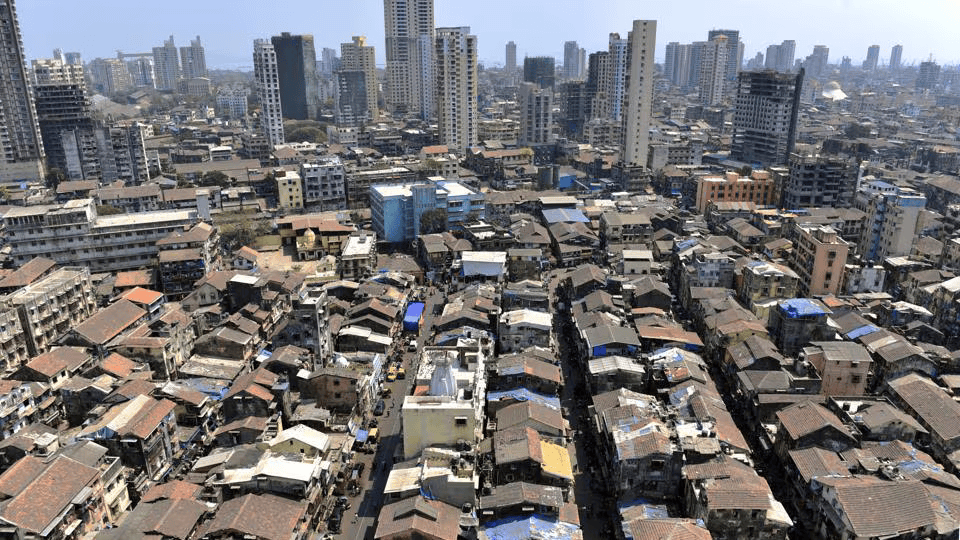
Housing affordability, defined as the capacity to buy or rent a home without straining one’s resources, is critical to urban growth. However, this presents a significant difficulty in Greater Mumbai. Greater Mumbai’s housing expenses are significantly higher than those in Pune (₹15,187) and Bengaluru (₹14,265), making home ownership unattainable for many.
The notion of housing affordability was first developed to benefit the financially disadvantaged members of society, ensuring access to secure and decent housing for people at the bottom of the economic ladder. In the Deepak Parekh Committee Report of 2008, the Indian government defined home affordability as follows:
Housing expenditures for Economically Weaker Sections (EWS) should not exceed 20% of gross household income, with a total cost of up to three times annual income.
For Low-Income Groups (LIG), costs should not exceed 30% of income, with a total cost cap of four times annual income.
For Middle-Income Groups (MIG), affordability is defined as 40% of income, with housing expenditures of up to 5 times annual income.
In Mumbai, the word “affordable housing” is interpreted variably by numerous agencies, each with their own criteria:
Section 80-IBA of the Income Tax Act:
Carpet Area: For developments approved on or after September 1, 2019, the carpet area of a residential unit in metropolitan cities, including Mumbai, must not exceed 60 square metres (646 square feet).
Unit Value: The value of the residential unit should not exceed ₹45 lakh.
Reserve Bank of India (RBI):
Loan Eligibility: Affordable housing refers to loans of up to ₹50 lakh for properties worth up to ₹65 lakh in metropolitan areas, such as Mumbai.
Goods and Services Tax (GST) Act:
Carpet Area: In metropolitan places such as Mumbai, the carpet area of a residential unit should not exceed 60 square metres (646 square feet).
Price Threshold: To qualify for the reduced GST rate of 1%, the unit’s total value must exceed ₹45 lakh.
Despite these benchmarks, the reality for India’s affluent middle class, particularly in major cities, differs. While the Pradhan Mantri Awas Yojana (PMAY) aims to address urban housing shortages among Economically Weaker Sections (EWS), Low-Income Groups (LIG), and Middle-Income Groups (MIG), including slum populations, by ensuring a pucca house for all eligible urban households, the middle class frequently finds itself unsupported in navigating the housing market.
In Greater Mumbai, the average price-to-income ratio for a 2BHK property is 8.9 times the annual salary of affluent middle-class professionals aged 35 and under, which is much more than what is deemed affordable.
Government Initiatives to Improve Affordable Housing in Mumbai
The Indian government has implemented several schemes and projects to enhance housing affordability for Mumbai, particularly targeting the economically weaker sections. However, the affluent middle class often finds these measures insufficient to meet their needs.
1. Pradhan Mantri Awas Yojana (PMAY)
PMAY, which was launched in 2015, intends to provide low-income urban and rural residents with affordable housing by 2022. Eligible participants can receive interest subsidies on their home loans under the plan. While it has benefited many lower-income individuals, the middle class frequently falls outside of the eligibility standards, reducing its impact on this group.
2. Maharashtra Housing and Area Development Authority (MHADA) Housing
MHADA holds lotteries to allot affordable housing units in Maharashtra. These flats are offered below market value, which makes them appealing. However, supply is restricted, and demand far outstrips availability, resulting in minimal chances of allocation for middle-class candidates.
3. Infrastructure Development Projects
Initiatives such as the Mumbai Metro expansion seek to increase connectivity and minimize commute times. While these projects improve the quality of life, they frequently result in higher property values in surrounding communities, making homes less affordable for the affluent middle class.
4. Affordable Rental Housing Complexes (ARHCs)
ARHCs, as a sub-scheme of PMAY-Urban, seek to provide affordable rental housing to urban migrants and economically disadvantaged communities. However, the emphasis remains on lower-income groups, with few facilities for wealthier middle-class families looking for cheap rental housing.
5. Credit-Linked Subsidy Scheme (CLSS)
CLSS, as part of PMAY, provides interest subsidies on house loans to the Economically Weaker Section (EWS), Low-Income Group (LIG), and Middle-Income Group (MIG). While it applies to the middle class, the subsidy caps and property price limits frequently do not correspond to the high property prices in major places such as Mumbai, diminishing its usefulness in this group.
Assessment of Impact and Shortcomings
While these measures have made progress in addressing housing affordability, they frequently fall short for the affluent middle class because:
Eligibility Constraints: Many systems include income limits that exclude upper-middle-class households.
Supply-Demand Mismatch: The scarcity of affordable flats leads to intense rivalry and low success rates in schemes such as MHADA lottery.
Price Limitations: Subsidies and perks are frequently restricted at unrealistically low property prices in metropolitan areas, making them ineffectual for middle-class buyers.
Indirect Price Inflation: While infrastructure improvements are beneficial, they can raise housing values in surrounding communities, making it more difficult for the middle class to afford.
Challenges Faced by the Affluent Middle Class in Mumbai’s Real Estate Market
1. Rising Costs and Stagnant Incomes
Suburban property values range from ₹25,000 to ₹27,000 per square foot, causing severe financial burden for middle-class households. A basic 2BHK property priced at ₹1.75 crore exceeds the affordability criteria of five times yearly income, forcing residents to either overstretch budgets or choose smaller dwellings.
2. Limited Impact of Government Schemes
Existing initiatives, like as the Pradhan Mantri Awas Yojana (PMAY) and the MHADA, predominantly benefit lower-income families, leaving middle-class households unprotected. Limited availability of homes priced under ₹1 crore makes accessibility challenging for this group.
3. Rising Costs Near Infrastructure Developments
Metro extensions and coastal road construction have fueled real estate inflation in the surrounding districts. While Western Suburbs has returned almost 10% over the last four quarters (Q3, 2023 to Q2, 2024), it has become tough for new investors to purchase at such high costs. Middle-class purchasers will face much greater affordability challenges.
4. Financing Challenges
Rising interest rates and strict lending criteria worsen purchasers’ financial challenges. A typical EMI for a ₹1.5 crore loan at 9% interest is ₹1.35 lakh per month, leaving little flexibility for other critical costs.
5. Shrinking Living Spaces
With the average RERA carpet space of a 2BHK apartment in Greater Mumbai decreasing from 900 sq ft in 2014-15 to 700-750 sq ft in recent years, households are facing reduced living conditions while dealing with escalating expenditures.
6. Focus on Luxury Housing
Developers’ preference for high-margin luxury buildings has resulted in a substantial gap of affordable homes. This trend marginalizes middle-class consumers, sending them to the city’s outskirts.
What is the solution to unaffordable housing in Mumbai?
Affordable housing in Mumbai is more than simply a policy issue; it is a fundamental necessity for the city’s middle-class families, who are facing rising expenses, fewer options, and smaller living spaces. Addressing Mumbai’s unaffordable housing crisis demands a sophisticated approach that combines targeted legislative reforms, innovative development initiatives, and stakeholder collaboration.

According to MHADA data, the housing authority had received 82,929 applications for the 2,640 flats as of May 23, 2026. Additionally, it received 57,718 earnest money deposits (EMDs) from individuals interested in purchasing the flats.
The last date to apply for the MHADA lottery 2026 is May 28.
According to the updated schedule released by the Mumbai Board, interested applicants can submit online applications until 11:59 p.m. on May 28, 2026, and pay the earnest money deposit online until 11:59 p.m. on May 29, 2026. Applicants may also pay the earnest money deposit via RTGS/NEFT till the working hours of the relevant bank on May 29, 2026.
The provisional list of lottery applications submitted will thereafter be published on the website https://housing.mhada.gov.in at 3:00 p.m. on June 10, 2026. Online claims and objections can be submitted until 3:00 p.m. on June 12, 2026.
The final list of accepted applications will be posted on the MHADA website at 3:00 p.m. on June 16, 2026. The date, location, and time of the computerized draw for the sale of tenements will be announced on the website shortly.
Aside from extending the application deadline twice, MHADA cut the prices of nearly half of the flats. MHADA has reduced the sale cost of 1,221 tenements in Mumbai’s Vikhroli region by 7.5%, including 610 homes that had their category reservation changed from MIG to HIG two weeks ago.
All about the MHADA lottery 2026.
The MHADA lottery 2026 has listed 2,640 affordable homes for sale in Mumbai. According to data from the MHADA website, 1,762 flats, or approximately 66%, are now under construction.
MHADA apartments for sale are now under construction in Vikhroli, Goregaon, and Borivali. According to the list, of the 1,762 flats under construction, 128 are in Borivali East, 85 in Goregaon West, and the rest in Kanamwar Nagar and Vikhroli.
Several apartments in the lottery cost between ₹2 crore and ₹4 crore. The list shows that the most inexpensive flats are above 300 sq ft in Mankhurd and Goregaon, priced at around ₹29 lakh and ₹32 lakh, respectively.
The MHADA Lottery 2026 features apartments in numerous Mumbai neighborhoods, including Vikhroli, Goregaon, Borivali, Gorai, Chembur, Bandra, Ghatkopar, Wadala, Powai, and Dadar, among others.
MHADA offers the most expensive condominium in the Tardeo district of South Mumbai, valued at ₹6.82 crore for the High Income Group (HIG). The most inexpensive property for sale by MHADA is in Mankhurd, priced at about ₹29 lakh for the Economically Weaker Section.
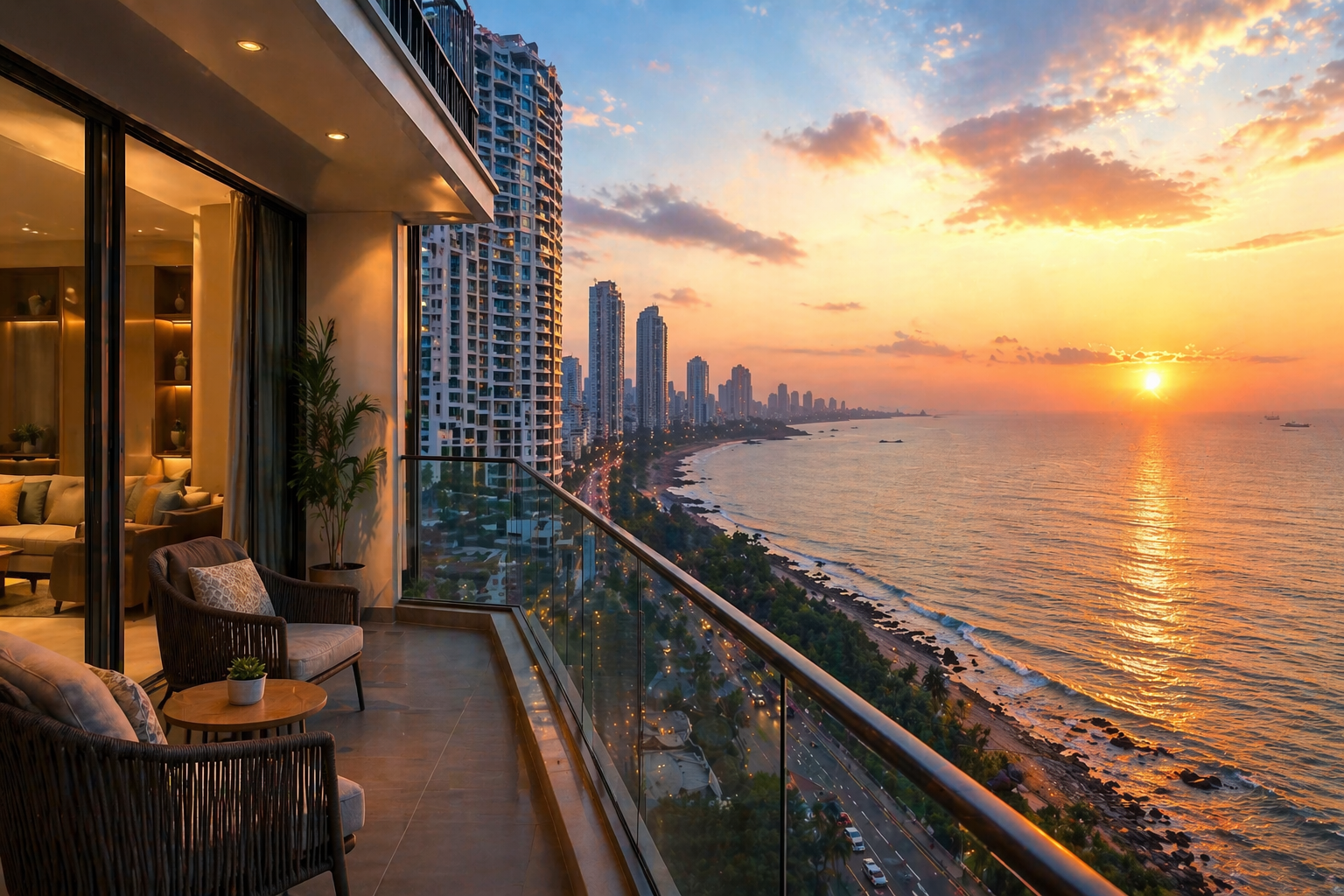
If owning a sea-view or sea-facing apartment has long been a dream but appears out of reach, there is cause to be hopeful. Several growing micro-markets continue to provide more affordable options than the city’s ultra-premium areas.
In Mumbai, popular sites such as Worli, Malabar Hill, Carter Road, Bandra Bandstand, Juhu, Marine Drive, and Walkeshwar command exorbitant rates, with sea-facing residences ranging from ₹70,000 to ₹2.5 lakh per sq ft.
However, there are sections of the Mumbai real estate market where purchasers can still obtain sea-view flats at reasonable prices. Here’s a look at some of these reasonably priced micromarkets.
1. Sewri-Wadala Belt
Sewri is emerging as an important hotspot, boosted by infrastructure enhancements such as the Mumbai Trans Harbour Link. Sea-view flats are priced at ₹35,000-45,000 per sq ft, much lower than traditional South Mumbai sea-facing areas. The combination of improved connection and very inexpensive base prices makes the area appealing to early adopters.
Developers in the Parel-Sewri belt are providing sea-view homes for between ₹40,000 and ₹50,000 per sq ft, with views of the Atal Setu, which connects South Mumbai and Navi Mumbai.
2. Versova.
Local brokers report that select pockets in Versova still provide sea-facing or partial sea-view properties in the ₹30,000-₹40,000 per sq ft range, despite the high cost in Andheri West. Versova, as opposed to the nearby Lokhandwala Complex or premium Juhu, provides a more accessible entry point and a well-developed social scene.
According to brokers, flats priced between ₹40,000 and ₹45,000 per sq ft are often in semi-old structures (5-15 years old).
3. Madh Island.
Madh Island has one of the most remarkable sea-view offerings within Mumbai’s metropolitan limits. Property costs range from ₹25,000 to ₹35,000 per sq ft, with upscale duplex units reaching ₹37,000 per sq ft.
The location currently has little connectivity, mainly via Malad, but it is accessible to Versova via ferry services. However, real estate analysts believe that the projected Versova-Madh Island bridge and the Mumbai Coastal Road (North) will greatly increase accessibility.
4. Mira Road-Bhayandar, Thane district.
Mira Road and Bhayandar, located in the Mumbai Metropolitan Region (MMR), provide affordable sea- or creek-facing apartments priced between ₹15,000 and ₹20,000 per square foot. In recent years, the neighborhoods have seen steady development, with homebuyers placing a higher value on waterfront views.
According to local brokers, land deals in these micro-markets are picking up following the announcement of the Mumbai Coastal Road North, which is scheduled to connect Versova to Virar via Mira Road and Bhayandar.
5. Ulwe, Navi Mumbai.
Ulwe, located on the other side of the harbour in Navi Mumbai, is frequently referred to as the region’s Worli equivalent. The region provides sea-facing or open sea-view apartments at rates ranging from ₹10,000 to ₹18,000 per sq ft, making it one of the most affordable options in Mumbai Metropolitan Region for homeowners wanting coastal views, according to local brokers.
While the Mumbai real estate market’s most costly sea-view flats are in neighborhoods such as Worli, Malabar Hill, and Bandra, there are still more inexpensive possibilities.

Creating affordability in the residential segment has been a well-intentioned quandary that Indian developers have been grappling with for the past decade. With real estate development principles challenged, hard-earned viewpoints have been displaced, and valuable lessons from failures have fuelled numerous success stories in this relatively tough industry.
As with the Indian real estate market, the definition of inexpensive housing varies by city and income level. This is because both the government (under PMAY) and the private sector have hurried to invest in and construct important and innovative products to address one of the world’s largest housing shortages. However, multiple factors must be present for an affordable housing project to achieve stakeholder success requirements. Customers obtaining more room and amenities for less, developers being able to spring communities for high profit margins, and institutional funds making big exits to keep capital churn at bay. A successful affordable housing project is essentially a combination of high sales velocities created by strategically targeting under-represented product niches. IRR-inspiring land purchase, FSI optimisation (often counterintuitive but important), a well-planned procurement approach, and quick execution.
As Steve Jobs once stated, “Get closer than ever to your customers.” So close that you tell them what they need before they realise it themselves.” All of the elements listed above must be combined in the proper proportions to ensure the success of affordable housing developments. It is possible that what the consumer wants does not even exist in the existing market dimension; consequently, it is vital to listen to the customers’ demands without preconceived assumptions. A project in Bhiwandi (on the suburbs of Mumbai) sold 1000 units in 2020 (yep, a complete slam dunk) by targeting an untapped virgin apartment pricing range, causing competitors to drop prices arbitrarily to maintain sales volumes. However, one aspect that enabled lower-than-market price was not lowering unit sizes, but rather deliberate FSI under-consumption (against typical practice).
Achieving this FSI tipping point reduced exposure to input costs on the majority of counts. Steel prices have risen by 50% today. Lockdowns have resulted in a significant labour shortage. Choosing MLCPs over basements for parking (although sacrificing ground covering) and lowering building heights through FSI optimisation might result in significantly higher profits for the developer despite lower ticket prices for customers and an incremental trade-off on land cost. Fast-selling ventures pay their construction because the inflow of receivables increases as the project grows.
The approach for land acquisition, approval, and financial infusion in the affordable housing context influences the project’s success even more. Lands in inexpensive micro-markets tend to appreciate as infrastructure improves and more families migrate from more established and thus pricier marketplaces. As a result, locking in the price of land now effectively minimises future potential costs. Outright land purchases best serve the mechanism by making staggered payments that level out the risk and return on capital during the approved sanction stage. Exchanging land for a portion of the area to be completed by the developer in the project is likely the maximum price some would pay for land using a finished and supremely priced-in product.
While JDAs can boost project IRRs to new heights, margins suffer, which is why outright purchases can sometimes outperform JDAs in the affordable environment. For the capital supplier, such an investment usually has a shorter cash cycle. A significant portion of the land investment can be staggered if win-win negotiation strategies are used with landlords. In the best-case scenario, a significant and ultimate tranche might coincide with the receipt of official sanction. Then, the time between a lengthy land investment and subsequent project launch is reduced to a matter of weeks. The investor’s risk switches from timely clearance to project launch success, which is a better problem to have. With proper planning and execution, cheap projects can achieve levered IRRs in the early 30s and gross PBT margins in the late teens.
A development’s creatively woven sense of community feel for customers serves as the binding glue that keeps this class of customers loyal to a specific breed of developers, resulting in significant differentiation. The developer’s ability to handle local issues on and around the site, take a hard look at construction costs, and constantly course-correct while enabling multiple avenues for making home loans and CLSS available to customers (many of whom have income instability) are also critical in resolving the difficult but immensely rewarding conundrum of affordable housing.

Ranbir Kapoor Rents Pune Trump Towers Flat for ₹4.63 Lakh/Month

AI to Drive APAC Office Demand Growth

MahaRERA Recovers ₹369 Crore from Developers, Mumbai Leads

43,000 Homes Unsold in Navi Mumbai Amid Buyer Slowdown

Vijayta Raheja Applauds India’s ₹4 Lakh Crore Urban Vision at ET Maharashtra Business Summit

K Raheja & IHG Team Up to Elevate Powai’s Hospitality Landscape
-
 Real Estate News6 months ago
43,000 Homes Unsold in Navi Mumbai Amid Buyer Slowdown
-
 Real Estate News6 months ago
Vijayta Raheja Applauds India’s ₹4 Lakh Crore Urban Vision at ET Maharashtra Business Summit
-
 New Projects & Launches6 months ago
K Raheja & IHG Team Up to Elevate Powai’s Hospitality Landscape
-
 Real Estate News6 months ago
Mumbai’s Largest MHADA Redevelopment Drive Set to Transform 923 Acres
-

 NRI Real Estate7 months ago
Will NRI Investments Drive Mumbai Housing?
-
 Global Real Estate7 months ago
Spanish Youth Hostel Group Considers London Real Estate Deals
-

 NRI Real Estate7 months ago
How NRIs Are Driving India’s Property Market?
-

 Real Estate News7 months ago
John Abraham Firm Renews Bandra Rent at ₹12L/Month