Housing affordability, defined as the capacity to buy or rent a home without straining one’s resources, is critical to urban growth. However, this presents a significant difficulty in Greater Mumbai. Greater Mumbai’s housing expenses are significantly higher than those in Pune (₹15,187) and Bengaluru (₹14,265), making home ownership unattainable for many.
The notion of housing affordability was first developed to benefit the financially disadvantaged members of society, ensuring access to secure and decent housing for people at the bottom of the economic ladder. In the Deepak Parekh Committee Report of 2008, the Indian government defined home affordability as follows:
Housing expenditures for Economically Weaker Sections (EWS) should not exceed 20% of gross household income, with a total cost of up to three times annual income.
For Low-Income Groups (LIG), costs should not exceed 30% of income, with a total cost cap of four times annual income.
For Middle-Income Groups (MIG), affordability is defined as 40% of income, with housing expenditures of up to 5 times annual income.
In Mumbai, the word “affordable housing” is interpreted variably by numerous agencies, each with their own criteria:
Section 80-IBA of the Income Tax Act:
Carpet Area: For developments approved on or after September 1, 2019, the carpet area of a residential unit in metropolitan cities, including Mumbai, must not exceed 60 square metres (646 square feet).
Unit Value: The value of the residential unit should not exceed ₹45 lakh.
Reserve Bank of India (RBI):
Loan Eligibility: Affordable housing refers to loans of up to ₹50 lakh for properties worth up to ₹65 lakh in metropolitan areas, such as Mumbai.
Goods and Services Tax (GST) Act:
Carpet Area: In metropolitan places such as Mumbai, the carpet area of a residential unit should not exceed 60 square metres (646 square feet).
Price Threshold: To qualify for the reduced GST rate of 1%, the unit’s total value must exceed ₹45 lakh.
Despite these benchmarks, the reality for India’s affluent middle class, particularly in major cities, differs. While the Pradhan Mantri Awas Yojana (PMAY) aims to address urban housing shortages among Economically Weaker Sections (EWS), Low-Income Groups (LIG), and Middle-Income Groups (MIG), including slum populations, by ensuring a pucca house for all eligible urban households, the middle class frequently finds itself unsupported in navigating the housing market.
In Greater Mumbai, the average price-to-income ratio for a 2BHK property is 8.9 times the annual salary of affluent middle-class professionals aged 35 and under, which is much more than what is deemed affordable.
Government Initiatives to Improve Affordable Housing in Mumbai
The Indian government has implemented several schemes and projects to enhance housing affordability for Mumbai, particularly targeting the economically weaker sections. However, the affluent middle class often finds these measures insufficient to meet their needs.
1. Pradhan Mantri Awas Yojana (PMAY)
PMAY, which was launched in 2015, intends to provide low-income urban and rural residents with affordable housing by 2022. Eligible participants can receive interest subsidies on their home loans under the plan. While it has benefited many lower-income individuals, the middle class frequently falls outside of the eligibility standards, reducing its impact on this group.
2. Maharashtra Housing and Area Development Authority (MHADA) Housing
MHADA holds lotteries to allot affordable housing units in Maharashtra. These flats are offered below market value, which makes them appealing. However, supply is restricted, and demand far outstrips availability, resulting in minimal chances of allocation for middle-class candidates.
3. Infrastructure Development Projects
Initiatives such as the Mumbai Metro expansion seek to increase connectivity and minimize commute times. While these projects improve the quality of life, they frequently result in higher property values in surrounding communities, making homes less affordable for the affluent middle class.
4. Affordable Rental Housing Complexes (ARHCs)
ARHCs, as a sub-scheme of PMAY-Urban, seek to provide affordable rental housing to urban migrants and economically disadvantaged communities. However, the emphasis remains on lower-income groups, with few facilities for wealthier middle-class families looking for cheap rental housing.
5. Credit-Linked Subsidy Scheme (CLSS)
CLSS, as part of PMAY, provides interest subsidies on house loans to the Economically Weaker Section (EWS), Low-Income Group (LIG), and Middle-Income Group (MIG). While it applies to the middle class, the subsidy caps and property price limits frequently do not correspond to the high property prices in major places such as Mumbai, diminishing its usefulness in this group.
Assessment of Impact and Shortcomings
While these measures have made progress in addressing housing affordability, they frequently fall short for the affluent middle class because:
Eligibility Constraints: Many systems include income limits that exclude upper-middle-class households.
Supply-Demand Mismatch: The scarcity of affordable flats leads to intense rivalry and low success rates in schemes such as MHADA lottery.
Price Limitations: Subsidies and perks are frequently restricted at unrealistically low property prices in metropolitan areas, making them ineffectual for middle-class buyers.
Indirect Price Inflation: While infrastructure improvements are beneficial, they can raise housing values in surrounding communities, making it more difficult for the middle class to afford.
Challenges Faced by the Affluent Middle Class in Mumbai’s Real Estate Market
1. Rising Costs and Stagnant Incomes
Suburban property values range from ₹25,000 to ₹27,000 per square foot, causing severe financial burden for middle-class households. A basic 2BHK property priced at ₹1.75 crore exceeds the affordability criteria of five times yearly income, forcing residents to either overstretch budgets or choose smaller dwellings.
2. Limited Impact of Government Schemes
Existing initiatives, like as the Pradhan Mantri Awas Yojana (PMAY) and the MHADA, predominantly benefit lower-income families, leaving middle-class households unprotected. Limited availability of homes priced under ₹1 crore makes accessibility challenging for this group.
3. Rising Costs Near Infrastructure Developments
Metro extensions and coastal road construction have fueled real estate inflation in the surrounding districts. While Western Suburbs has returned almost 10% over the last four quarters (Q3, 2023 to Q2, 2024), it has become tough for new investors to purchase at such high costs. Middle-class purchasers will face much greater affordability challenges.
4. Financing Challenges
Rising interest rates and strict lending criteria worsen purchasers’ financial challenges. A typical EMI for a ₹1.5 crore loan at 9% interest is ₹1.35 lakh per month, leaving little flexibility for other critical costs.
5. Shrinking Living Spaces
With the average RERA carpet space of a 2BHK apartment in Greater Mumbai decreasing from 900 sq ft in 2014-15 to 700-750 sq ft in recent years, households are facing reduced living conditions while dealing with escalating expenditures.
6. Focus on Luxury Housing
Developers’ preference for high-margin luxury buildings has resulted in a substantial gap of affordable homes. This trend marginalizes middle-class consumers, sending them to the city’s outskirts.
What is the solution to unaffordable housing in Mumbai?
Affordable housing in Mumbai is more than simply a policy issue; it is a fundamental necessity for the city’s middle-class families, who are facing rising expenses, fewer options, and smaller living spaces. Addressing Mumbai’s unaffordable housing crisis demands a sophisticated approach that combines targeted legislative reforms, innovative development initiatives, and stakeholder collaboration.



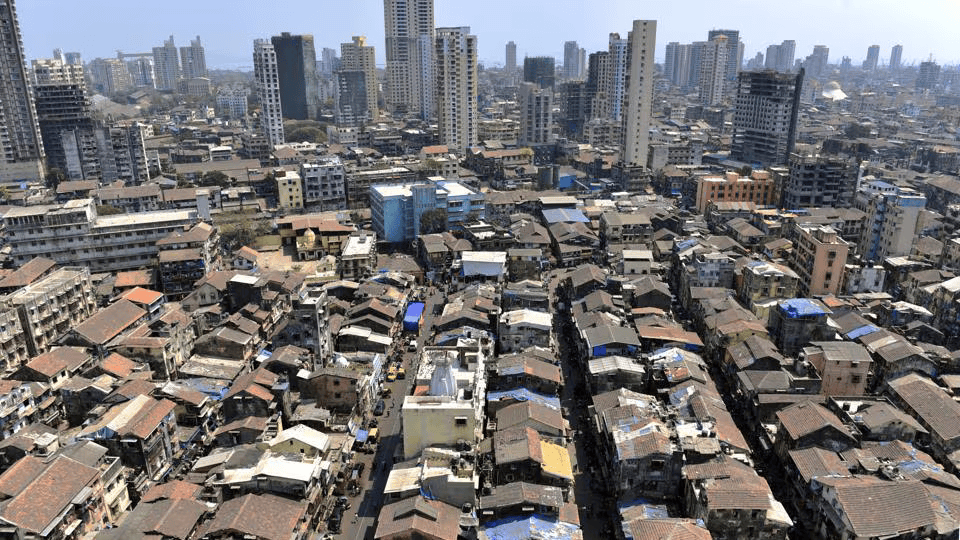 Mumbai’s Affordable Housing Challenge




No Comments