
Mumbai Real Estate
Mahindra Eyes ₹5,600 Cr from Kandivali Project

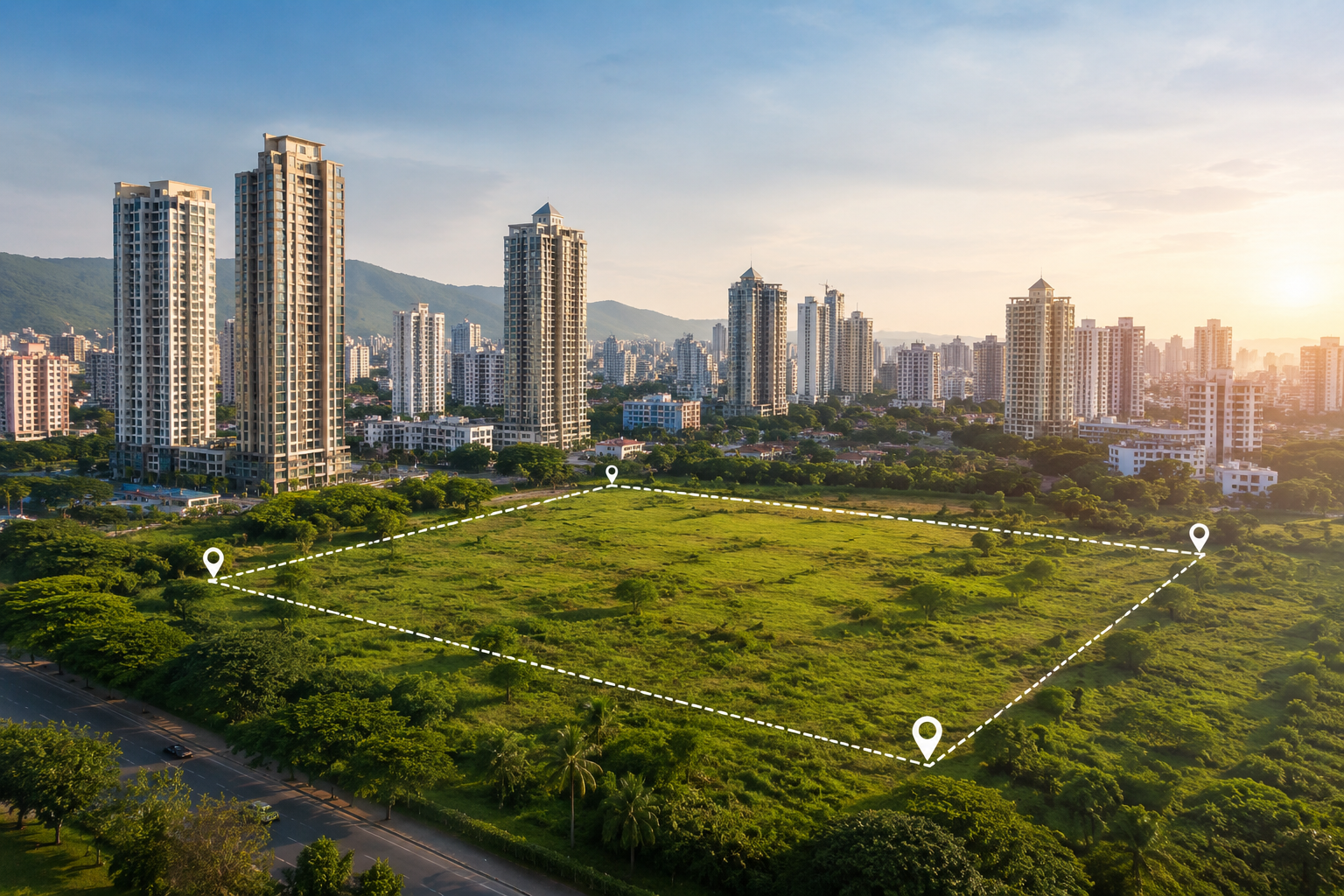
Mahindra Lifespace Developers Ltd, a publicly traded real estate developer, has purchased a 15-acre plot of land in Mumbai’s Kandivali East with plans to build a home project with a development potential of around 1.8 million square feet. The project is estimated to have a GDV of around ₹5,600 crore.
“The project’s accessibility is expected to be further enhanced by the upcoming Borivali-Thane Twin Tunnel, a landmark infrastructure initiative that is set to significantly reduce travel time between Mumbai’s western suburbs and Thane, strengthening regional connectivity and supporting the area’s long-term growth prospects,” the business said in its statement.
“We are delighted to add this project to our growing Mumbai portfolio. Mahindra Lifespace Developers Limited’s Chief Business Officer, Residential, Vimalendra Singh, stated that this acquisition strengthens the company’s presence in one of Mumbai’s most promising residential destinations. The acquisition was made through a competitive bidding process and aligns with the company’s strategy of expanding in markets with strong end-user demand and long-term growth potential. “We remain committed to delivering thoughtfully planned communities that create long-term value for both customers and stakeholders,” Singh added.
According to the firm, the property parcel in Kandivali East is conveniently located near the Western Express Highway (WEH) and existing metro routes.
Recent launch.
Mahindra Lifespace plans to open Mahindra Rainforest, a residential project in Mumbai’s Kanjurmarg region, in March 2026. The anticipated development value is ₹3,000 crore.
The business described the project as a luxury mixed-use development encompassing 25.47 acres on LBS Marg in Kanjur, Mumbai.
“The project is among the largest developments in Mumbai’s central suburbs and is envisioned as an integrated lifestyle destination,” the business stated in a statement released on March 19.
According to the firm, the residential township will be built in phases and will have 2- and 3-bedroom apartments, green spaces, community living, and a focus on climate-responsive planning and improved quality of life. The residential township will have approximately 3.5 lakh square feet of open amenities and clubhouse area, making it one of the largest in Mumbai. The development has almost seven acres of open, dense green area.


The Mumbai police have filed an extortion complaint against two Goa residents and their accomplices, alleging that they seized Rs 41 lakh and demanded Rs 6 crore from a real estate company’s agent in order to continue work on an ongoing project in the coastal state, an official said on Sunday.
The NM Joshi Marg police submitted a FIR on August 27 in response to a complaint from a liaison officer with ‘The House of Abhinandan Lodha’, who claimed that the accused threatened to halt building at the project site until payment was made, according to the official.
According to police, the accused, Siddhesh Jana Tari, Pritesh Salgaonkar, and their associates, allegedly sought Rs 6 crore from the complainant to allow the company’s Goa project to go without interruption. Tari reportedly accepted Rs 34 lakh, while Salgaonkar accepted Rs 7 lakh from the complainant in numerous instalments over the last five months, totaling Rs 41 lakh, they claimed.
However, the accused allegedly wanted Rs 10 lakh recently, and the complainant, sick up with the incessant threats and demands, approached the NM Joshi Marg police station, which has jurisdiction over the company’s office, according to the official. The police have filed a case under relevant parts of the Bharatiya Nyaya Sanhita (BNS), including provisions for extortion and criminal intimidation, and an investigation is continuing.
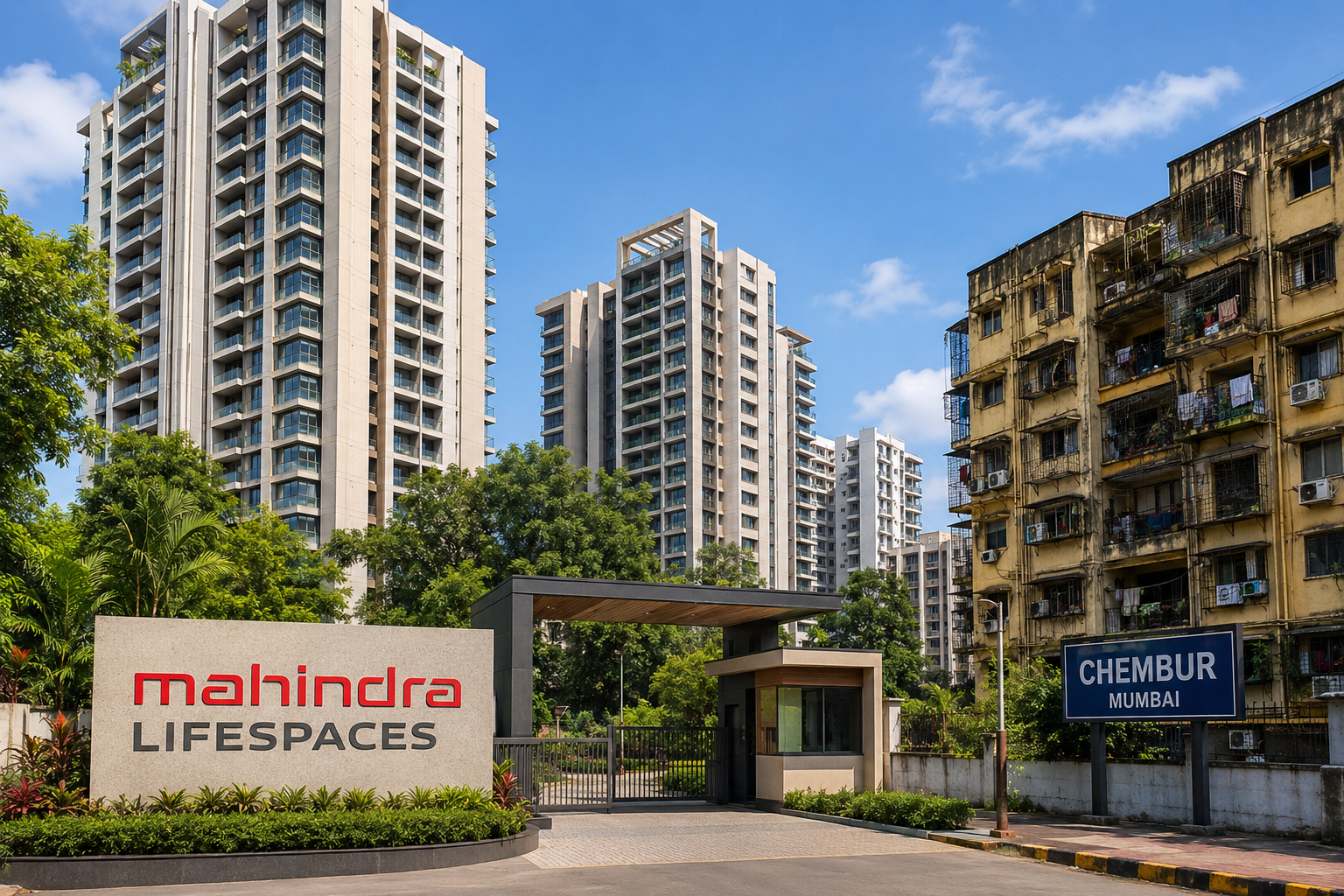
Mumbai’s redevelopment market has received another significant transaction, this time in Chembur.
Mahindra Lifespaces has entered into a development agreement for the redevelopment of Twinkle Star Co-operative Housing Society in Chembur. The agreement is valued at approximately ₹142.72 crore and was registered on August 17, 2026, according to property-registration data reported in connection with the transaction.
The deal is important not just because of its headline value.
It provides another example of how established Mumbai neighbourhoods are becoming increasingly important redevelopment markets.
What Is the Chembur Project?
The project involves approximately 11,241.7 square metres of land spread across seven plots in the Borla/Chembur area along Ghatla Village Road.
The redevelopment involves nine existing buildings and 133 existing members.
The agreement value is reported at ₹142.72 crore.
Property documents reported in connection with the transaction indicate that stamp duty of approximately ₹7.23 crore was paid.
The project demonstrates the scale at which redevelopment is now taking place in Mumbai.
Why Chembur?
Chembur has several characteristics that make it attractive to residential developers.
The locality is established.
It has access to major road networks.
It is connected to central and eastern parts of Mumbai.
It also benefits from proximity to important employment and commercial areas.
Infrastructure improvements are adding another dimension to the location.
The wider Chembur-Kurla-Sion belt is increasingly integrated into Mumbai’s evolving transport network.
That combination of established neighbourhood infrastructure and redevelopment potential makes Chembur an important micro-market.
Why Is a ₹142 Crore Agreement Significant?
A transaction of this size illustrates the commercial value developers can see in established housing societies.
For developers, redevelopment is not simply about constructing a new building.
The developer must evaluate:
- Land area
- Existing members
- Rehabilitation requirements
- Development potential
- Construction costs
- Sales potential
- Financing
- Approvals
- Market demand
The project only works if the economics make sense after considering all these factors.
Therefore, a ₹142.72 crore agreement reflects the commercial scale of the opportunity.
What Does It Mean for Existing Society Members?
For existing residents, redevelopment can potentially deliver a completely new residential environment.
Depending on the final project and agreement, members may receive new homes with modern layouts and amenities.
But the headline agreement value does not tell residents exactly how much they will receive.
The most important document for members remains the legally executed redevelopment agreement and associated documents.
Residents should carefully understand:
- New carpet area
- Corpus
- Transit rent
- Shifting expenses
- Possession timeline
- Delay compensation
- Parking
- Amenities
- Construction specifications
- Security arrangements
Why Redevelopment Deals Matter to Other Mumbai Societies
Every major redevelopment transaction can serve as a market indicator.
When established developers enter society redevelopment projects, other societies may become more aware of their own development potential.
A society that has remained unchanged for decades may begin asking:
What is our land actually worth?
That question can fundamentally change redevelopment negotiations.
However, societies should not simply compare their land with another project’s headline value.
Every property has different development rights, plot configuration, reservations, FSI/TDR conditions, existing member requirements and market conditions.
Redevelopment Is Not Just About Land Value
A common misconception is that a society can simply estimate the value of its land and demand a percentage from the developer.
The economics are more complicated.
The developer may have to bear:
- Construction costs
- Rehabilitation costs
- Rent
- Financing costs
- Approval costs
- Premiums
- Marketing expenses
- Taxes
- Infrastructure costs
- Sales and administrative expenses
The final commercial offer therefore depends on the project’s overall feasibility.
Chembur’s Infrastructure Advantage
Infrastructure can play an important role in redevelopment economics.
MMRDA has been expanding the region’s transport network, including road and metro connectivity.
The SCLR Phase-II project was inaugurated in August 2026, while the Chembur section of Metro Line 2B also became operational in August. MMRDA lists the operational phases and project status on its official website.
Better connectivity can make established neighbourhoods even more attractive to residents and developers.
Does This Mean Chembur Property Prices Will Rise?
Not automatically.
Infrastructure and redevelopment can support demand, but property prices depend on several factors.
These include:
- Supply
- Demand
- Interest rates
- Project quality
- Location
- Connectivity
- Economic conditions
- New launches
- Rental demand
A redevelopment project may improve the value of a specific building without causing a uniform increase across the entire locality.
Homebuyers should therefore evaluate individual projects rather than assuming that every Chembur property will benefit equally.
What Developers Can Learn
The Chembur transaction also demonstrates the importance of strategic land acquisition.
In a mature city such as Mumbai, developers increasingly have to look beyond traditional vacant-land purchases.
Society redevelopment offers another route to expand residential portfolios.
The ability to negotiate with residents, structure financing and execute complex redevelopment projects is therefore becoming an increasingly important development capability.
What Societies Can Learn
The transaction also offers lessons for societies.
First, understand the commercial potential of the property.
Second, obtain multiple proposals.
Third, do not evaluate developers only on the basis of additional carpet area.
Fourth, examine the developer’s financial capacity and previous redevelopment projects.
Finally, make sure the final agreement protects residents against delays and other project risks.
Chembur’s Bigger Real Estate Story
Chembur is not an isolated redevelopment story.
Across Mumbai, ageing societies are increasingly becoming redevelopment opportunities.
The pattern is logical.
Established neighbourhoods have strong existing infrastructure and demand, while new land is difficult to find.
Redevelopment allows developers to introduce new housing supply without moving to distant peripheral markets.
For residents, it can mean the transformation of ageing buildings into modern homes.
For developers, it can unlock valuable development opportunities.
Bottom Line
The ₹142.72 crore Chembur redevelopment agreement is significant because it demonstrates the scale of Mumbai’s redevelopment economy.
The project involves nine existing buildings and 133 members on approximately 11,241.7 square metres of land.
For Chembur, it reinforces the locality’s importance as an established redevelopment market.
For Mumbai’s wider housing market, it is another example of how redevelopment is becoming one of the city’s most important sources of new residential development.
Mumbai has a problem that is also becoming one of its biggest real estate opportunities: limited land and a large stock of ageing buildings.
Across the city, old residential buildings are being evaluated for redevelopment. What was once considered simply a way to replace an ageing structure has increasingly become a major real estate business opportunity.
For residents, redevelopment can mean a safer and modern building, additional carpet area, new amenities and improved common infrastructure.
For developers, it can provide access to valuable land in established neighbourhoods where acquiring a fresh development parcel is difficult and expensive.
That combination is driving Mumbai’s redevelopment market.
Recent reporting has highlighted the growing importance of redevelopment in Mumbai, where land scarcity and ageing housing stock are creating opportunities for both builder-led and self-redevelopment models.
Why Is Redevelopment Growing in Mumbai?
The basic reason is simple: Mumbai has limited developable land.
A developer looking for a large parcel in a well-established neighbourhood may find very few options.
However, an old housing society may already occupy land in an excellent location.
Instead of purchasing vacant land, a developer can potentially enter into an agreement with the existing society and redevelop the property.
This creates a different business model.
The residents provide access to the existing development opportunity, while the developer provides construction expertise, financing and project execution.
What Does a Society Gain?
Redevelopment can offer several benefits.
Larger or Better-Designed Homes
Depending on the development potential and agreement, existing members may receive apartments with additional carpet area.
However, residents should compare actual carpet area rather than relying on phrases such as “30% bigger flat.”
New Building
An ageing building can be replaced with a modern structure designed according to current regulations and standards.
Modern Amenities
A redeveloped project may include:
- New lifts
- Security systems
- Parking
- Fire-safety systems
- Modern lobbies
- Recreation areas
- Better building services
The exact amenities depend on the project and agreement.
Corpus
Society members may negotiate a corpus amount as part of the redevelopment package.
The amount and payment terms should be clearly documented.
Transit Accommodation
Residents normally need financial arrangements for the period during which the old building is demolished and the new building is constructed.
Transit rent and shifting expenses therefore become critical negotiation points.
The Biggest Mistake Societies Make
Many societies focus heavily on one number:
“How much extra area are we getting?”
But redevelopment is much more complicated than carpet area.
A developer offering slightly less area but providing stronger financial security, better transit arrangements and a stronger completion record may ultimately be a safer choice than a developer promising the largest apartment.
Residents should evaluate the entire package.
Developer Selection Matters
A society should investigate a developer before signing a redevelopment agreement.
Important questions include:
- How many redevelopment projects has the developer completed?
- Has the developer delivered projects on time?
- Does the developer have adequate financial capacity?
- Are there ongoing disputes?
- What is the company’s track record with existing society members?
- Does the developer have experience in the specific type of redevelopment?
- Who will finance construction?
The developer’s brand alone should not determine the decision.
Builder-Led vs Self-Redevelopment
Mumbai societies generally have different redevelopment models.
Builder-Led Redevelopment
The society selects a developer.
The developer executes the project and usually monetises the additional development potential.
Residents receive benefits according to the agreement.
Self-Redevelopment
The society itself takes greater responsibility for the project.
This can provide greater control and potentially greater financial participation, but it also requires substantial expertise, financing and project-management capability.
Self-redevelopment should not be treated as an easy way to eliminate developers.
It transfers many responsibilities to the society.
What Should Be in the Redevelopment Agreement?
The redevelopment agreement should clearly address the commercial and practical terms.
At minimum, residents should carefully examine:
- Existing carpet area
- New carpet area
- Corpus
- Transit rent
- Shifting charges
- Rent escalation
- Possession deadline
- Delay compensation
- Construction specifications
- Amenities
- Parking
- Bank guarantee/security
- Approvals
- Termination conditions
- Consequences of developer default
Every important promise should be documented.
A presentation made during a society meeting is not a substitute for contractual protection.
Why Transit Rent Is So Important
Imagine a society has 100 families.
The building is demolished and construction takes four years.
Those 100 families need somewhere to live.
If transit rent is inadequate, residents can face significant financial pressure.
The agreement should therefore clearly define the rent, payment timing, escalation and other shifting-related expenses.
Residents should also consider what happens if possession is delayed beyond the original construction period.
Redevelopment and Property Prices
Redevelopment can change the value proposition of a neighbourhood.
An old building may have limited amenities, inefficient layouts and structural limitations.
A new building can introduce modern apartments and facilities.
This can improve the attractiveness of the property.
But redevelopment does not automatically mean that property prices will rise by a specific percentage.
Location, market conditions, project quality, supply and demand continue to determine actual market value.
Why Developers Want Mumbai Societies
For developers, redevelopment can offer three major advantages.
First: access to established locations.
Second: potential development upside.
Third: access to markets where demand already exists.
A society in a well-connected neighbourhood can be commercially attractive because the developer does not have to create an entirely new location from scratch.
This is particularly important in mature suburbs and central Mumbai.
Redevelopment Is Also a Legal Process
Society members should not treat redevelopment as a simple builder negotiation.
There are multiple legal, financial and regulatory aspects involved.
Recent guidance on Mumbai redevelopment has specifically emphasised the importance of legal due diligence, documentation and regulatory compliance before choosing a builder-led or self-redevelopment route.
The society should therefore appoint qualified legal and technical professionals where appropriate.
What Residents Should Do Before Selecting a Builder
A sensible process can include:
- Conduct a structural and technical assessment.
- Understand the property’s title and development potential.
- Appoint professional advisors.
- Invite proposals from multiple developers.
- Compare financial and non-financial offers.
- Investigate developer track records.
- Negotiate the redevelopment agreement.
- Ensure critical protections are documented.
- Verify approvals and project feasibility.
- Obtain professional legal review before signing.
The Future of Mumbai Redevelopment
Redevelopment is unlikely to disappear.
As Mumbai’s buildings age and land remains scarce, redevelopment will continue to be a major source of new housing supply.
The market will also become more sophisticated.
Societies are becoming more aware of development potential, while developers are competing for strategically located projects.
That means residents have an opportunity—but they also need to negotiate carefully.
Bottom Line
Mumbai’s redevelopment boom is not simply about replacing old buildings.
It is about unlocking the value of land in one of India’s most land-constrained cities.
For residents, the opportunity can mean better homes and improved living conditions.
But the outcome depends heavily on the developer, agreement and execution.
The most important lesson for every society is simple:
Don’t choose a developer only because the offer looks attractive on paper. Choose a redevelopment structure that protects residents throughout the entire project.

Mumbai Police Book 2 Goa Residents in ₹41 Lakh Real Estate Extortion Case

Chembur’s ₹142 Crore Deal

SCLR Phase-II

43,000 Homes Unsold in Navi Mumbai Amid Buyer Slowdown

Vijayta Raheja Applauds India’s ₹4 Lakh Crore Urban Vision at ET Maharashtra Business Summit

K Raheja & IHG Team Up to Elevate Powai’s Hospitality Landscape
-
 Real Estate News5 months ago
43,000 Homes Unsold in Navi Mumbai Amid Buyer Slowdown
-
 Real Estate News4 months ago
Vijayta Raheja Applauds India’s ₹4 Lakh Crore Urban Vision at ET Maharashtra Business Summit
-
 New Projects & Launches5 months ago
K Raheja & IHG Team Up to Elevate Powai’s Hospitality Landscape
-
 Real Estate News5 months ago
Mumbai’s Largest MHADA Redevelopment Drive Set to Transform 923 Acres
-
 Global Real Estate5 months ago
Spanish Youth Hostel Group Considers London Real Estate Deals
-

 NRI Real Estate5 months ago
Will NRI Investments Drive Mumbai Housing?
-

 Real Estate News5 months ago
John Abraham Firm Renews Bandra Rent at ₹12L/Month
-

 NRI Real Estate5 months ago
How NRIs Are Driving India’s Property Market?