
Commercial Real Estate
Japan’s SMBC Leases 50,000 Sq Ft in BKC for ₹189 Cr


Sumitomo Mitsui Banking Corporation (SMBC), a Japanese bank, has leased roughly 50,000 square feet of office space in Mumbai’s Bandra-Kurla Complex (BKC) from Goisu Realty Private Limited, the Indian real estate arm of Japan’s Sumitomo Realty and Development Co. Ltd. Propstack obtained property registration indicating the space was rented for five years at a total rent of ₹189 crore.
The new lease includes 49,820 square feet on the upper floors of Sumitomo C65, a commercial tower in BKC. The agreement is dated October 6, 2026, and has a five-year term, according to transaction documents. The monthly rent is ₹694 per sq ft, with an estimated starting rate of ₹3.46 crore.
Using the indicated monthly rate, the annual rental cost would be around ₹41.5 crore before escalation. The agreement allows for a 15% rent increase every three years. The security deposit is ₹35.115 crores.
The agreement offers a nine-month rent-free period, with rent payments beginning in June 2027.
Japanese real estate group expands into Mumbai
Goisu Realty is a subsidiary of Japan’s Sumitomo Realty and Development that builds commercial office space in Mumbai. The Sumitomo C65 project in BKC is part of the group’s India expansion strategy, which includes long-term office development, leasing, and management models.
In 2025, US-based financial services major JP Morgan Private Limited pre-leased 1.16 lakh sq ft in a commercial tower developed by Goisu Realty Private Limited, a subsidiary of Japan’s Sumitomo Realty & Development Company, in Mumbai’s Bandra Kurla Complex (BKC) for a monthly rent of ₹6.91 crore, according to documents accessed by Propstack.
BKC- India’s most expensive commercial district.
BKC is home to various government offices, including MMRDA, GST, the Reserve Bank of India, the Income Tax Department, and the Family Court. The US consulate is also located nearby the Jio Convention Center. BKC also houses luxury hotels like the Sofitel and Trident.
Companies holding offices in BKC include Jio, Apple, Netflix, Google, Facebook, Amazon, Tesla, the National Stock Exchange, Standard Chartered Bank, WeWork, CISCO, Pfizer, Spotify, and Blackstone.


Prices in the country’s top six residential markets increased in the third quarter of 2026, with Bengaluru leading at 14.5% year on year (YoY), followed by the National Capital Region (NCR) at 10.6%, Chennai at 10.2%, and the Mumbai Metropolitan Region (MMR) at 8.9%. Pune and Hyderabad experienced the slowest growth rates, with 7.7% and 5.6%, respectively.
Following several years of price increases, more unsold inventory in several locations is restricting additional large gains, according to a recent NoBroker analysis.
Bengaluru tops price growth despite tighter supply.
Bengaluru had the fastest price rise of the six cities for the third consecutive quarter, with prices climbing 14.5% in Q1, 16% in Q2, and 14.5% in Q3. The average residential price increased to ₹11,293 per sq ft from ₹9,863 a year ago.
Demand rose 14%, while new launches declined 12%, leaving buyers with fewer new houses to select from and sustaining price growth, according to the research.
NCR prices increase, but demand remains sluggish.
NCR saw an annual price increase of 10.6%, despite the fact that high property prices continue to impact on demand. Demand declined 8% in Gurugram, 9% in Noida, and 5% throughout the rest of the region. Noida, which had been stable in Q2, experienced the highest fall.
Within the NCR, Faridabad saw the biggest price growth at 15%, followed by Noida at 11% and Gurugram at 8%.
New launches in NCR decreased 23% to 7,177 units as developers became more cautious in Gurugram, where high entry costs and expensive, large-format developments have priced homes out of reach for many purchasers. Ghaziabad, Noida, and Faridabad collectively accounted for 77% of the region’s launches, with Faridabad being the only NCR market to experience demand growth.
The Q3 pattern indicates that tighter supply is driving stronger price increase in Bengaluru, while higher supply and more moderate demand are causing slower growth in Pune and Hyderabad.
Hyderabad and Pune experience slower price rise.
Hyderabad had the slowest price growth of the six cities, gaining 5.6% to an average of ₹8,732 per sq ft, comparable to Pune’s ₹8,622 per sq ft. Hyderabad’s growth rate decreased from 9% in the second quarter to 5.1% in the first.
With a significant backlog of large project completions and low demand growth, price appreciation has been constrained, according to the research.
Prices in Pune grew 7.7%, down from 10% in the second quarter and 8% in the first quarter. The city continues to have the lowest average residential price among the six markets. With new launches increasing and demand remaining generally flat, buyers have more options, limiting price rise.
Pune and MMR are anticipated to experience active Christmas season launches.
Pune and MMR are expected to be among the most active areas for new supply during the holiday season. According to the NoBroker research, project registration activity in Maharashtra normally improves ahead of important festivals, and launches in both sectors recovered substantially in Q3 from a low base in Q3 2025.
Given the relatively flat demand in Q3, developers in Pune may be hesitant to launch new phases.
Bengaluru’s new supply is expected to continue focused in North and East Bengaluru, which had the highest launch activity in Q3. According to the research, approval activity may improve if the Greater Bengaluru Authority’s revised processes gain traction.
Hyderabad is anticipated to concentrate on finishing and selling existing large projects, particularly those in West Hyderabad. Launches in the third quarter were significantly lower than the previous year, while demand recovered. This means that developers may continue to pace new releases rather than drastically increasing supply in the foreseeable future.
Across Chennai’s major growth corridors, there will be a mix of large and small developments. Strong demand growth in Q3, combined with sustained infrastructure development and job growth, is likely to boost residential activity. However, the timing of large-scale releases may have an impact on quarterly supply figures.
NCR developers shift to relatively affordable markets.
NCR is likely to be cautious about additional supply, especially in higher-priced areas. Noida, Ghaziabad, and Faridabad had a higher percentage of Q3 launches than Gurugram, indicating a continued shift toward more affordable markets.
Demand remains a restriction, and established infrastructure corridors are projected to continue determining where developers focus future projects, according to the report.

According to Colliers India’s APAC survey study, India and Southeast Asia are the most growth-oriented clusters in the Asia Pacific region (APAC), with occupiers prioritizing portfolio resilience, talent acquisition, and future-ready facilities. According to the report, 47% of surveyed occupiers believe artificial intelligence (AI) would increase demand for a variety of developing formats.
According to the report, artificial intelligence is becoming a major driving force in workplace decision-making. Every surveyed respondent expects AI to generate new specialized professions that require distinct skills, competences, and collaboration models. Occupiers believe AI will have the largest impact on production and output, followed by skills, job positions, and workforce structures.Importantly, the study questions the premise that AI will result in widespread office closures. According to the poll research, nearly half of respondents (47%) believe AI will increase demand for various office forms and space kinds, including more collaborative, tech-enabled workspaces.
According to the report, 82% of APAC occupiers use office-centric models with a greater emphasis on efficiency and creativity, and 80% predict no significant changes to their workplace regulations in the next 12 months.
The 2027 Colliers Asia Pacific Workplace Insights report is based on a proprietary Colliers survey of 313 corporate office occupiers conducted in August 2026 in 11 Asia Pacific markets: Australia, China, Hong Kong, India, Indonesia, Japan, New Zealand, the Philippines, Singapore, South Korea, and Taiwan. The poll integrated digital replies with one-on-one client encounters and included organizations from a variety of industries and company sizes.
The book outlines the major topics that will impact workplace strategies and decisions in 2027 and beyond, drawing on information from over 300 office occupier clients in 11 important APAC markets.
India and Southeast Asia prioritize expansion, talent, and future-ready workplaces.
The research highlights India and Southeast Asia as the region’s fastest growing cluster, with occupiers focusing on portfolio resilience and future preparation.While occupants in the cluster continue to be highly sensitive to geopolitical concerns, 34% are actively seeking development and expanding their activities. According to the survey, cost efficiency and skill availability continue to be the most influential variables in location decisions, emphasizing the importance of combining expansion with operational efficiency and access to talent.
According to the research, India has emerged as a particularly attractive growth market for most multinational firms, with occupiers continuing to spend in workspaces that improve talent attraction and performance. Compared to many regional rivals, occupiers have a better appetite for upgrading to higher-quality office space and redesigning workplaces, indicating a shift toward value creation rather than cost reduction.
“India remains a high-growth office market in APAC, supported by a strong economy and continuous occupier development. Aside from high demand prospects, occupiers increasingly see the office as a strategic enabler of corporate performance, talent attraction, and collaboration,” stated Arpit Mehrotra, Managing Director, Office Services, Colliers India.
“This movement is echoed in the APAC survey, which shows that 21% of occupiers in India and Southeast Asia prioritize upgrading to higher-quality office premises, while the same proportion focus on rearranging their offices. These trends highlight an increasing emphasis on value creation, as organizations invest in workspaces that support changing workstyles and long-term success. Mehrotra believes that this flight to quality will become increasingly prominent in occupier decisions across the area.
The survey also demonstrates that, despite persistent cost concerns, occupiers across APAC are prioritizing value generation over footprint reduction. Three-quarters of respondents (75%) identified occupancy costs as an important factor affecting workplace decisions. Rather than reduce space, 40% aim to extend existing leases, while 29% intend to keep their current footprint.
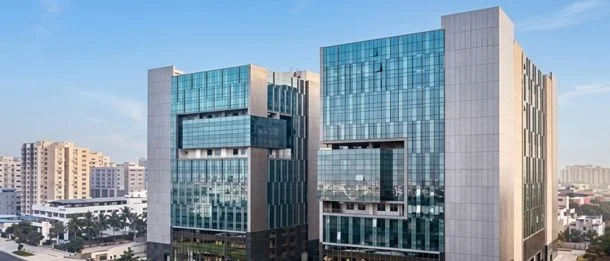
Mindspace Business Parks REIT (BSE: 543217 | NSE: MINDSPACE) has acquired 100% equity shareholding in Sycamore Properties Private Limited and Content Properties Private Limited, totaling approximately 26 lakh sq ft at Commerzone Pallikaranai on the Pallavaram-Thoraipakkam Road (PTR) in Chennai, for ₹2,541 crore. Mindspace Business Parks REIT’s Board of Managers has approved a transaction involving a preferential issue of up to ₹675 crore, subject to unitholder and regulatory approval.
Portfolio Expansion
This is Mindspace REIT’s second acquisition in Chennai since its listing, and the fifth asset acquisition from its sponsor pipeline. The sponsor is K Raheja Corp. This acquisition brings total expansions since listing to about 66 lakh sq ft and ₹8,800 crore in Gross Asset Value (GAV). The REIT’s overall leasable portfolio will expand from 390 lakh sq ft to 416 lakh sq ft, with a GAV of around ₹46,760 crore, up from ₹44,130 crore. Chennai’s part of the portfolio rises from around 3% to about 9% by area.
The purchasing price of ₹2,541 crore is a 3.4% decrease from the average of two independent valuations. The preferential issue of units costs ₹484.89 per unit. Proforma Net Operating Income (NOI) growth is expected at 10.2%, with NAV accretion of around ₹2.2/unit. The Loan-to-Value (LTV) ratio will rise slightly from around 25.6% to 28.0%.
Asset Overview
Commerzone Pallikaranai is a Grade-A office campus encompassing 12.4 acres on PTR with IGBC Platinum and WELL Platinum certifications. It presently has around 14 lakh sq ft of completed office space across two blocks, with the remaining roughly 12 lakh sq ft under development, with delivery scheduled for March 2027. The completed portfolio’s committed occupancy rate is roughly 70%. In-place rent is around ₹63 per sq ft per month, with recent deals reaching ₹85 per sq ft. Shell, a Fortune Global 500 business, occupies about 55% of the leased space.
Ramesh Nair, MD and CEO of Mindspace REIT, stated that Commerzone Pallikaranai was a strategic addition that strengthened the REIT’s footprint in Chennai, one of India’s office markets with the lowest vacancy rate. He stated that PTR was a well-established office corridor where demand continued to outperform supply, and that the acquisition would position the REIT to capture future leasing demand, rental upside, and long-term value for unit holders.

Mumbai’s Floating Billboards Spark Controversy

NMMC Warns 2,515 Property Tax Defaulters

Shree Naman Group Acquires JW Marriott Bengaluru and Crowne Plaza Pune for ₹1,800 Crore

43,000 Homes Unsold in Navi Mumbai Amid Buyer Slowdown

Vijayta Raheja Applauds India’s ₹4 Lakh Crore Urban Vision at ET Maharashtra Business Summit

Bengaluru Tops Housing Price Growth at 14.5% in Q3 2026
-
 Real Estate News7 months ago
43,000 Homes Unsold in Navi Mumbai Amid Buyer Slowdown
-
 Real Estate News6 months ago
Vijayta Raheja Applauds India’s ₹4 Lakh Crore Urban Vision at ET Maharashtra Business Summit
-
 Commercial Real Estate4 days ago
Bengaluru Tops Housing Price Growth at 14.5% in Q3 2026
-

 New Projects & Launches7 months ago
K Raheja & IHG Team Up to Elevate Powai’s Hospitality Landscape
-

 Global Real Estate7 months ago
Spanish Youth Hostel Group Considers London Real Estate Deals
-
 Real Estate News7 months ago
Mumbai’s Largest MHADA Redevelopment Drive Set to Transform 923 Acres
-

 NRI Real Estate7 months ago
Will NRI Investments Drive Mumbai Housing?
-

 NRI Real Estate7 months ago
How NRIs Are Driving India’s Property Market?