
NRI Real Estate
Indian rupee in 2026: Bears may rest a little, but cautious stance may remain

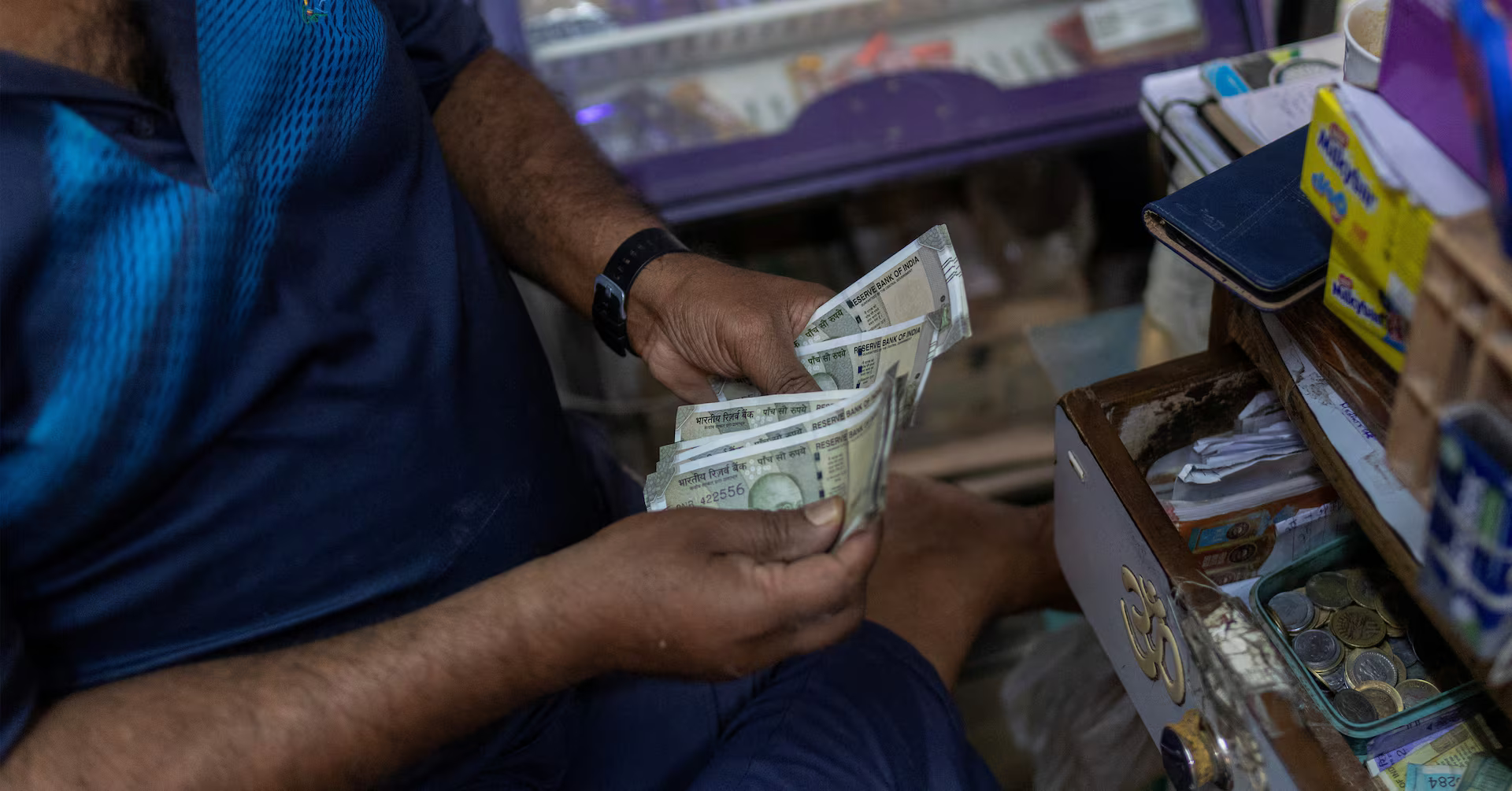
After a traumatic 2025 in which the Indian rupee fell to record lows, currency experts predict that 2026 would be a year of stabilisation rather than another leg of rapid depreciation, with the outlook depending on US-India trade negotiations and capital flow direction.
“2025 was the year of rupee bears,” stated Dilip Parmar, Senior Research Analyst at HDFC Securities.
Parmar added that ongoing capital outflows and geopolitical concerns drove the local currency to a new low, making it the region’s worst-performing currency. “Even after multiple steps taken by the government and the central bank, the rupee surrendered to the US dollar amid a demand-supply imbalance,” Parmar said, citing increasing trade deficits and delays in US-India trade treaties as the main drags.
Experts predict that USD/INR will settle in the 88-91.50 area by 2026, with markets carefully following trade discussions and capital movements.
The rupee fell roughly 4.75 percent, while the dollar index experienced one of its steepest annual drops in years.
According to Abhilash Koikkara, EVP and Head of Forex & Commodities at Nuvama Professional Clients Group, this divergence demonstrated the importance of India-specific pressures over global dollar weakening. Record foreign portfolio investor (FPI) equity outflows of roughly $19 billion, prolonged uncertainty over trade negotiations with the United States, and the application of hefty tariffs all weighed severely on mood.
“After defending key levels for over a month, the RBI stepped back, allowing the rupee to become more market-driven, which eventually led to a breach of the 91-per-dollar level for the first time,” according to Koikkara.
While the central bank intervened intermittently to prevent dramatic swings, 2025 was one of the most difficult years for the currency in recent memory.
Despite the significant decline, valuation indications have become more positive. Koikkara said that the rupee’s real effective exchange rate (REER) has fallen to roughly 97.5, below its long-term average and the lowest since 2018, indicating a slight undervaluation. Indian equities markets have also corrected from previously extended levels, paving the way for prospective inflows.
Looking ahead, Koikkara defined the forecast for 2026 as “cautiously constructive rather than outright bullish.” With much of the adjustment complete, a steady appreciation is possible if progress is made on a US-India trade accord and portfolio inflows resume following record withdrawals. “Even a partial return of flows could have a meaningful impact,” he stated!
Global influences will also have an impact. Volatility is projected to continue high due to evolving trade dynamics, AI-driven capital reallocation, and policy uncertainty, which includes US tariff decisions and the selection of the next Federal Reserve Chair. While the Fed is projected to continue easing toward neutrality, different trajectories among major central banks could result in currency volatility early this year.
External buffers enhance comfort in India. India’s strong service exports, consistent remittances, and foreign exchange reserves of about $690 billion provide major support to the currency. Historically, significant rupee movements triggered by capital flow shocks or geopolitical developments have been followed by partial reversals, particularly when speculative pressure eases or RBI support appears.
“In sum, 2025 left the rupee weaker but more competitively valued,” she said. “That sets the stage for stabilisation in 2026, provided policy clarity improves and capital flows begin to normalise.”
With values improving but uncertainty remaining high, the rupee’s course in 2026 is likely to be defined by volatility around important policy and flow-driven triggers rather than a clear direction.


NRIs make a significant number of real estate transactions throughout the country. This statement is supported by data; for example, in 2023, NRI investments in Indian real estate accounted for about 15% of the overall market. Expectations were that this number would climb to 20% by 2025, which has already occurred! Despite various processes, NRI banking regulations, and cross-border transactions, the number is increasing.
Are you an NRI looking to buy real estate in India? This guide provides crucial do’s and don’ts to assist you navigate the details.
Here’s what we’ll discuss in this article:
Real estate is becoming increasingly popular among NRIs.
Know the market before you buy.
Trust only reputable builders.
Do not skip legal checks.
Get your NRI accounts in order.
Prepare for remote property management.
Stick to the golden rule.
Why Are NRIs Interested in Indian Real Estate?
First, we’ll address the most significant question. Factors that drive an NRI’s interest include:
The rupee depreciated.
Attractive rental yields
Growing emotional and economical link with owning property in India.
Furthermore, consumer confidence has grown as a result of reforms such as the Real Estate Regulatory Authority Act (RERA). NRIs may so benefit from making real estate investments in the country.
Do your homework: research, market, and location.
Before you invest a single rupee, conduct extensive investigation. According to the Anarocks CII research, the correct city matters the most for NRIs, with Hyderabad, Bengaluru, and NCR at the top of the list. When choosing a city, consider:
Economic Growth Prospects
Infrastructure development
Rental Market Demand and Yields
Lifestyle that works for you and your family
If you’re looking to buy for rental income, choose cities with high rental yields. For personal usage, prioritize your comfort and convenience.
Choose the Right Property and Builder.
Your investment may be residential or commercial, ready to move in or under construction. However, under-construction properties should be approached with caution; only choose builders with a proven track record of timely delivery. Reputed builders not only give high-quality construction, but also transparency and after-sales support, lowering your risk significantly.
Understand Legal and Regulatory Compliance.
Legal due diligence cannot be understated. Verify:
Clear ownership titles.
No liens or legal disputes.
Approval and authorization from local authorities
Compliance with the RERA regulations
Also, educate yourself with the Foreign Exchange Management Act (FEMA) regulations. NRIs can purchase both residential and commercial properties. They are not eligible to purchase agricultural or plantation land. Hiring a legal expert for due diligence is a prudent decision that will save you from costly mistakes.
Finance Your Property: NRI Banking Essentials
Your NRI banking setup is an important consideration when buying property in India. You need to understand the duties of several accounts:
The NRE (Non-Resident External) Account is fully repatriable and maintains international profits in INR. Ideal for repatriating rental and selling revenues.
Non-Resident Ordinary (NRO) Account: For revenue obtained in India, such as rent or dividends. While it is only partially repatriable (up to $1 million per fiscal year after taxes), current income, such as rent and dividends, can be fully repatriated.
You can use these accounts to fund your property purchase, but keep in mind that cash or foreign currency notes are not permitted for property purchases in India.
Property management and repatriation of funds
The remote administration aspect of buying or owning property in India presents a significant problem for an NRI. You can hire either property management businesses or caregivers. What they can do, they can handle.
Tenant Screening
Rent Collection
Property Maintenance
Legal papers
An NRO bank account is essential for repatriating rental income or sale proceeds. NRO accounts allow for the repatriation of up to $1 million per year, after taxes.
Quick Dos and Don’ts for NRIs Buying Real Estate in India.
Do’s:
Research market trends and local growth attentively.
Confirm all property paperwork with a legal professional.
Use your NRI bank accounts wisely for payments and repatriation.
Look for reputable builders and RERA-registered projects.
Consider appointing a Power of Attorney (POA) to handle paperwork.
Don’ts:
Do not hurry to buy under-construction properties without due diligence.
Avoid paying with cash or through illegitimate ways.
Do not overlook legal compliances, including FEMA and RERA.
Don’t neglect property management after acquisition.
Final Word
Buying property in India as an NRI can be a profitable investment if done correctly. You may enjoy the benefits of Indian real estate without any trouble. How? With proper investigation, legal checks, and effective use of your NRI banking facilities. Still, if you require expert advice and personalized services.

Until a few decades ago, India’s real estate market was primarily a domestic one, driven by end users. However, today’s paradigm is fast altering. While local purchasers continue to dominate volumes, particularly in the low- and middle-income categories, a new wave of global capital is changing the upper end of the market. At the core of this transition is the resurgent Non-Resident Indian (NRI) investor, who is no longer buying properties for sentimental reasons, but is instead betting strategically on India’s urban growth story.
From premium apartments in Gurugram to second residences in Goa, and from high-yield commercial assets in Bengaluru to fractional ownership platforms in Mumbai, NRI investors are actively shaping how India’s cities are constructed, funded, and marketed. This is no longer anecdotal; it is a systemic shift. What was formerly considered an emotionally driven buy has evolved into a smart investment theory. In the process, developers have had to rethink their strategy, offering concierge-style services, gated luxury enclaves, smooth online booking platforms, and even post-possession property management solutions suited to absentee owners.
As a result, it’s not surprising that over the last decade, the share of NRIs in Indian property purchases has increased from a modest 7-10% in 2015-2018 to a projected 18-20% in 2025, according to industry reports. That translates to nearly one-fifth of the market being driven by abroad Indians, a remarkable shift that indicates more than just a diaspora reconnecting with its roots. It represents a tectonic upheaval in the investment landscape. In fact, in the luxury market, NRIs currently account for approximately 25% of all transactions in marquee developments in important cities such as Mumbai, Hyderabad, Bengaluru, and Delhi-NCR.
Several critical tailwinds are pushing this boom. Emotional links to one’s homeland are important, but the motivations are considerably more sophisticated these days. A weakening rupee, increased discretionary incomes abroad, and relative stagnation in Western property markets have made Indian real estate an appealing option. For NRIs located in the United States, United Kingdom, Canada, Singapore, and, particularly, the Gulf countries, India provides a unique combination of strong rental returns, capital appreciation, and regulatory reforms that have greatly reduced risk in the purchasing process.
The reform began in earnest after 2017, when the Real Estate (Regulation and Development) Act (RERA) was implemented, bringing much-needed accountability to a sector plagued by delays, opacity, and fly-by-night operators. RERA, together with digitized land records, streamlined FEMA requirements, and enhanced tax repatriation norms, has significantly increased offshore investor trust. The Indian government’s digital push, paired with fintech innovation and the introduction of virtual property tours, has further reduced friction in the NRI buying journey, making remote property acquisition not only feasible, but also frictionless.
The data backs this up. According to a survey by GRI Club, a worldwide real estate network, Indian real estate is on track for its third consecutive record-breaking year. In 2024 alone, residential sales in the top seven cities are expected to exceed Rs 5.1 trillion, with over 300,000 units sold. NRI investments alone are expected to account for $14-15 billion, representing a 20% rise over the previous year.
Furthermore, the sector’s openness has increased since RERA, improving NRI confidence and lowering the risks that previously plagued cross-border property purchases. According to a research by GRI Club, an international real estate organization, the industry is surpassing forecasts and is on track to record extraordinary sales for the third straight year. The sector has not only exceeded predictions, but it is also on track to achieve its third consecutive record-breaking year in sales. In the top seven cities, total residential sales in 2024 are expected to exceed INR 5.1 trillion, with over 300,000 units sold. NRI investments in Indian real estate increased by 20% in 2024, totaling around $14-15 billion over the previous year.
Inflows are not restricted to the metros. What’s noteworthy is that this capital inflow is no longer limited to typical metropolitan areas. Tier-II cities and growing corridors are experiencing an increase in demand, thanks in part to infrastructure renovations and improved connectivity. Cities like Kochi, Indore, Vishakhapatnam, and Surat are drawing NRIs looking for second homes, long-term rentals, or retirement opportunities. In reality, home values in Tier II cities have risen by roughly 79% and 125%, respectively, in the last five years, indicating an upward trend.
A large portion of this wealth is also coming from the Gulf Cooperation Council (GCC) region. NRIs from the UAE, Saudi Arabia, Oman, and Qatar are emerging as the major donors, owing to increased disposable incomes and restricted real estate investment prospects in their respective countries. With sizable Indian communities in Dubai, Abu Dhabi, and Muscat and direct access to Indian cities, real estate is becoming the default investment option for many Gulf-based expatriates.
The broader economic ramifications are similarly significant. India’s aspiration to become a $5 trillion economy by 2027 is dependent on continued capital formation, employment creation, and urbanization—pillars that real estate directly supports. With NRIs investing billions of dollars in the sector each year, they are no longer passive buyers, but active partners in India’s economic growth.
As we look ahead, it is clear that the trend of NRI investment will continue to rise. According to conservative estimates, their percentage of overall real estate investments could rise to 22-25 percent by 2026. This will increase the pressure on developers and regulators to maintain openness, assure timely delivery, and balance luxury supply with affordability requirements.
The story that NRIs are “taking over” Indian real estate is not a journalistic exaggeration, but a commercial reality. Their capital, hopes, and expectations are transforming the industry in real time. From driving innovation to redefining quality standards and moving urban policy toward global best practices, NRIs are now among the most powerful stakeholders in the Indian property industry. If properly managed, this global-local alliance has the potential to be the driving force behind India’s urban revival for decades.

As global financial markets fluctuate and investment prospects change, Non-Resident Indians (NRIs) have shifted their focus to India’s real estate sector, particularly in cities such as Mumbai. In an unstable global economic backdrop, NRIs seek secure, long-term investments, with Mumbai’s residential sector emerging as a prominent area of focus. Mulund, Thane, Bhandup, and Navi Mumbai are seeing an increase in demand from NRIs, raising the question of whether NRI investments would be the next significant trend in the city’s residential market.
Why are NRI investments in Mumbai gaining traction?
Several fundamental indicators indicate that NRI investments in Mumbai may become a significant trend in the residential real estate industry. Factors like:
1. Currency depreciation and stable home loan rates are economic drivers.
2. Emerging Neighborhoods and the Affordability Factor.
3. High Gains from Infrastructure Development and Urbanization.
4. Real Estate’s Digital Transition
5. Tax Advantages
Currency depreciation and stable home loan rates are economic drivers.
Since the rupee’s decline increases the purchasing power of foreign income, currency fluctuations have made Indian real estate more affordable for NRIs. Furthermore, NRIs now find it easier to fund their real estate acquisitions because to stable home loan interest rates, which have further streamlined the investment process. Increased investment in Mumbai’s residential sector is made possible by these financial incentives.
New Neighborhoods and the Affordability Factor
Although Mumbai is renowned for its expensive real estate, there are more reasonably priced options with significant growth potential in places like Navi Mumbai and newly developed suburbs like Thane, Mulund, and Bhandup. These regions are becoming more appealing to NRIs searching for affordable investment options that also offer strong long-term profits as a result of improved connectivity and infrastructure development.
High Gains from Infrastructure Development and Urbanization
The need for both residential and commercial spaces is being driven by Mumbai’s fast urbanization as well as the continuous expansion of business districts, IT hubs, and transportation infrastructure. Because these growth locations present chances for both steady rental returns and property value appreciation, NRIs are increasingly focusing on them. According to Magicbricks’ most recent Rental Update, the rental markets in 13 major Indian cities had a 7.4% quarter-over-quarter (QoQ) increase in average rates during Q3 2024 (July-September), hitting INR 35.8 per square foot per month—the sharpest increase in two years. Thane, for example, had a 10.9% QoQ increase, with average rentals rising to INR 37.55 and INR 33.10 per square foot, respectively. Frank’s most recent report tonight.
Real Estate’s Digital Transition
NRIs are finding it much easier to invest in Mumbai’s real estate market because to digital platforms. NRIs can now invest remotely with more confidence thanks to the development of technology like blockchain-enabled secure transactions, AI-driven suggestions, and virtual property tours. These platforms are making long-distance real estate investing more accessible and effective by eliminating obstacles that have historically been present.
Tax Benefits
An NRI is eligible for a 30% standard deduction, property tax deductions, and a home loan interest deduction. Section 80C also permits the NRI to deduct principal repayment. Section 80C also allows for the recovery of stamp duty and registration fees paid while buying a property.
In conclusion, is NRI investing going to be the next big thing?
It is very likely that NRI investments will continue to have a growing impact on Mumbai’s residential real estate market given the state of the economy, technology, and infrastructure. Mumbai is an attractive option for NRIs because to its favorable currency exchange rates, reasonably priced but very promising locations, robust returns on investment, and the convenience of digital platforms.
The degree to which NRI investments will control the market, however, depends on how stable these elements remain, even though they indicate a growing trend. The trend of NRI investment in Mumbai is expected to increase dramatically if the economy stays strong and infrastructure keeps getting better.
The future of Mumbai’s residential real estate industry is expected to be significantly shaped by NRI investments.

Mumbai Police Book 2 Goa Residents in ₹41 Lakh Real Estate Extortion Case

Chembur’s ₹142 Crore Deal

SCLR Phase-II

43,000 Homes Unsold in Navi Mumbai Amid Buyer Slowdown

Vijayta Raheja Applauds India’s ₹4 Lakh Crore Urban Vision at ET Maharashtra Business Summit

K Raheja & IHG Team Up to Elevate Powai’s Hospitality Landscape
-
 Real Estate News5 months ago
43,000 Homes Unsold in Navi Mumbai Amid Buyer Slowdown
-
 Real Estate News4 months ago
Vijayta Raheja Applauds India’s ₹4 Lakh Crore Urban Vision at ET Maharashtra Business Summit
-
 New Projects & Launches5 months ago
K Raheja & IHG Team Up to Elevate Powai’s Hospitality Landscape
-

 Real Estate News5 months ago
Mumbai’s Largest MHADA Redevelopment Drive Set to Transform 923 Acres
-

 Global Real Estate5 months ago
Spanish Youth Hostel Group Considers London Real Estate Deals
-

 NRI Real Estate5 months ago
Will NRI Investments Drive Mumbai Housing?
-

 Real Estate News5 months ago
John Abraham Firm Renews Bandra Rent at ₹12L/Month
-

 Real Estate News5 months ago
Lower Parel Sees ₹60Cr+ Luxury Property Boom