
Real Estate News
AI Powered Air Purification Debuts in Mumbai Real Estate


The advent of AI-powered “breathable buildings” marks a change in Mumbai’s real estate market from typical smart home features to health-centric infrastructure. A major pilot project will incorporate modern air filtration technologies into large-scale developments, putting indoor air quality at the forefront of urban living. This approach reflects increasing knowledge of pollution dangers and shifting shopper expectations in densely populated areas.
AI Integration in Building Infrastructure.
The innovative device combines real-time environmental sensors and artificial intelligence to dynamically optimize indoor air quality. It continuously monitors interior and outdoor conditions, changing filtration and airflow to keep the air safe. Unlike traditional systems, it more efficiently targets ultrafine particulate matter, toxic gasses, and microbiological contaminants, providing a proactive rather than reactive filtration.
From Smart Home to Healthy Buildings
For many years, developers have promoted buildings utilizing smart technologies like automation and connected gadgets. The present trend establishes “healthy buildings” as a new baseline, with air becoming a key design aspect. This shift mirrors a larger trend in urban planning that prioritizes tenant well-being over convenience and luxury.
Air Quality: A Real Estate Differentiator
Air pollution is having an increasingly negative impact on property values, particularly in big metropolitan areas. According to studies, people spend approximately 90% of their time indoors, where air quality is often worse than outside due to restricted pollution. As knowledge rises, clean indoor air could become as important as location, connectivity, and amenities in determining home demand and cost.
Scalability and Future Urban Adoption
The Mumbai prototype is intended to be a scalable platform that may be expanded to include residential and commercial projects. If proven effective, such solutions might be incorporated into the design phase rather than as add-ons. Cities with serious pollution problems, such as Delhi and Bengaluru, may implement similar systems. This has the potential to revolutionize urban living standards by making clean air a visible and monetisable characteristic in future real estate markets.


Since 2017, MahaRERA has issued ₹1,037 cr in recovery warrants against developers, with 45% recovery rate, the highest in India.
On October 15, Maharashtra Real Estate Regulatory Authority (MahaRERA) reported recovering ₹369.45 crore in compensation for homebuyers across 273 real estate projects. In the last 9 years, 516 recovery warrants worth ₹1,037 crore were issued to developers. The Mumbai real estate market had the largest recovery of dues, according to the government.
According to MahaRERA, its compensation recovery rate is 45%, making it the leading RERA authority in India in terms of compensation obtained for homebuyers.
What is a recovery warrant?
MahaRERA issues recovery orders against real estate developers who fail to deliver over property possession to homebuyers on time. Recovery warrants must be executed by the area’s district collectors.Since May 2017, MahaRERA has issued ₹1,037.86 crore in recovery orders to compensate 1,531 complainants. Of this sum, cases involving ₹104.70 crore are pending before the National Company Law Tribunal (NCLT), while cases involving ₹104.46 crore fall under the Maharashtra Protection of Interest of Depositors (in Financial Establishments) Act, 1999. MahaRERA stated that recovery proceedings for roughly ₹209.16 crore are currently prohibited.
Mumbai leads in collection.
MahaRERA has recovered ₹369.45 crore from District Collectorates, with Mumbai leading the way with ₹228 crore.
Data shows that ₹142.31 crore was recovered from the Mumbai Suburban area, followed by ₹85.80 crore from the Mumbai City district, ₹68 crore from the Pune district, ₹36 crore from the Thane City district, and ₹12 crore from the Alibaug district.
The MahaRERA reported that Nagpur district collected ₹9.65 crore, Palghar recovered ₹4.90 crore, Nashik ₹4.90 crore, Chhatrapati Sambhaji Nagar ₹3.84 crore, Sindhudurg ₹54 lakh, Solapur ₹12 lakh, and Chandrapur ₹9 lakh, bringing the outstanding compensation amount to zero.
Highest dues in Mumbai and Pune.
MahaRERA data shows that of the total ₹1,037 crore in recovery warrants issued in Maharashtra, the highest due amount is ₹878 crore from Mumbai and Pune. The Mumbai suburban district owes ₹415 crore, followed by ₹231 crore in Mumbai city and ₹230 crore in Pune.
Data shows that districts including Thane, Alibaug, Palghar, and Nagpur have recovered warrants valued over ₹146 crore.

Maharashtra is considering a major change in the way property developers collect money from homebuyers.
The state government is planning an amendment that could restrict developers from collecting more than around 75–80% of the property’s total consideration before the project’s final completion and registration. The remaining amount could be retained by the buyer until the final registration stage.
The proposal is aimed at reducing the financial risk faced by homebuyers, particularly those purchasing under-construction properties.
The development is important for Mumbai because the city’s property market has a large under-construction segment, where buyers often commit substantial amounts of money years before receiving possession.
According to recent reporting, the Maharashtra government is looking at amendments to the Registration Act that could prevent developers from taking the entire property consideration before completion. The exact percentage and implementation mechanism will depend on the final legislation or notification.
What Is the Proposed 80% Rule?
Under the proposal being discussed, a developer may be allowed to collect only around 75–80% of the property’s total consideration before final registration.
For example, suppose a homebuyer purchases a flat worth ₹1 crore.
Under a possible 80% framework:
- Property value: ₹1 crore
- Maximum amount before final registration: around ₹80 lakh
- Amount retained until registration: around ₹20 lakh
The exact structure should not be assumed until the government formally notifies the provision.
The key idea is that the buyer would retain a meaningful financial stake until the property reaches the final stage of the transaction.
Why Is This Important for Homebuyers?
Buying an under-construction home involves a major financial risk.
A buyer may begin paying for the property while construction is still underway. If the project faces delays, approval problems, funding issues or other difficulties, the buyer may have already paid a significant portion of the purchase price.
The proposed mechanism could change that risk equation.
If 20% of the consideration remains payable until final registration, buyers may have greater financial leverage during the final stage of the transaction.
This does not eliminate project risk.
It also does not mean buyers should stop checking the developer’s track record or project documents.
Instead, it could become an additional layer of protection.
What Could It Mean for Mumbai Buyers?
Mumbai has one of India’s most expensive residential markets.
For a ₹2 crore apartment, 20% represents ₹40 lakh.
For a ₹3 crore apartment, it represents ₹60 lakh.
Therefore, even a relatively small change in the payment structure could have a substantial financial impact on buyers.
For example, a buyer who is purchasing a ₹2 crore under-construction apartment could potentially retain around ₹40 lakh until the final registration stage if the final rule establishes an 80% threshold.
That could reduce the amount of money exposed before the property reaches its final legal and completion stage.
Will This Stop Delays?
Not necessarily.
This is one of the most important points homebuyers should understand.
A payment restriction cannot by itself guarantee timely possession.
Construction delays can happen because of approvals, financing, litigation, contractor issues, changes in plans or other circumstances.
The buyer must therefore continue to examine the possession date, construction progress and contractual remedies.
MahaRERA itself requires promoters to keep important project information updated, including construction progress, building details, documents, encumbrances and completion dates.
What Should Buyers Check Before Booking?
Even if the proposed rule becomes law, buyers should conduct their own due diligence.
1. Check MahaRERA Registration
Search the project on the official MahaRERA portal.
MahaRERA provides facilities for homebuyers to search registered projects and access project-related information.
2. Check the Completion Date
Don’t rely only on a sales representative’s verbal promise.
Compare the proposed possession date with the project’s official MahaRERA information and the Agreement for Sale.
3. Read the Agreement for Sale
The agreement should clearly specify the property, carpet area, consideration, payment schedule, possession terms and other important obligations.
4. Check Approvals
Buyers should verify whether the relevant approvals and commencement certificates are in place.
MahaRERA’s project-registration requirements include approvals, commencement certificates, sanctioned plans, project details and the proposed Agreement for Sale.
5. Examine the Developer’s Track Record
A large brand name should not replace due diligence.
Look at previous projects, delays, litigation, possession history and customer complaints.
Could Developers Be Affected?
The proposed rule could also change developers’ cash-flow planning.
Under the traditional construction model, customer collections are an important source of project funding.
If a portion of the consideration remains outstanding until final registration, developers may need stronger project-level financial planning.
This could potentially favour financially stronger developers who have access to institutional finance and other sources of capital.
Smaller developers may need to adapt their funding models.
Is the 80% Rule Already Law?
This distinction is extremely important.
No homebuyers should not treat the proposal as an already applicable rule.
The current reports describe a proposed change being considered by the Maharashtra government. The final percentage, conditions, applicability and effective date will depend on the government’s formal legal process.
Therefore, buyers should check the latest government notification before assuming that they can legally withhold a particular amount.
What Should Existing Buyers Do?
Existing buyers should not independently stop making scheduled payments simply because the proposed rule has been reported.
The payment obligations under their existing Agreement for Sale remain important.
If there is a dispute regarding payment, possession or construction, buyers should obtain professional legal advice and examine the applicable RERA provisions and contractual terms.
Bottom Line
Maharashtra’s proposed payment restriction could become an important development for homebuyer protection.
If implemented, retaining around 20% of the property consideration until final registration could give buyers greater financial leverage and reduce the amount of money paid before a project reaches its final stage.
But the proposal should not be viewed as a replacement for due diligence.
For Mumbai homebuyers, the safest approach remains the same: verify MahaRERA, check approvals, study the Agreement for Sale, investigate the developer’s track record and understand the payment schedule before committing large amounts of money.
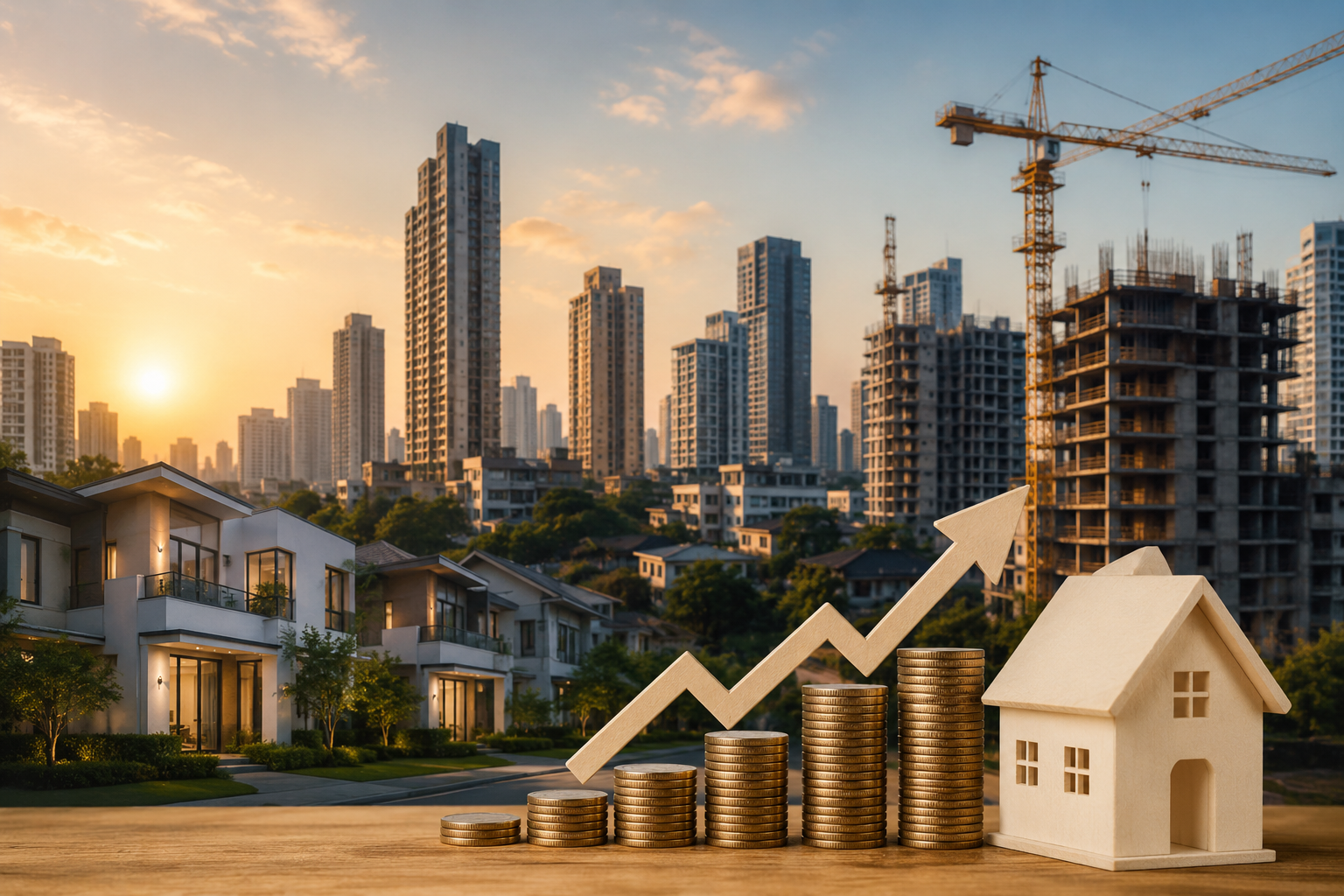
India’s residential real estate market is showing an interesting shift in 2026: home sales are slowing, but property prices continue to rise.
According to the latest Real Insight Residential Q2 2026 report by PropTiger, 91,729 homes were sold across India’s top eight residential markets during the second quarter of 2026. That represents a 6.1% decline compared with the same period last year and a 4.4% drop from the previous quarter.
At the same time, the average sales-weighted residential property price increased 1% quarter-on-quarter to ₹10,153 per sq ft, keeping the national average above the ₹10,000-per-sq-ft mark for the second consecutive quarter.
The numbers point towards a market that is not necessarily weakening, but one where buyers are becoming more selective while developers continue to maintain pricing power.
Home Sales Slow Despite Rising Property Prices
The Q2 2026 numbers reveal a widening gap between sales volumes and property prices.
Developers launched around 89,161 new housing units across the top eight cities during the quarter, compared with 91,729 homes sold. While sales declined, new launches were down 4.2% sequentially but remained 6% higher than a year earlier.
The fact that sales continue to exceed fresh supply is important. It indicates that the market has not yet entered a phase of significant inventory accumulation.
However, the decline in sales suggests that buyers are becoming increasingly cautious, particularly as property prices and overall homeownership costs rise.
For middle-income homebuyers, the question is becoming increasingly straightforward: How much more can property prices rise before affordability starts affecting demand?
Bengaluru Leads India’s Property Price Growth
Bengaluru has emerged as one of the clearest examples of the changing affordability equation.
Residential prices in Bengaluru jumped 26% year-on-year to ₹9,931 per sq ft, the highest annual price increase among the eight major markets tracked in the report.
Interestingly, sales in the city declined 9.2% YoY during the same period.
This combination of rising prices and falling sales could indicate that buyers are becoming more price-sensitive.
Pune also crossed an important threshold, with average residential prices reaching ₹8,084 per sq ft, representing a 13.7% annual increase.
These markets highlight a broader trend across India’s urban housing sector: premiumisation continues, but affordability is becoming a more important consideration.
Mumbai MMR Remains India’s Biggest Housing Market
For Mumbai’s real estate market, the numbers remain particularly significant.
The Mumbai Metropolitan Region (MMR) continued to be India’s largest residential market by both sales volume and value.
The region recorded 24,112 home sales during Q2 2026, with the average property price reaching ₹15,422 per sq ft. Prices increased 20.4% year-on-year, while sales declined around 7% compared with the previous year.
Mumbai’s performance reinforces the city’s position as one of India’s most valuable residential markets.
Limited land availability, redevelopment activity, infrastructure investment, premium housing demand and strong interest in established locations continue to support property values across the MMR.
However, the combination of high prices and softer sales also suggests that buyers in Mumbai are becoming more selective about location, apartment size, amenities and overall value.
Not Every City Is Seeing Sales Decline
Despite the national slowdown, housing demand remains strong in several markets.
Chennai recorded the strongest annual growth in sales, with volumes increasing 36% YoY to 7,183 units.
Hyderabad also performed strongly, with 13,196 homes sold during the quarter, representing 14.6% annual growth.
Kolkata recorded a particularly strong sequential recovery, with sales increasing 22% compared with the previous quarter.
On the other hand, Pune and Ahmedabad recorded annual sales declines of 20.8% and 20.2%, respectively.
This uneven performance shows that India’s residential market cannot be viewed as a single market. Local employment conditions, infrastructure, affordability, supply, investor sentiment and buyer demographics are increasingly influencing individual city markets.
Premium Homes Continue to Drive the Market
One of the biggest trends emerging from the latest data is premiumisation.
Despite weaker overall sales volumes, higher-priced homes continue to find buyers in major Indian cities.
This suggests that demand has not disappeared. Instead, the composition of demand may be changing.
Higher-income buyers continue to have purchasing power, while middle-income buyers are becoming more cautious about taking on large home loans at elevated property prices.
For developers, this creates an incentive to focus on projects with stronger locations, better amenities and higher ticket sizes.
For buyers, however, rising prices mean that the same budget may now purchase a smaller home or require moving further away from established locations.
Why Are Property Prices Still Rising?
A key question is why prices are increasing even though sales have moderated.
One explanation is the relatively balanced demand-supply situation.
With 91,729 homes sold against 89,161 new launches, developers have not flooded the market with excess inventory. This supply discipline can help support pricing even when sales volumes moderate.
Construction costs, land prices, redevelopment expenses and infrastructure-led appreciation are also important factors influencing residential prices.
In several major cities, improved connectivity and infrastructure are increasing the attractiveness of emerging micro-markets, allowing developers to command higher prices.
Is India’s Housing Market Becoming Too Expensive?
The latest numbers do not suggest an immediate housing-market crisis.
Inventory has not risen sharply, sales remain substantial and developers continue to maintain supply discipline.
But affordability is becoming the biggest issue to watch.
Bengaluru provides a clear example. Prices rose 26% in one year even as sales declined 9.2%. Pune has crossed ₹8,000 per sq ft, while MMR’s average price is already above ₹15,000 per sq ft.
If prices continue rising faster than household incomes, more buyers could postpone purchases, reduce their budgets or shift towards smaller homes and peripheral locations.
That could eventually force developers to balance their desire for price appreciation with the need to maintain sales momentum.
What Could Happen During the Festive Season?
The upcoming festive quarter could provide an important test for India’s housing market.
Festive-season demand traditionally supports property purchases, while infrastructure development and improving connectivity could continue to support several major urban markets.
If home sales recover while prices remain elevated, it would strengthen the argument that India’s housing market is entering a more mature phase rather than experiencing a fundamental slowdown.
But if sales remain weak while prices continue climbing, affordability could become a much bigger concern for developers and homebuyers.
India’s residential real estate market is entering an interesting phase.
Home sales are cooling, but property prices are still climbing.
The latest Q2 2026 data suggests that India’s housing market is not facing a major demand-supply imbalance yet. Instead, buyers appear to be becoming more selective as prices rise.
For developers, the challenge will be maintaining sales momentum without pushing prices beyond what buyers can comfortably afford.
For homebuyers, the message is equally important: location, pricing, financing costs and long-term value matter more than ever.
The next few quarters will reveal whether India’s property market can continue its premiumisation trend or whether affordability eventually puts a stronger brake on demand.
For now, the market appears to be maturing rather than collapsing—but rising prices are making affordability the biggest question in Indian real estate.

Ranbir Kapoor Rents Pune Trump Towers Flat for ₹4.63 Lakh/Month

AI to Drive APAC Office Demand Growth

MahaRERA Recovers ₹369 Crore from Developers, Mumbai Leads

43,000 Homes Unsold in Navi Mumbai Amid Buyer Slowdown

Vijayta Raheja Applauds India’s ₹4 Lakh Crore Urban Vision at ET Maharashtra Business Summit

K Raheja & IHG Team Up to Elevate Powai’s Hospitality Landscape
-
 Real Estate News6 months ago
43,000 Homes Unsold in Navi Mumbai Amid Buyer Slowdown
-
 Real Estate News6 months ago
Vijayta Raheja Applauds India’s ₹4 Lakh Crore Urban Vision at ET Maharashtra Business Summit
-
 New Projects & Launches6 months ago
K Raheja & IHG Team Up to Elevate Powai’s Hospitality Landscape
-
 Real Estate News6 months ago
Mumbai’s Largest MHADA Redevelopment Drive Set to Transform 923 Acres
-

 NRI Real Estate7 months ago
Will NRI Investments Drive Mumbai Housing?
-
 Global Real Estate7 months ago
Spanish Youth Hostel Group Considers London Real Estate Deals
-

 NRI Real Estate7 months ago
How NRIs Are Driving India’s Property Market?
-

 Real Estate News7 months ago
John Abraham Firm Renews Bandra Rent at ₹12L/Month