The top activities in Isfahan are listed in this travel guide. Isfahan is a very lovely and historically significant city in central Iran. Isfahan is said to as half of the world by Iranians. My initial motivation for traveling to Iran was the city and its renowned Naqs-e Jahan square.
With stunning Persian Islamic architecture, palaces, mosques, gardens, and a bustling bazaar renowned for its Persian carpets, the former capital of the Persian empire is now brimming with history. There are plenty of activities to do in Isfahan, as you can see, however I didn’t have the best time to visit the city.
My trip to Isfahan
On my first night, I went to the well-known Naqs-e Jahan area and saw how crowded it was. Hundreds of veiled ladies and their kids were waiting in line at the mosque’s entrance.
The women were lugging big suitcases filled with folding chairs, pillows, and blankets, and there was a joyous atmosphere. It marked the beginning of the Itikaf ceremony. at honor of Imam Ali’s birthday, people would spend three days at the mosques fasting and praying.
Sadly, it also meant that the bazaar and mosques would be closed for the next three days. Fortunately, there are so many things to do in Isfahan that I never got bored. If everything had been open, I can only image how hectic my schedule would have been.
Before I knew it, the sun was setting every day when I left in the morning to take a stroll about the town. Even though I was unable to enter the mosques, I was nonetheless impressed by the exquisite architecture and decorations. The city is also abundant of parks and gardens, which provide a much-needed break from the city’s hectic traffic and are where I met a lot of fascinating and amiable people.
It was just insufficient for me to spend three full days in this beautiful city of Isfahan. I still didn’t have enough time to do all the things I wanted to do in Isfahan. Isfahan is a city that never fails to surprise and delight you.
The top activities in Isfahan
Square of Naqs-e Jahan
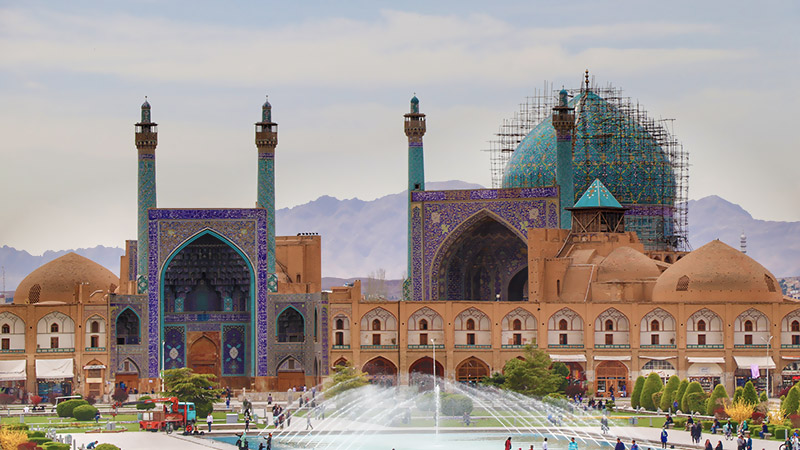
For many tourists, their first stop in Isfahan is the Naqs-e Jahan square. It is recognized as a World Heritage Site by UNESCO. The Imam Mosque, Sheikh Lotfollah Mosque, Ali Qapu Palace, and Qeysarieh Bazaar are among the stunning structures that encircle the plaza and showcase the opulence of the Safavid era.
You can spend an entire day occupied and in awe of the square alone. Every time I visited, I learned something new. From the stores and eateries to the blue-tiled entrances of the palaces and mosques. When you stroll around here, time flies.
The Shah Mosque.
The breathtaking vista of the Shah mosque is unmissable as soon as you reach the square. You may recognize it from the 20,000 rial bill.
Its sparkling dome, blue tilework, and exquisite Quranic calligraphy make it considerably more stunning in person. When Shah Abbas relocated the capital to Isfahan in 1611, construction got underway. His idea was to replace the much older Jame mosque with the Shah mosque, which would have the largest dome in the city.
Mosque of Sheikh Lotfollah
While the Shah mosque was erected for public use, King Abbas also ordered the construction of a private mosque for his royal court.
It may be little, but entering the inside dome takes your breath away. When the sun goes down and you look up at the center of the dome, the light creates the illusion of a peacock tail.
Ali Qapu Palace
King Abbas welcomed his visitors at the Ali Qapu palace, which has an entrance that is forty-eight meters high. The structure has six levels and is lavishly ornamented with wall murals. The pilkared hall on the third floor and the music hall on the sixth floor are particularly interesting. Also, remember to glance up. The ceilings are equally covered with paintings.
The Isfahan Bazaar
I was fortunate to observe the market in operation on my first night, but I also witnessed its closure. Walking through the vacant passageways allowed me to focus more on the buildings’ details. Hidden domes with tiles, colorful mosaics, and little shrines that are usually hidden from view.
It’s an experience that few people get to have because Isfahan’s bazaar is usually a congested and hectic place where sight, sound, and scent overwhelm your senses.
One of the most popular things to do in Isfahan is visit the market. It is arguably the greatest site to buy souvenirs in Iran, as several handicrafts are unique to this region. I adored the Qhalam kari art, which consisted of handprinted fabrics with flowery patterns that I had never seen before. The most typical items are tablecloths, but some businesses also sell beds, bags, and cushions.
Other Isfahani handicrafts include minakari (hand-printed floral patterns on utensils) and khatamkari (covering wooden surfaces with small bone and metal pieces). Some more common souvenirs, including as metalwork, miniature paintings, and carpets, are of particularly high quality in Isfahan.
The Jameh Mosque
The Jameh mosque may be less spectacular than the Shah mosque, but it is far older and was formerly the most significant mosque in Isfahan. Some believe the first mosque, built in 771, was already a place of worship for Zoroastrians.
What you see today is the result of numerous restorations, repairs, and expansions over history, and it is a fascinating mosque to tour.
The Hakim Mosque
The Hakim Mosque has a modest construction plan, although it is the oldest in Isfahan. It is close to the Jameh mosque and I thought it interesting due to its unique style.
The minaret of Ali mosque
With so many mosques in Isfahan, it’s easy to miss the modest Ali mosque, but it’s definitely worth a visit. The shrine within is an active site of devotion with several remarkable murals.
The Ali mosque is well known for its adjoining Ali minaret. The oldest and largest minaret in Isfahan. While most visitors come to see the minaret, I found the mosque more intriguing.
The Chehel Sotun Palace.
If you only have time to see one palace in Isfahan, make it the stunning Chehel Sotun Palace. It is one of the top things to do in Isfahan because of its stunning Persian gardens and the numerous frescoes, wall paintings, and ceiling artworks within. King Abbas erected the palace to receive guests, and the gardens are now designated as a World Heritage Site.
The Hasht Behesht Palace
The 17th-century Hasht Behesht pavillion is surrounded by lovely Persian gardens, which are free to view. I felt it was the ideal place to escape the city. A charge is required to visit the Hasht Behest Pavilion. I didn’t do this because the majority of the building can be viewed from outside.
The Gholi Agha Hammam
On my second day, I ran into a Dutch couple I had met earlier in Kurdistan. They were with a friend, who was showing them about Isfahan. I decided to accompany them on a walk to Ali Gholi Agha Hamam.
I hadn’t planned to go there because it was a little far from the center. As a result, many people ignore this modest jewel. I’m delighted I ended myself here, because I particularly liked the magnificent architecture of this antique hammam.
The hammam was constructed in 1713 during the Safavid Empire. It is currently a museum that welcomes occasional visitors.
Qazi Hammam
The Goli Agha hammam is more of a museum that shows you what it was like to visit a bathouse, whereas the Qazi hammam is still operational.
The Bridges of Isfahan
One of the most popular things to do in Isfahan is to see the iconic bridges over the Zayandeh river. I was fortunate since there was water in the river. I was told that this is unusual, and that the riverbed is usually dry. The municipality appears to have control over the water flow.
For the time being, folks enjoyed their time on the riverbanks. My favorite bridge was the stunning Khaju bridge, where I spent two evenings listening to the men who sing every night.
A visit to the iconic Zayandeh river bridges is one of the best things to do in Isfahan. I was fortunate to find water in the river. I was told that this was unusual, and that the riverbed was usually dry. The municipality appears to be controlling the flow of water.
For the time being, folks were enjoying their time on the riverbank. My favorite bridge was the lovely Khaju bridge, where I spent two evenings listening to the men who perform here every night.
Don’t miss the Si-o-se-pol bridge. It is the largest of Isfahan’s eleven bridges.
Jolfa: The Armenian Quarter
The Armenian Quarter in Isfahan is a fascinating destination to explore. The Christian neighbourhood has a distinct vibe, demonstrating Isfahan’s tolerance and multiculturalism.
There are various Armenian churches, but the most impressive is the Vank Cathedral, which features interior mural paintings.
Meeting the wonderful people of Isfahan.
I had numerous pleasant interactions with the locals of Isfahan. A woman who tried to couple me with her son in Holland, a girl who explained how she had to wear more conservative clothes because she would otherwise lose her job as a teacher, a girl who felt sad she could not go into the mosque for itikaf, the cook of the beryan restaurant who asked my advice in attracting more tourists, students who wanted to interview me for their study projects, the girl who gifted me her manteau because I told her I liked it, a student who was in Delft on an exchange project approached me for relationship advise on how to woo his Dutch lover.
I can say that my time in Isfahan was primarily spent meeting nice, pleasant, and inspirational people.
Try Persian cuisine.
Isfahan is Iran’s third largest city and an excellent site to enjoy Persian cuisine, including local specialties such as beryan and gaz. To learn all about Isfahani cuisine, I recommend Firstquest’s gastronomic walking tour. Alternatively, you can sample some of the Persian dishes and establishments listed below.
Meraj gaz : Isfahan has its own regional cuisine and specialties. First and foremost, Isfahan is famous for gaz. A white nougat-like sweet. There are plain varieties as well as those with nuts, rosewater, and saffron added. The best location to buy is Meraj Gaz, which has multiple stores across Isfahan.
Beryan on Hafez Street : Isfahan is also famous for beryan. This is sometimes mistakenly referred to as beryani, however it translates as a place to consume beryan. It also has nothing to do with the Indian rice dish biryani. Instead, it’s a dish made of minced sheep lungs and intestines. They serve the meat in folded bread with fresh herbs. I had Beryan in a modest eatery on Hafez Street, close off Naqs-e Jahan Square.
The bread and herbs were great, but the beef patty was oily and had an unusual flavor. I felt full for the rest of the day, and this was not my favorite food. The cooks were so enthused about a foreigner eating Beryan that it was an unforgettable experience.
Tea at Azadegan Tea House : Azadegan Tea House is Isfahan’s most popular tea house and is well worth a visit, even if only for the interior décor.
Bastani traditional restaurant is praised in most guidebooks. The food is ok, but the primary appeal is the atmosphere, which transports you to the Middle East.
Icecream : Icecream is available everywhere in Isfahan, but it is not the same as you would have at home. Iranians prefer things sweet. The popular Faloodeh was a little too sweet for my taste, but the vermicelli-like noodles with sugar and rosewater are a must-try. My favorite was the bright saffron-infused ice cream.
The finest things to do around Isfahan
The Soffeh Mountain Park
My hostel owner recommended that I visit Soffeh Mountain Park on the outskirts of Isfahan. Another famous picnic location among Iranian families. What distinguishes this location is the view of the city, and it is an excellent site to visit around sunset.
The Ateshgah Fire Temple
Another thing to do near Isfahan is visit Ateshgah. An ancient Zoroastrian fire temple lies atop a hill on the outskirts of Isfahan. It is a hard climb that is best done right before dusk to see the stunning view of Isfahan.
Varzaneh
Varzaneh is the nicest desert hideaway near Isfahan. Varzaneh is the location to go if you want to be alone and explore the sand dunes. Culturally, it is an interesting site to visit. Traditionally, women in Varzaneh wear a white chador rather than a black one.
How to get there: Varzaneh lies 105 kilometers southeast of Isfahan, and buses depart from Isfahan’s Jey Terminal.
Nain
Nain is a historic desert city located midway between Isfahan and Yazd. It is a convenient quick stop to visit one of Iran’s oldest mosques. It is two hours away from Isfahan and can be reached by bus in one day.
How to Get There: Buses to Nain run frequently from the Jay Terminal.
Mesr Desert
For a truly desert adventure, visit Mesr, also known as Dasht-e Kavir in Persian. With no light pollution, the desert is an ideal area to see stars. A stargazing tour from Isfahan is quite easy to plan with 1stQuest’s professional astronomy tour.
Zagros Mountains
In the spring and summer, visitors can travel from Isfahan to the stunning Zagros Mountains. These mountains are known for their nomadic communities. It would be impossible to reach this area on your own, but there are multiple trips available that include climbing over the mountains and visiting various towns, including the picturesque stepped village of Sar Agha Seyed.
Isfahan Travel Tips
Best Places to Stay in Isfahan
Booking hostels in Iran online is a bit complicated. Because of the penalties, most regular websites, such as Booking.com and Airbnb, will not work. To book your hotel in advance, you can either contact them directly or use 1stQuest.
They are one of the few firms that allow you to plan much of your trip to Iran in advance. They can book hotel rooms online, schedule airport pickups, and purchase domestic flight and bus tickets.
For a city of its size, Isfahan still lacks a sufficient number of low-cost lodgings. However, new backpacker hostels are opening in Isfahan, such as Howzak House.
How long does it take to visit Isfahan?
Isfahan has so many things to do that you’ll need at least three days to fully see the city. However, this will only allow you to see the main attractions, such as the square, market, bridges, and Jolfa.
Personally, I felt three days were insufficient for me. But I am a slow traveler, and one thing I particularly enjoyed about Isfahan was meeting the kind people. I wished I had one or two longer days to gain a deeper sense of the city and its inhabitants.
What is the ideal time to visit Isfahan?
The best times to visit Isfahan in Iran are in the spring (March to May) and fall (September to November), when the weather is calmer and more conducive to outdoor activities. During these seasons, the weather is often warm, with average temperatures ranging from 20 to 25 degrees Celsius and less rain than during the winter.
In contrast, summer (June to August) may be quite hot, with temperatures often topping 35 degrees Celsius, making daytime exploration of the city and its attractions challenging. Winter (December to February) can also be rather chilly, with temperatures plunging below freezing and the occasional snowfall.
Money is important in Isfahan.
Iran is no longer able to use the international money transfer system as a result of sanctions. There are no ATMs in Isfahan that accept foreign bank cards. You must bring all of your money in cash (euro or dollar).
How can I get around in Isfahan?
Isfahan by foot: Because Isfahan is a vast city, be prepared to walk a lot. Still, this is an excellent way to get to know Isfahan. It’s a pleasant walk from Naqs-e Jahan Square through the market to the Jame Mosque. Another picturesque walk is along the Zayandeh River to see the bridges of Isfahan.
Isfahan by bus: Isfahan has a well-developed public bus network. If you plan to spend a long period in Isfahan or travel frequently by bus, you can get the Isfahan card.
Bus 91, which connects the Kaveh bus terminal in the north of the city to the center, and the Soffeh bus terminal in the south, are two good routes to remember.
The train station is located in the southern section of Isfahan. You can take bus 37 to Soffeh bus terminal, then transfer to bus 91 to get to the centre.
Isfahan by metro: The metro opened in 2016 and is still expanding. Unfortunately, the current stations are not close to the majority of Isfahan’s tourism attractions.
There is still only one line that goes from the northwest via Kaveh bus station to Soffeh bus terminal in the south.
Isfahan by taxi: Taxis are inexpensive in Isfahan, and like with anywhere in Iran, there are shared taxis and taxis with closed doors. If you need to go somewhere quickly, hire a taxi dar bast (private). Always negotiate the price upfront.
How to Get To Isfahan
Isfahan has multiple bus stations that serve various locations. The Kaveh bus terminal in the north is the largest, with buses to Tehran, Kashan, Shiraz, Yazd, and most other destinations in Iran.
Soffeh bus station is located in the south and serves most of Iran’s southern destinations, including Shiraz.
The Jey terminal is ideal for desert cities east of Isfahan, such as Varzaneh, Nain, and Yazd.
The 1stQuest booking system allows you to check bus times and order bus tickets.
Isfahan has a train station that runs regular night trains to Tehran and Mashad. You can view the most recent timetables at Iranrail. This is not the Iranian Railways’ official website, however it contains information in English.
Security in Isfahan
Iran, particularly Isfahan, is widely regarded as a safe tourism destination, with millions of people visiting year. The city has a low crime rate. However, it is always advisable to exercise caution and take the essential safety precautions when traveling. The political environment in Iran is always changing, therefore it is important to keep informed and mindful of your surroundings.
Protests erupted in Iran in 2022 and 2023. Although this is not a reason to avoid Iran, it is important to recognize that these protests can turn violent. Avoid political demonstrations, express strong political ideas, and follow local laws. As a foreigner, it’s best to be safe than sorry.
For single female travelers, I published a piece containing suggestions and information about traveling as a woman in Iran.
Sustainable Travel in Isfahan
Tourism is a valuable source of revenue in Isfahan, but it can also have negative implications. Traveling responsibly in Isfahan entails making thoughtful decisions that reduce your environmental effect and benefit the local population.
Stay in small-scale sustainable hotels: To directly support the local economy, choose to stay in locally owned guesthouses or homestays. These accommodations often have a more favorable influence on the environment compared to huge hotels. Where possible, I can recommend staying in a homestay for a real cultural experience. To start the conversation, consider bringing a little book with images of your family.
You can also look for guesthouses or homestays that value sustainable practices. Nevertheless, environmental awareness remains poor. It is up to you to conserve water and turn off lights, air conditioning, and heating while leaving your accommodation.
Use public transit: Isfahan has a well-developed public transportation infrastructure, including shared taxis and buses. To reduce carbon emissions, take public transportation whenever possible rather than driving your own automobile.
Avoid plastics: To avoid single-use plastics, buy reusable things. For example, you can bring your own water bottle with a filter, which you can refill at your hotel. Finally, utilize biodegradable and environmentally friendly personal care products to reduce pollution of water sources.



 The Best Things to do in Isfahan: Iran’s blue city


No Comments