Pilgrims from all over the country make their way to the Chardham Yatra and the Kumbh Mela in this holy land.
Tucked away into the foothills of the mighty Himalayas, the state of Uttarakhand throws up some delightful landscapes for the discerning traveller. While adventure sports and backpacking are among top draws for visitors, Uttarakhand is also a culturally significant state owing to its prominence in Hindu pilgrimages like the Kumbh Mela and the Chardham Yatra.
The Kumbh Mahaparva Mela, Haridwar
The Kumbh Mela, held in Haridwar every twelve years, is arguably the most important religious gathering in Uttarakhand.
This pilgrimage is based on a tale about the gods and demons fighting over a pitcher or kumbh of amrut, often known as the nectar of immortality. According to legend, Lord Vishnu disguised himself as Mohini to divert the demons’ attention and successfully wrested possession of the pitcher. As the pitcher was brought to heaven, a few droplets of nectar are reported to have dropped on India’s four towns of Nashik, Ujjain, Prayagraj, and Haridwar. As a result, millions of people travel to these areas for the Kumbh Mela, expecting to take a bath in the rivers that run by these cities, as the waters are said to have absorbed the nectar of eternal life. Furthermore, the entire trip of the kumbh is said to have lasted twelve divine days, or twelve human years. Thus, each of these cities celebrates the Kumbh Mela four times over a twelve-year period. The festival has been included to UNESCO’s List of Intangible Cultural Heritage due to the large number of pilgrims and its spiritual significance to Hindus.
The Chardham Yatra
Yamunotri, Gangotri, Kedarnath, and Badrinath are four pilgrimage sites located in Uttarakhand’s high terrain. These four places, which are typically traveled from west to east, are known as the Chardham Yatra and draw thousands of pilgrims each year. The journey is not for the faint of heart or mind, as it winds through perilous mountain passes at times, but those who persevere are rewarded with breathtaking views of the Himalayas, mountain streams, verdant valleys, and the friendship of fellow travelers.
While Haridwar is not one of the Char Dham temples, it is frequently utilized as the beginning point for the Char Dham Yatra due to its proximity and status as a prominent religious hub in Uttarakhand.
Here’s a quick synopsis of the Char Dham Yatra in Haridwar:
Yamunotri
The first stop on the Char Dham Yatra is Yamunotri. The Yamunotri glacier in Uttarkashi district, to the west, feeds the mountain spring that eventually becomes the great Yamuna, which flows through North India. It is located at an altitude of 3,293 metres and is flanked by snow-capped Himalayan peaks along the Indo-China border. The river Yamuna is supposed to be Lord Yama’s sister. Thus, it is thought that a dip in the holy waters of this river guarantees a painless death for mankind. Aside from the Yamunotri temple, the location is well-known for its hot springs, which are best experienced at Surya Kund, where the water is claimed to reach temperatures of up to 1900 degrees. Farheneit and the people are known for using the water to cook rice and potatoes!
Gangotri
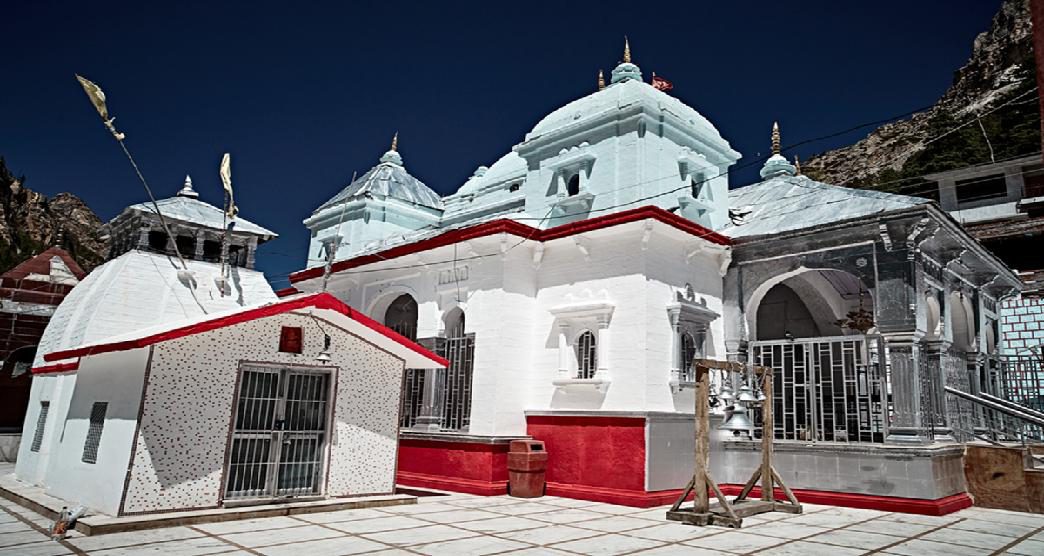
The next stop on the Chardham Yatra is Gangotri, which is regarded as the origin of the Ganga, one of India’s most important rivers, both culturally and biologically. The river, however, is known as Bhagirathi when it begins at Gangotri. The river Ganga is not formed until it combines with the waters of the Alaknanda at Devprayag.
The goddess Ganga tale, on the other hand, is linked with Gangotri rather than Devprayag: it is said that the goddess Ganga changed herself into a river at Gangotri to wash away the sins of King Bhagirath’s predecessors.
Tourists can visit the Bhairon Ghati temple, located near the junction of the Jat Ganga and Bhagirathi rivers, and see the Jalmagna Shivling, a naturally formed rock Shivling that is submerged below.
Kedarnath
After visiting Gangotri, you move on to Kedarnath. The Kedarnath Mandir dedicated to Lord Shiva goes back more than a thousand years, when it was constructed by Adi Shankaracharya. Evidence of the temple’s historical provenance is borne out by Pali inscriptions in the inner sanctums in the temple, and a quaint architectural style. Like Yamunotri and Gangotri, Kedarnath is also situated close to the Chorbari glacier, which is the point of origin for the River Mandakini. Additionally, adventure junkies can embark on treks to the nearby Gaurikund Lake or the challenging Chorbari Bamak Glacier. Another interesting culture trip is an excursion to the nearby village of Triyuginarayan, a site of pilgrimage in its own right.
Badrinath
The last stop on the Chardham Yatra is the Badrinath shrine in the Chamoli district of Uttarakhand. The colourful temple is set against the panoramic backdrop of the Nar and Narayan mountain ranges in the Himalayas, with the peak of the Neelkanth mountain rising towards the sky, towering over the rest. The site is supposed to have been the residence of Lord Shiva before Lord Vishnu unseated him and made his own home there with his wife, the goddess Lakshmi. The place gets its name from the berries or badri that grow abundantly in these parts. Among the four sites on this pilgrimage, Badrinath probably offers the widest range of tourist spots for visitors to enjoy including thermal springs like Tapt Kund and Narad Kund and the Charanpaduka meadow which comes alive with a carpet of wild flowers in the summer.
Haridwar, being a major city in Uttarakhand, serves as a gateway for pilgrims embarking on the Char Dham Yatra. Pilgrims often take buses or hire vehicles from Haridwar to reach Yamunotri, the starting point of the Char Dham Yatra. The yatra usually takes several days to complete, and the route offers stunning views of the Himalayas and the sacred Ganges River.
Before undertaking the Char Dham Yatra, it is essential to plan and prepare adequately, as the journey involves visiting high-altitude areas with varying weather conditions. It’s also advisable to check the current guidelines and conditions, as they may change over time.



 On the path to divinity from Haridwar, Uttarakhand.



No Comments