



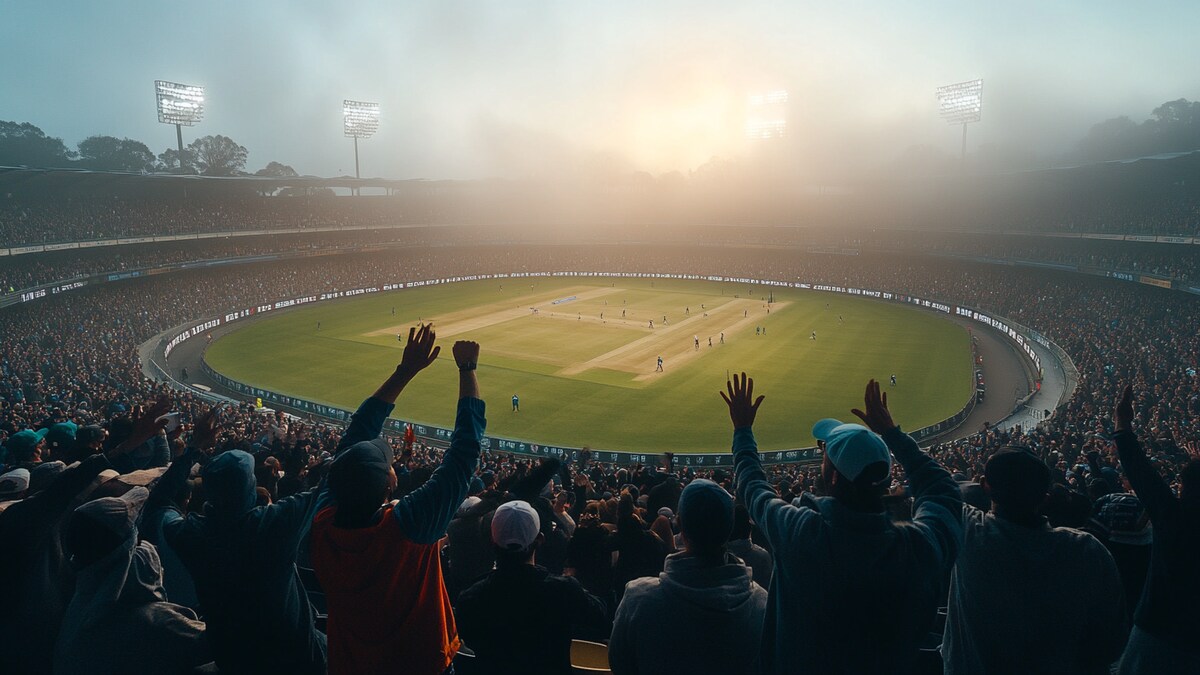
 largest cricket stadium
Cricket’s enormous popularity in India has resulted in the construction of some of the world’s largest stadiums, notably the Narendra Modi Stadium in Ahmedabad, which can accommodate 1,32,000 people. With over 50 international venues, including the renowned Eden Gardens, Wankhede, and Chepauk, India tops the cricket infrastructure. On that point, here is a comprehensive list of cricket stadiums in India, along with information on upcoming ones.
Table of Contents
- What are the largest cricket grounds in India?
- Here is the list of India’s biggest stadiums:
- Key data about some of India’s most famous cricket grounds
- Narendra Modi Stadium, Ahmedabad
- Eden Gardens, Kolkata
- Shaheed Veer Narayan Singh International Cricket Stadium, Chhattisgarh
- Greenfield International Stadium, Trivandrum
- Ekana Cricket Stadium, Lucknow
- JSCA International Cricket Stadium, Ranchi
- Barabati Stadium, Cuttack
- Vidarbha Cricket Association Stadium, Nagpur
- Rajiv Gandhi International Cricket Stadium, Hyderabad
- Chepauk Stadium, Chennai
- M. Chinnaswamy Stadium, Bangalore
- Wankhede Stadium, Mumbai
- Saurashtra Cricket Association Stadium, Rajkot
- Cricket stadium in Noida
India has a long history of sports, ranging from hockey and kabaddi to wrestling and boxing; the country has welcomed and enjoyed all sports. However, nothing compares to cricket’s immense appeal. Cricket maintains a particular place in the hearts of every Indian, with matches taking place all year round, from international events to the Indian Premier League.
Want to know where the major cricket events take place? Continue reading to find out which are India’s largest cricket venues by capacity!
What are the largest cricket grounds in India?
Many cricket grounds, including Eden Gardens and Motera Stadium, have been renovated and expanded throughout the years to suit an increasing number of sports aficionados. The scale has grown to the point where India now has some of the largest cricket venues in terms of capacity.
Here is the list of India’s biggest stadiums:
| Rank | Stadium | Location | Capacity | Home teams |
| 1 | Narendra Modi Stadium | Ahmedabad, Gujarat | 132,000 | Gujarat Titans; Gujarat cricket team |
| 2 | Eden Gardens | Kolkata, West Bengal | 68,000 | Bengal; Kolkata Knight Riders |
| 3 | Shaheed Veer Narayan Singh Intl. Stadium | Nava Raipur, Chhattisgarh | 65,000 | Chhattisgarh; Delhi Capitals (alt. venue) |
| 4 | BRSABV Ekana Cricket Stadium | Lucknow, Uttar Pradesh | 50,000 | Uttar Pradesh; Lucknow Super Giants |
| 5 | Greenfield International Stadium | Thiruvananthapuram, Kerala | 50,000 | Kerala |
| 6 | JSCA International Stadium Complex | Ranchi, Jharkhand | 50,000 | Jharkhand |
| 7 | Barabati Stadium | Cuttack, Odisha | 45,000 | Odisha |
| 8 | Vidarbha Cricket Association Stadium (Jamtha) | Nagpur, Maharashtra | 44,904 | Vidarbha |
| 9 | MCA International Stadium | Gahunje (Pune), Maharashtra | 42,700 | Maharashtra |
| 10 | Barsapara (ACA) Cricket Stadium | Guwahati, Assam | 40,000 | Assam; Rajasthan Royals (alt. venue) |
| 11 | Rajiv Gandhi International Cricket Stadium | Hyderabad, Telangana | 39,200 | Hyderabad; Sunrisers Hyderabad |
| 12 | M. A. Chidambaram Stadium (Chepauk) | Chennai, Tamil Nadu | 38,000 | Tamil Nadu; Chennai Super Kings |
| 13 | Arun Jaitley Stadium | New Delhi | 35,200 | Delhi |
| 14 | M. Chinnaswamy Stadium | Bangalore, Karnataka | 35,000 | Karnataka; Royal Challengers Bengaluru |
| 15 | Wankhede Stadium | Mumbai, Maharashtra | 33,108 | Mumbai; Mumbai Indians |
| 16 | Holkar Stadium | Indore, Madhya Pradesh | 30,000 | Madhya Pradesh |
| 17 | Saurashtra Cricket Association (Niranjan Shah) Stadium | Rajkot, Gujarat | 28,000 | Saurashtra |
| 18 | Dr. YS Rajasekhara Reddy International Cricket Stadium | Visakhapatnam | 27,500 | Andhra |
Key data about some of India’s most famous cricket grounds
Cricket fields are often measured in terms of spectator seating capacity. Read on to learn more about India’s largest cricket stadiums.
Narendra Modi Stadium, Ahmedabad
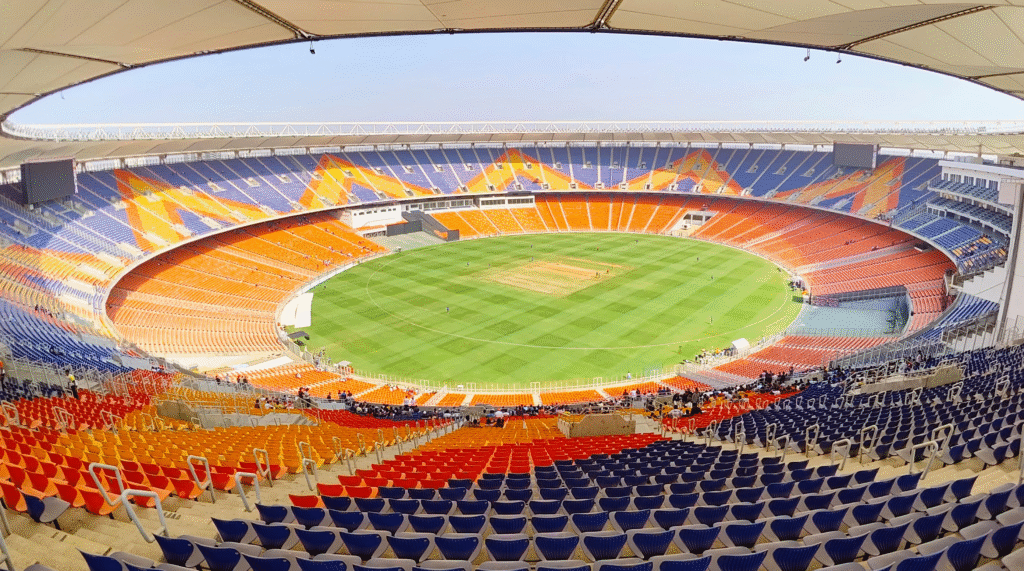
The Narendra Modi arena, formerly known as Sardar Patel Stadium or Motera Stadium, is India’s largest cricket arena. The Motera stadium, built in 1983, was dismantled in 2015 and rebuilt, with a reopening scheduled for 2020. It is also the world’s largest cricket stadium, having surpassed Melbourne Cricket Stadium.
The Narendra Modi Stadium in Ahmedabad has a capacity of 1.32 lakh spectators with 49,000 seats, whereas the Melbourne Cricket Ground can accommodate 1 lakh people.
The stadium has a circular roof over all of the stands, four dressing rooms, 76 corporate boxes, and a parking lot that can hold up to 3,000 cars. The stadium’s playing field is 180 metres long and 150 metres wide, with a 360-degree LED scoreboard showing live scores, replays and commercials.
Other notable features of the stadium include a cricket museum, library, and indoor cricket academy.
Eden Gardens, Kolkata
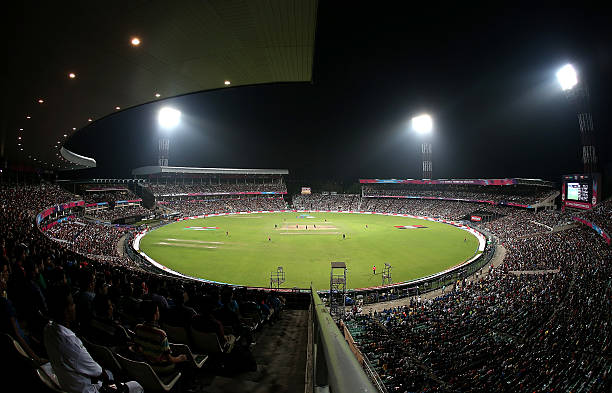
Established in 1864, Eden Gardens in Kolkata is the oldest and the second-largest cricket stadium in India, with a capacity of 68,000 people. Historically, its capacity was expanded to 100,000 from 40,000 during the 1987 World Cup and later reduced for safety reasons. It was revamped again in 2011 for the ICC (International Cricket Council) 2011 World Cup. The capacity was then fixed at 68,000 from the previous capacity near 94,000.
Eden Gardens Kolkata has had various restorations over the years, with the most recent occurring in 2020. The stadium has four stands, including the legendary B.C. Roy Clubhouse, which provides panoramic views of the playing field. It has modern amenities such as floodlights for day-night matches, a high-tech scoreboard, and a media area that can seat approximately 80 journalists.
Shaheed Veer Narayan Singh International Cricket Stadium, Chhattisgarh
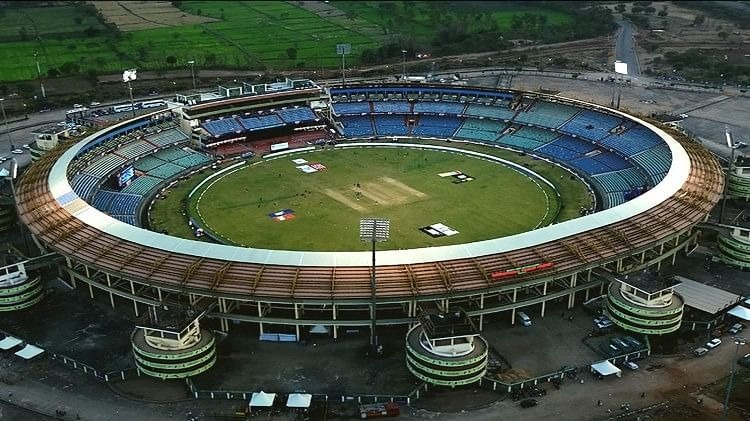
Shaheed Veer Narayan Singh International Cricket Stadium in Naya Raipur has a seating capacity of around 65,000, making it India’s third largest cricket stadium and the fourth largest in the world. It was inaugurated in 2008 and is named after Veer Narayan Singh Binjhwar, a Chhattisgarh freedom fighter.
The stadium is known for its enormous boundary dimensions and was named India’s 50th international cricket venue in 2023. It routinely hosts domestic and IPL matches and serves as the Delhi Capitals’ secondary home ground.
Greenfield International Stadium, Trivandrum
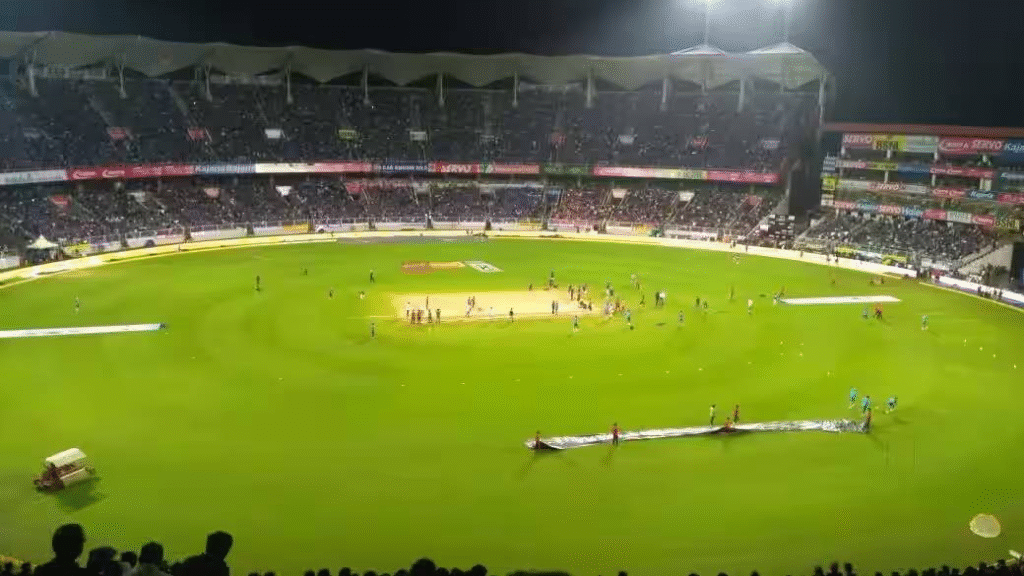
Previously known as the Trivandrum International Stadium, the Greenfield International Stadium is a multi-purpose venue that holds both cricket and football competitions. The stadium, located in Thiruvananthapuram, Kerala, can accommodate around 50,000 people at one time.
It is India’s first Design, Build, Operate, and Transfer (DBOT) outdoor stadium, sprawling across 36 acres. The arena, built to FIFA and ICC standards, is divided into four zones: the North Zone for cricket, the East Zone for football, the South Zone with shopping malls and a food court, and the West Zone, which includes an Olympic-size swimming pool as well as volleyball, squash, table tennis, and basketball courts. The stadium also emphasises environmentally friendly maintenance practices by providing extensive greenery and rainwater collection facilities.
Ekana Cricket Stadium, Lucknow
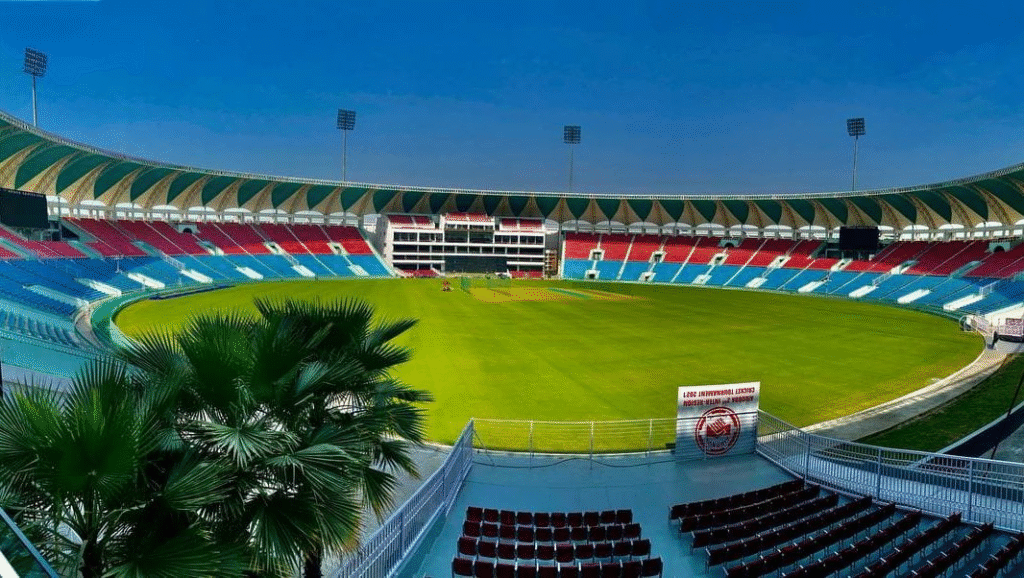
Ekana Cricket Stadium was developed in 2017 in Lucknow. It was later renamed as Bharat Ratna Shri Atal Bihari Vajpayee Ekana Cricket Stadium in 2018 to honour the late Atal Vihari Bajpayee, former Prime Minister of India. Presently, it is the third-largest international cricket stadium in India, with a seating capacity of 50,000.
As of July 2025, the stadium has hosted one test match, nine ODIs, and six T20 matches.
JSCA International Cricket Stadium, Ranchi
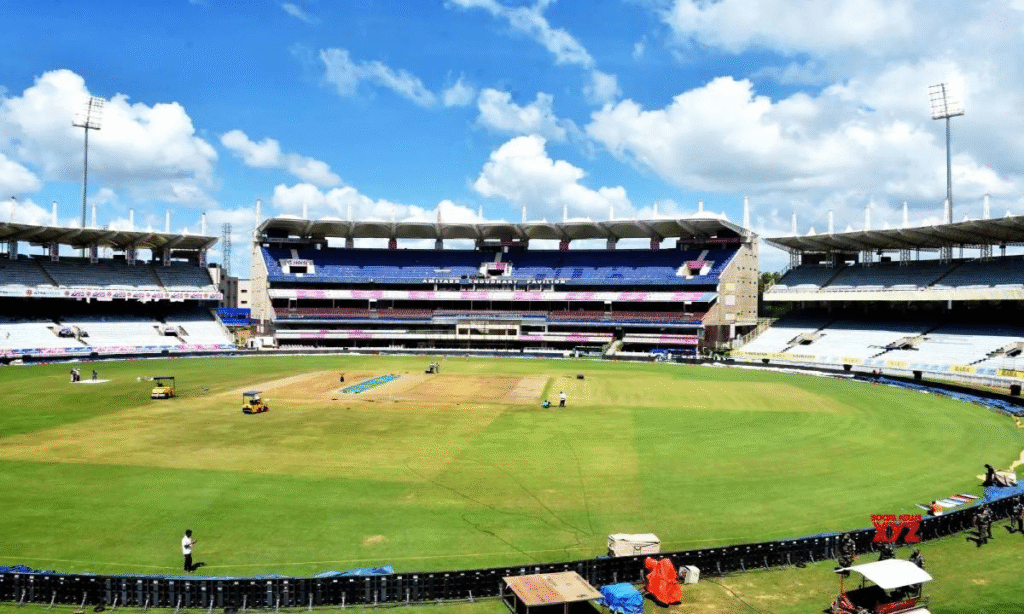
The Jharkhand States Cricket Association (JSCA) International Cricket Stadium in Ranchi has a 50,000-seat capacity and 76 corporate boxes. It is uniquely placed, with hills on the east and west sides providing spectacular vistas.
The stadium opened in January 2013 and hosted its maiden ODI match between India and England on January 19, 2013. The stadium went on to hold seven more Indian Premier League matches.
The best thing about the JSCA International Stadium is that the turf is designed so that no shadow may fall on any of the nine pitches before 4:45 PM. The stadium is conveniently positioned near Birsa Munda Airport and is well-connected across Ranchi.
Barabati Stadium, Cuttack
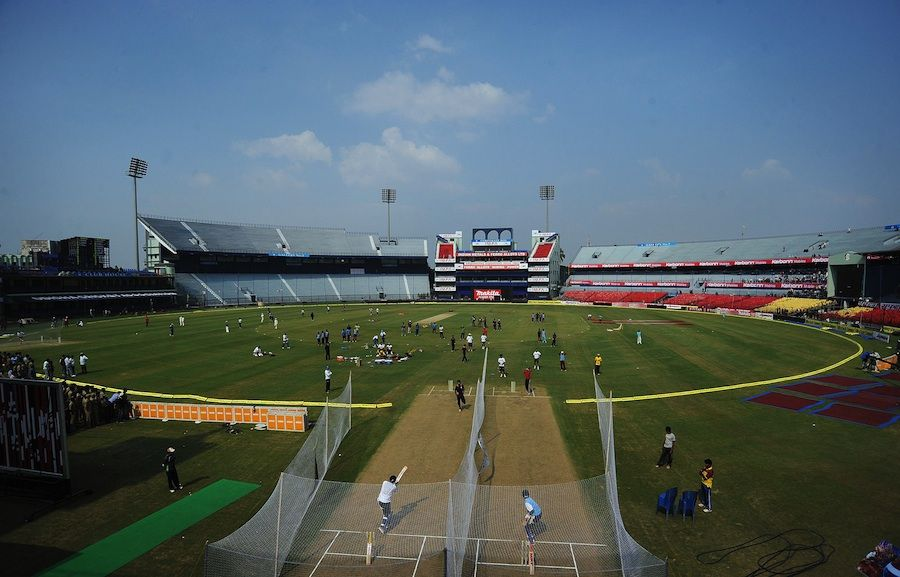
The Odisha Cricket Association owns and operates Barabati Stadium in Cuttack, which serves as the Odisha Cricket team’s home stadium. Established in 1958, it has a seating capacity of around 45,000 people as of 2025.
It is also one of India’s oldest cricket venues, having hosted various touring teams, including the Marylebone Cricket Club (MCC), West Indies, and Australians, prior to holding its first international match in 1982.
Vidarbha Cricket Association Stadium, Nagpur
The Vidarbha Cricket Association venue in Nagpur is India’s largest cricket venue by pitch area. It features 80-yard straight and 85-yard square bounds. The stadium was inaugurated in 2008 to host the first international match between India and Australia in November of that year.
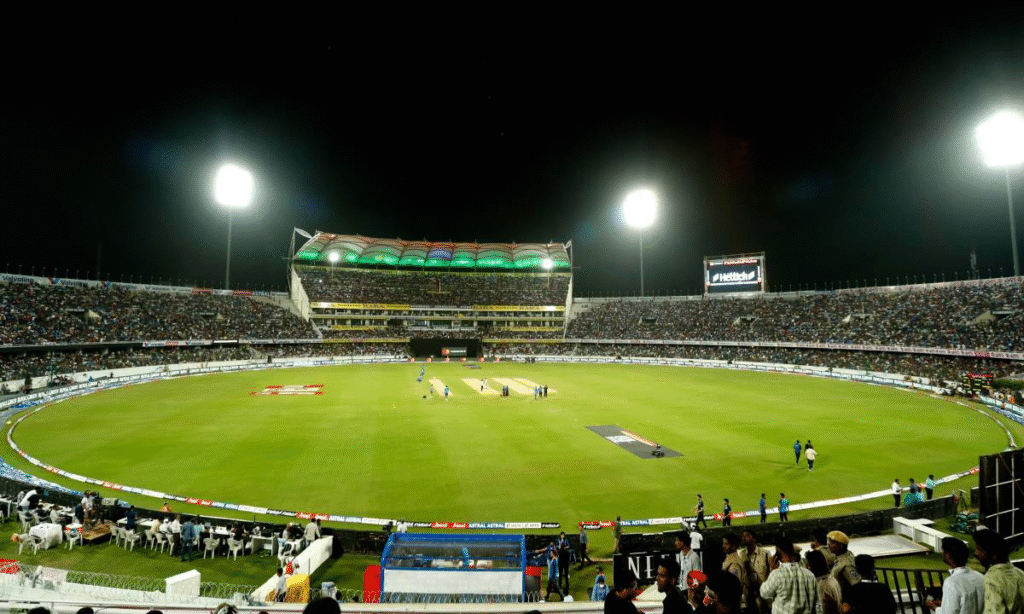
Rajiv Gandhi International Cricket Stadium, Hyderabad
The Rajiv Gandhi International Cricket Stadium in Hyderabad, popularly known as Uppal Stadium, spans 16 acres of land and can accommodate approximately 39,000 spectators at once. Built in 2003 by architect Sashi Prabh, it has two ends: Pavilion End and North End, also known as VVS Laxman End.
As of August 2025, the stadium, known for its flat, batsman-friendly pitch, had hosted six Tests, ten ODIs, and three T20Is. It is home to both the Hyderabad Cricket Team and the Sunrisers Hyderabad IPL franchise.
Chepauk Stadium, Chennai
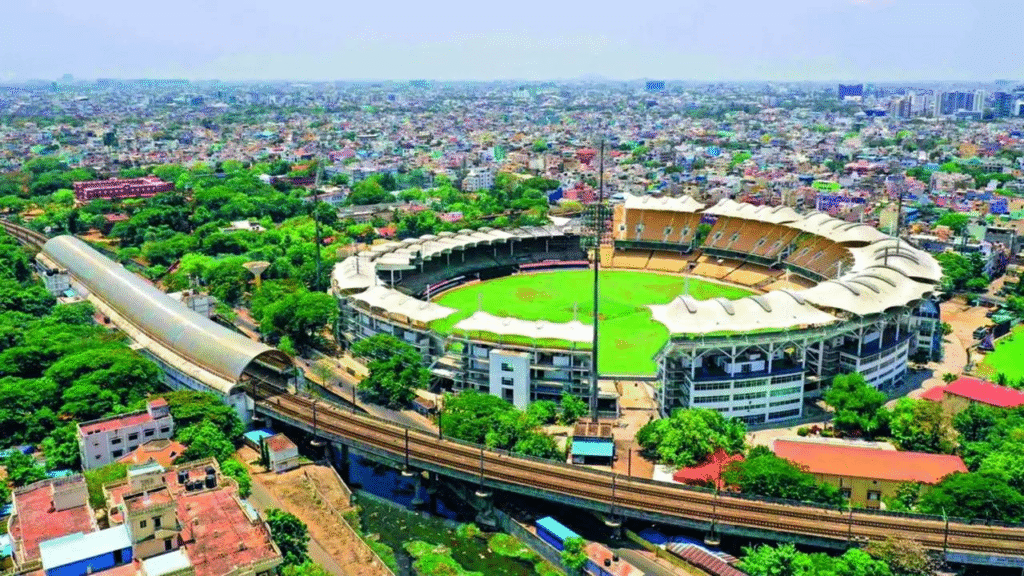
Chepauk Stadium (M.A. Chidambaram Stadium) in Chennai, constructed in 1916, is India’s second oldest cricket stadium, following Eden Gardens in Kolkata. It currently seats roughly 38,000 people, following improvements conducted before to the IPL 2023, which included the construction of a new pavilion named after former Tamil Nadu Chief Minister M. Karunanidhi.
The stadium held its first Test match on February 10, 1934, as well as other notable events such as India’s maiden Test victory over England in 1952. The outfield was rebuilt before the 2025 T20 World Cup to improve playing conditions.
The pitch remains spin-friendly and sluggish, which benefits bowlers. The arena is the home ground of the Chennai Super Kings in the Indian Premier League. Plastic bans, cloth bags and banners, and segregated wet and dry trash bins are among the eco-friendly innovations introduced during renovations.
M. Chinnaswamy Stadium, Bangalore
M. Chinnaswamy Stadium in Bangalore has a seating capacity of around 35,000 people, making it one of India’s top cricket stadiums. It was inaugurated in 1969 and named after Mangalam Chinnaswamy, a former BCCI president and long-time KSCA (Karnataka State Cricket Association) chairman. It now hosts international and IPL games.
It is the Royal Challengers Bengaluru team’s home ground. It is known for its short boundaries and true bounce, and it also includes rooftop solar, rainwater harvesting, and a sub-air drainage system.
Wankhede Stadium, Mumbai
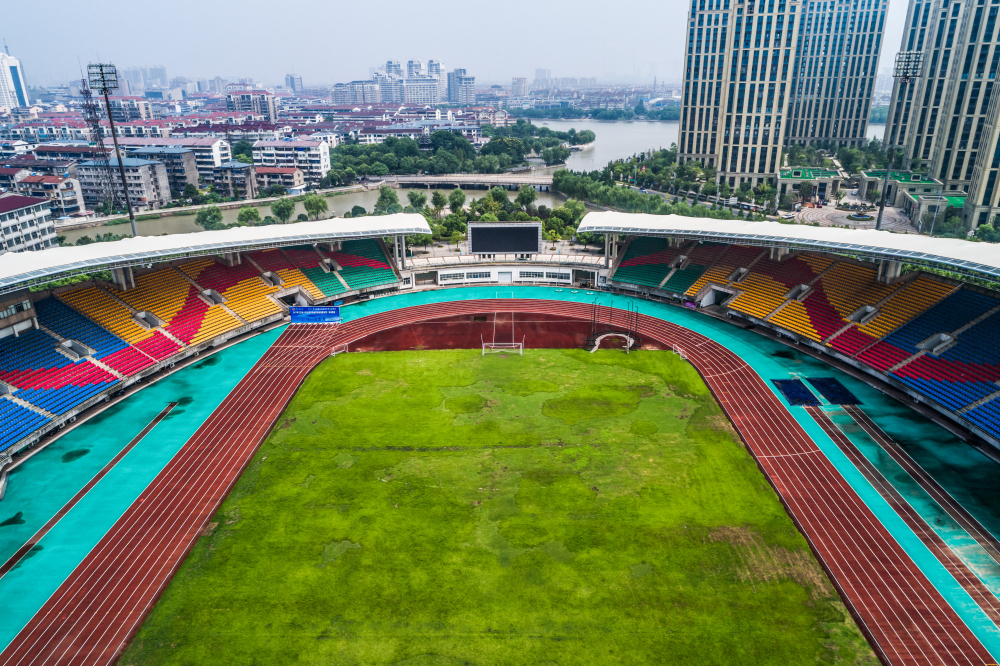
Wankhede Stadium in Mumbai is one of India’s most renowned cricket stadiums, valued more for its history and electrifying atmosphere than size. It opened in 1974 and was considerably refurbished for the 2011 World Cup, reducing capacity from almost 45,000 to approximately 33,000 and adding modern seats, enhanced floodlights, and state-of-the-art changing rooms.
Its beachside position near the Arabian Sea frequently aids swing bowlers, and evening dew can shape limited-overs chases. Wankhede has hosted historic events, such as the 2011 ICC Cricket World Cup Final and Sachin Tendulkar’s farewell Test in 2013.
Saurashtra Cricket Association Stadium, Rajkot
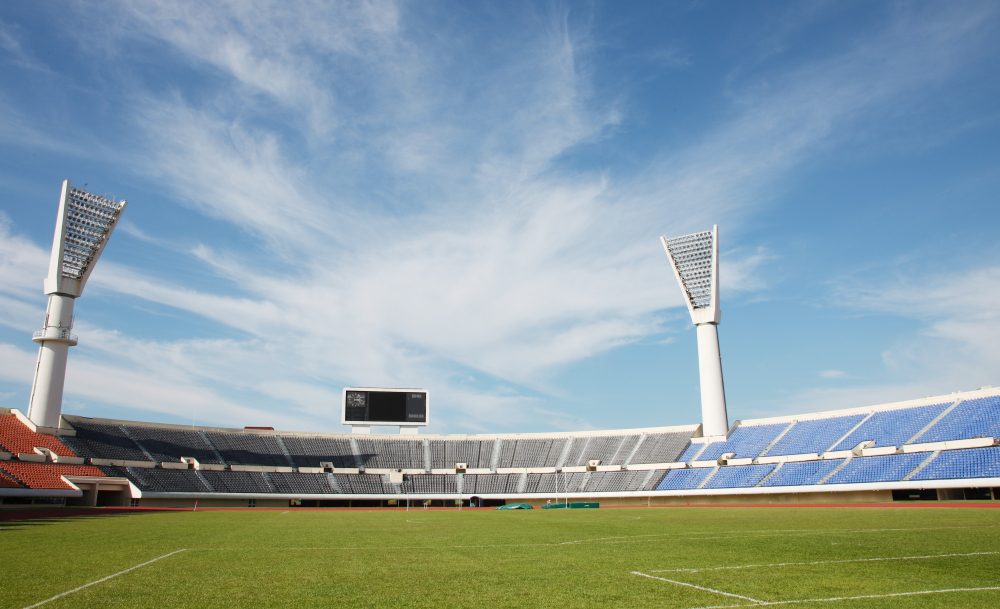
The Niranjan Shah Stadium, also known as the Saurashtra Cricket Association Stadium or the Khandheri Cricket Stadium, is located in Rajkot, India. Completed in 2009, this is Gujarat’s first solar-powered cricket stadium, having a seating capacity of around 28,000. It is part of a larger sports complex that also houses badminton, basketball, and volleyball courts.
The stadium staged its inaugural international match, an ODI between India and England, in January 2013. It served as the home stadium for the Gujarat Lions, an IPL team. The stadium has since hosted numerous ODIs, T20Is, and Test matches, including the India-Australia ODI in September 2023. It was renamed Niranjan Shah Stadium in 2024.
Cricket stadium in Noida
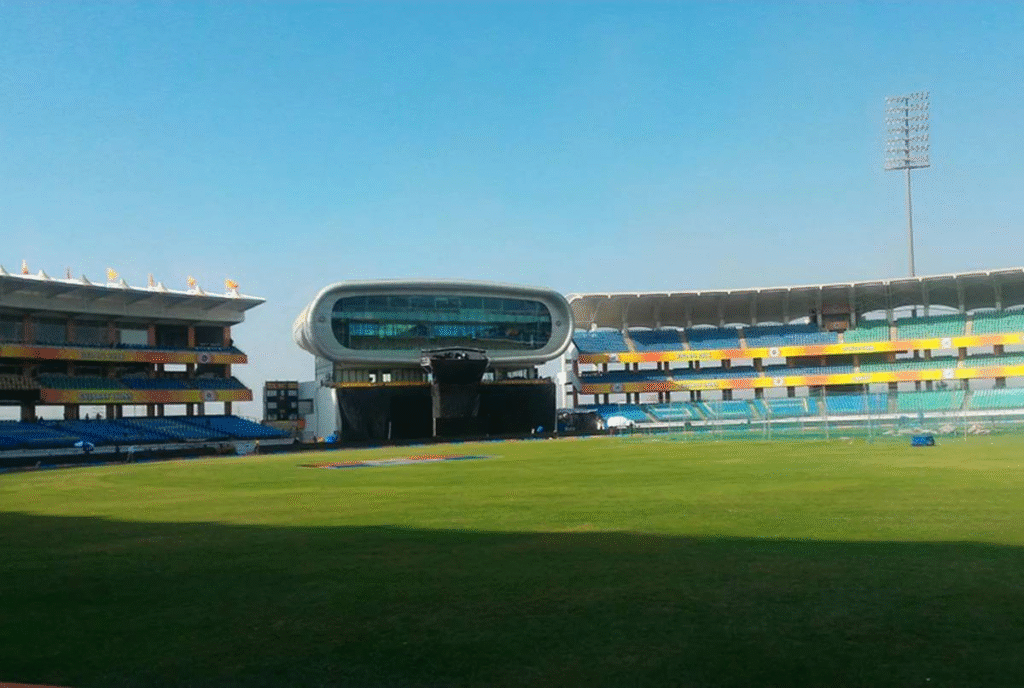
The proposed Noida International Cricket Stadium in Sector 150 will cover roughly 38 acres and have a seating capacity of 35,000 to 40,000 spectators. The Uttar Pradesh Cricket Association (UPCA) has accepted this project, which aspires to be Uttar Pradesh’s fifth international-level cricket stadium once completed.
The stadium’s design adheres to ICC and BCCI requirements, with a playing diameter of around 137.6 metres. The development is part of the larger Sports City effort near the Noida-Greater Noida Motorway, which includes significant business organisations such as Tata, Birla, Hero Group, and Eldeco.
Despite the approvals, building has been delayed since the Noida Authority has yet to approve the layout plans. In addition, legal processes involving the principal developer, ATS Homes, are still ongoing.
ATS Homes has launched a lawsuit to ensure that the project’s requisite land is allocated on schedule. As of mid-2025, the project’s timeframe is unknown and dependent on regulatory and judicial judgements.
As legal obstacles to the projected Noida International Stadium are cleared, India is poised to add another major cricket site to its list. Meanwhile, Andhra Pradesh has unveiled plans for a huge stadium in Amaravati, which is expected to be the country’s largest once completed.





No Comments