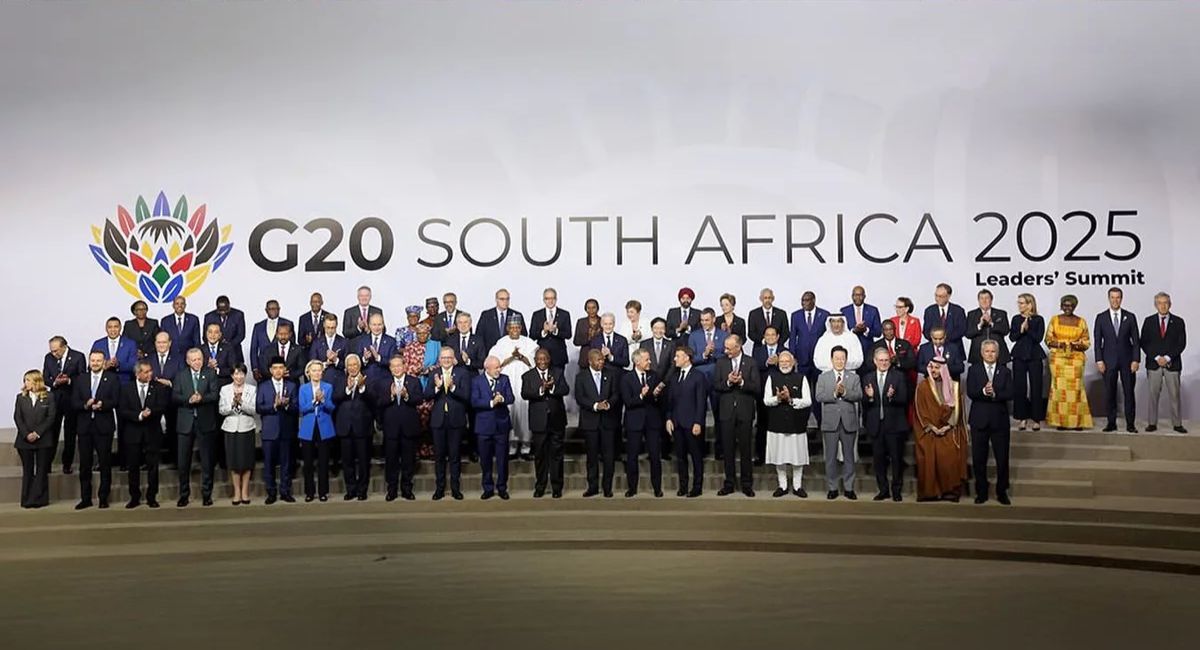
The G20 Summit was held in Johannesburg on November 22-23, 2025, and was the first G20 conference on the African continent, with India making a significant representation. South Africa chose the theme “Solidarity, Equality, and Sustainability” for its presidency. The South African G20 Presidency has identified four high-level priorities: improving disaster resilience and response, ensuring debt sustainability for low-income countries, mobilising finance for a just energy transition, and leveraging critical minerals to support inclusive and sustainable development.
The Summit took place against the backdrop of the US boycott, marking the first time any member has refrained from a G20 summit since its inception in 1999. At the G20 Summit, India reiterated its strong commitment to amplifying the Global South’s voice within global governance systems. PM Modi praised the African Union’s permanent participation in the G20, which was gained at the New Delhi Summit in 2023, as a historic achievement, emphasising that the spirit of inclusivity must extend beyond the gathering to shape the future of international governance.
US Boycott and Its Geopolitical Implications
The summit provided a dual narrative: on the one hand, it witnessed an unparalleled breakdown in global governance as a result of the United States’ complete boycott; on the other, it demonstrated the Global South’s operational resilience and growing assertiveness. The Trump administration boycotted the conference, citing bogus charges of human rights violations against South Africa’s White Afrikaner minority. Fundamentally, the decision was motivated by significant geopolitical tensions, including Washington’s hostility to the South African Presidency’s program, which focused on climate action and global injustice.
However, the absence of the world’s largest economy did not trigger a consensus crisis. On the contrary, the majority bloc, led by the Global South Troika (Brazil, India, and South Africa), used the occasion to refocus the G20’s agenda on long-standing developmental issues. With the US absent, the meetings revealed a growing alignment among developing economies and middle powers, allowing them to press for a more inclusive governance system.
This shift was reflected in the emphasis on fair access to climate financing, the call for restructured debt arrangements, and the promotion of sustainable industrialisation through essential minerals. The South African Presidency planned to strategically amplify the continent’s developmental demands and accelerate the implementation of Agenda 2063.
India at the G20 Summit: Vision for Inclusive Growth and Shared Responsibility
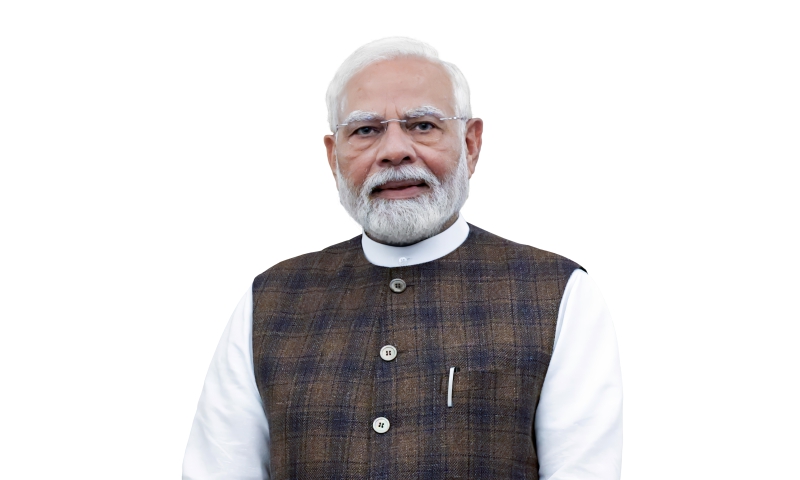
At the G20 Summit, Prime Minister Narendra Modi clearly expressed India’s perspective, which prioritised equity, solidarity, and shared global responsibility. India argued for equitable growth, highlighting that weak economies require equal access to international markets and financial tools. PM Modi highlighted the growing sovereign debt in several developing countries.
India underlined the importance of a development finance architecture that empowers fragile economies by assisting them on their path to stability and prosperity, rather than putting a load on those in most need. PM Modi elaborated on India’s vision for inclusive growth and well-being, proposing expanding collaboration in areas such as traditional knowledge, healthcare, critical minerals, satellite data access, African capacity building, and coordinated action against the drug-terror nexus, emphasising that these would contribute to long-term peace, resilience, and sustainable development.
Democratising the Digital Commons through Technology Access.
PM Modi proposed establishing a G20 Open Satellite Data Partnership to increase access to satellite data for agriculture, fisheries, disaster management, and urban planning, particularly in developing countries. This plan sparked interest among African and Asian delegates. India argued that the lessons of global governance should extend beyond accumulating technological knowledge to sharing it. In doing so, New Delhi gently shifted the concept of “developmental assistance,” from traditional handouts to technology-driven empowerment.
At the G20 Summit, India advocated for a global framework that promotes innovation while limiting misuse of artificial intelligence. India’s message of autonomy and responsibility resonated with countries concerned about being stuck between China’s supremacy and Western competitiveness. PM Modi’s key message at the G20 conference is that AI governance should not become a club of wealthy nations dictating norms for the rest. Instead, democratic frameworks that are open, inclusive, and global in scope should govern the AI future. This provides an alternative to the unregulated technological free-for-all and exclusive models.
Critical Minerals: India Strives for Strategic Autonomy
The G20 Summit also discussed key minerals, including their role in promoting global energy transitions and ensuring strategic autonomy. Drawing on PM Modi’s statement at the summit that “critical minerals are a shared resource of humanity,” India emphasised the importance of diverse and robust mineral supply chains. As the global race for lithium, cobalt, and rare earths heats up, India emphasises that resource security cannot be left to a few strong players.
This viewpoint is consistent with India’s overall domestic strategy of strengthening ties in Africa, Latin America, and Australia to lessen reliance on any single supplier. This also helps India maintain its long-term strategic autonomy. At the G20 Summit, India also proposed a Critical Minerals Circularity Initiative, which focusses on recycling, urban mining, and second-life battery ecosystems, with the goal of reducing pressure on primary mineral extractions while sustaining long-term industrial growth.
Looking Ahead: What’s Next for India?
India’s leadership and achievement at the G20 are significant steps towards its next big diplomatic milestone: taking the BRICS Chairmanship in 2026. The G20 Johannesburg Summit cements India’s position as a consensus builder and significant strategic force functioning autonomously within a multipolar global framework. The diplomatic vacuum created by the US absence allowed India, Brazil, and South Africa to push a development strategy centred on egalitarian finance, robust supply chains, and technological governance.
Geopolitically, successful collaboration among Global South countries reinforced their collective leadership, offering a powerful opposition to G7 dominance, especially when the US boycotted the summit. The road ahead will put India to the test in terms of maintaining diplomatic momentum, institutionalising Summit measures, and leveraging South-South cooperation to form a more fair global order.
Going forward, India’s ability to align G20 and BRICS priorities, particularly in debt reform, vital minerals, and digital public infrastructure, will decide how successfully it can shape the governance environment of an increasingly multipolar world. The Johannesburg Summit thus serves not just as a diplomatic success, but also as a platform for India to consolidate leadership within a reconfigured global governance architecture.



 India at G20: Leading Global South Agenda






No Comments