What does a balanced diet entail?
A well-balanced diet provides essential nutrients for optimal physiological function. Proteins, carbohydrates, fats, vitamins, and minerals are among these nutrients. Furthermore, fiber, which is essential for maintaining a healthy digestive tract, should be an important part of any balanced diet.
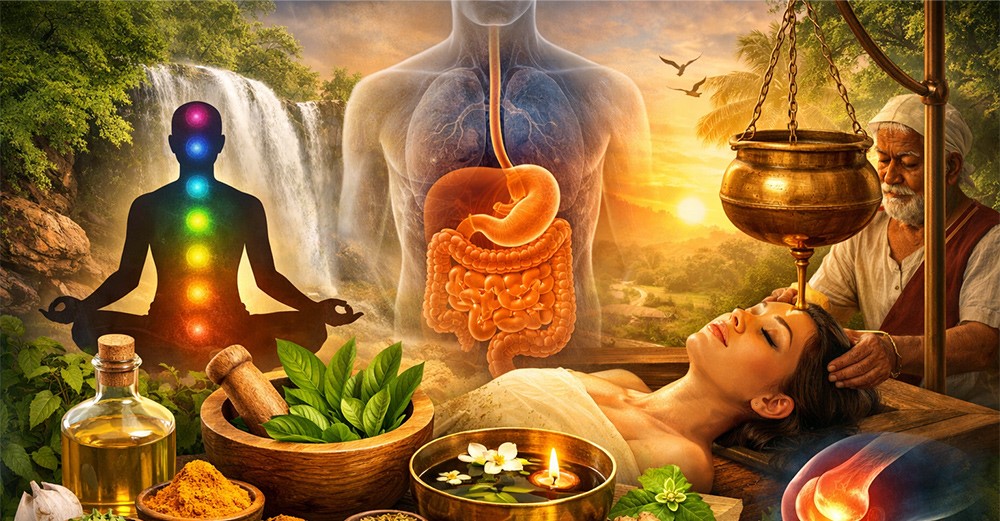
In Ayurveda, the act of eating food is taken seriously. It is not supposed to be a leisure, an unconscious activity, or anything motivated by desires and whims. Ayurveda emphasizes careful eating. Being thoughtful and intentional about what, when, why, and how we consume. Ayurveda is not about counting calories or following strict regulations, but there is a philosophy underlying the act of eating.
An Ayurvedic sage has said the following:
Ayurveda promotes a healthy diet that benefits not just the body but also the mind, senses, and spirit. Food, after all, provides vitality and power. It provides sustenance and luminosity. Ayurvedic nutrition is closely related to the three doshas (energy systems) and takes into account each individual’s specific nutritional requirements. consuming according to your constitutional makeup promotes equilibrium, whereas consuming dosha-aggravating foods causes imbalances. The idea that “food is medicine” is unique to Ayurveda. Food is the major preventive tool in Ayurveda, as well as the first step in restoring mental and physical balance. Although we frequently say, “You are what you eat,” Ayurveda would change it to, “You are what, how, when, and why you eat.” Your well-being is influenced not just by the foods you eat, but also by your mood, the environment, the time of day, and the season in which you consume them.




 Ayurvedic Concept of Eating





No Comments