


The Passiflora Caerulea flower is sometimes referred to as Blue Passion Flower or Bluecrown Passion Flower. The blooming plant is cultivated largely for its exotic-looking blossoms. It is a climber of the Passifloraceae family. The plant is native to South America. The perennial vine can grow up to ten meters long. However, depending on the climate and care offered, it can grow to a height of 25 meters. Flowers appear on the vine particularly throughout the summer months.
Table of Contents
- Quick Facts About Passiflora Caerulea (Blue Passion Flower)
- Passiflora Caerulea, popularly known as the Blue Passion Flower
- How to Care for the Passiflora Caerulea Flower
- How to Care for the Passiflora Caerulea Flower
- Myth and symbolism of Passiflora caerulea
- Benefits of Passiflora Caerulea Flower (Blue Passion Flower)
- Conclusion of Passiflora Caerulea Flower (Blue Passion Flower)
The Passiflora caerulea flower is known in Japan as the “clock plant” because to its form. The plant’s fruit is oval in shape and orange-yellow in hue. When ripe, the fruit is edible, but it contains more seeds than pulp. When compared to the fruits of other passion flowers, the berries of the Blue Passion Flower are quite bland. However, it is used to flavour teas, drinks, ice cream, and marmalades. Passionflowers are also known for their therapeutic use. Passiflora caerulea tea is renowned for its therapeutic benefits.
If you want to grow this plant, you’ll find the information below beneficial. We have explained how to grow and care for the Passiflora caerulea flower. We also talk about the two sorts of Bluecrown Passion flowers.
Quick Facts About Passiflora Caerulea (Blue Passion Flower)
Here are some key facts about the Passiflora Caerulea flower:
| Particulars | Description |
|---|---|
| Scientific name | Passiflora Caerulea |
| Other names | Passionflower, Blue Passion Flower, Passion Fruit, Jesus Flower |
| Indian name | Krishan Kamal |
| Native | South and North America |
| Best season to plant | Any month |
| Bloom season | Summer |
| Height of the plant | Up to 30 feet |
| Water requirement | Once or twice a week |
| Light requirement | Direct or partial sunlight for 4–5 hours |
| Soil | Well-drained soil |
| Toxicity | Only ripe fruit is edible |
Passiflora Caerulea, popularly known as the Blue Passion Flower
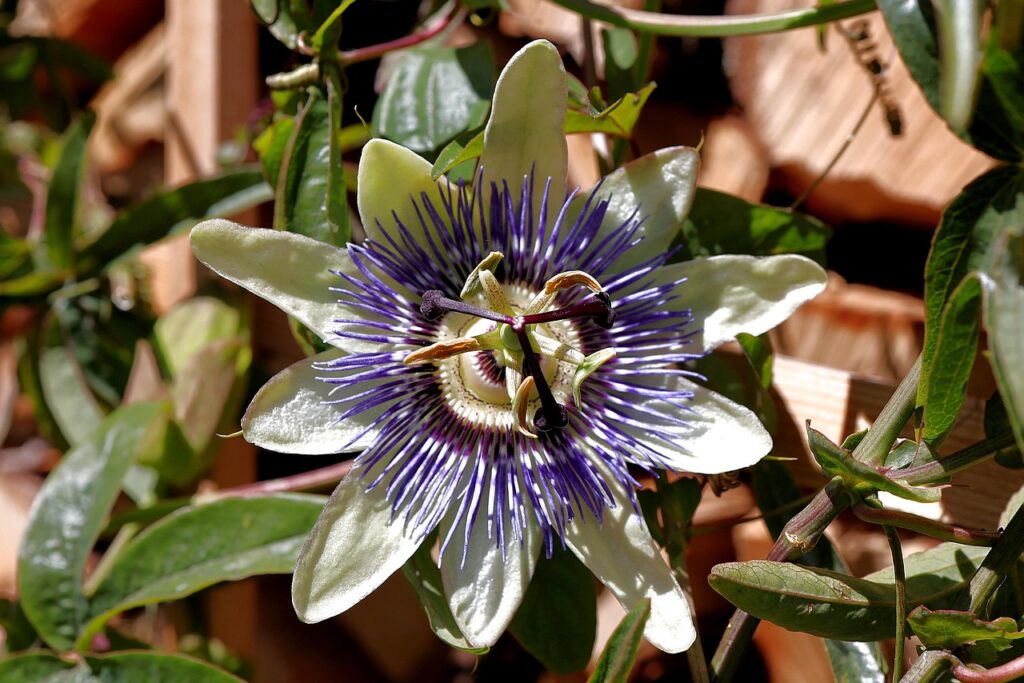
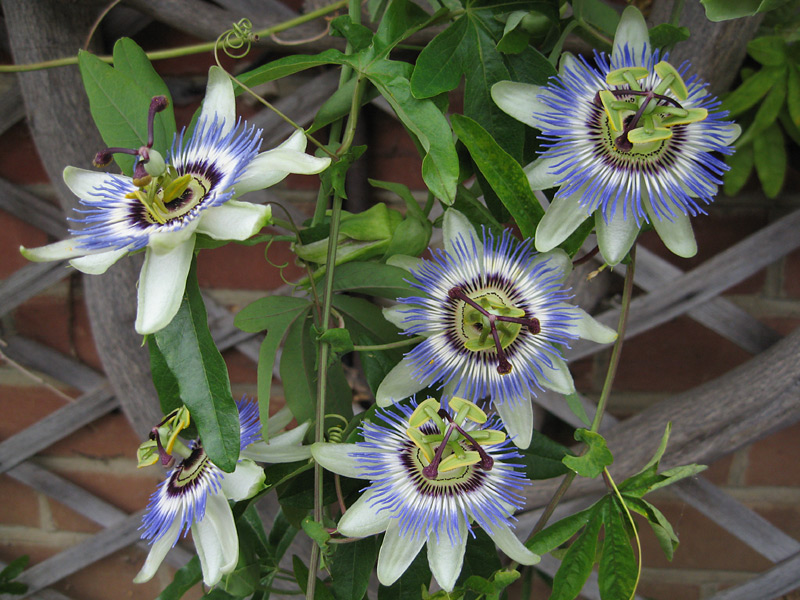
The Blue Crown Passion flower is one of the most often planted types. It is a fast-growing plant. The vine grows swiftly and covers the fences, trellises, and pillars that support it. The lovely Passiflora Caerulea flowers are normally 8-10 cm in diameter. These have a unique crown-shaped structure in the centre. Their name is derived from this structure. This flower’s petals are light blue or white. In contrast, the crown is formed of blue and white threads. This plant is also known to produce edible fruit. It yields fruit that is extremely similar to oranges.
The Miniature Passiflora Caerulea As the name suggests, this is a tiny counterpart of the Bluecrown Passion Flower. It is usually around 2-3 centimetres in diameter. It features a crown-like structure in the centre, similar to the Bluecrown Passion Flower. It’s perfect for tiny places. Passiflora Caerulea Flower in Hindi The Hindi name for Passiflora Caerulea is Krishna Kamal. Krishna Kamal’s name alludes to its affiliation with Lord Krishna. Its yellow-green round stamen are believed to represent Krishna’s sudarshan chakra. While its five yellow anthers are believed to be Pandavas, the 100 blue filaments around it are said to be Kauravas. As a result of this account, the plant was named Krishna Kamal.
How to Care for the Passiflora Caerulea Flower
The Passiflora Caerulea flower is very attractive. Adding this lovely vine to your home garden will dramatically enhance its appearance. The enticing perfume of the flower enhances the outdoor mood. Though originally from South America, the plant is easily grown in India. With some care, you may watch the Passiflora Caerulea vine develop and its beautiful blossoms bloom in your garden. The following advice will assist individuals who desire to grow Passiflora Caerulea.
- Careful Watering – The Passiflora Caerulea plant may grow in arid conditions. It does not require much water. Frequent watering might cause root rot. Recommended watering is once every two weeks. If kept in direct sunlight, it may require more frequent watering.
- Pruning – Passion flower vines should be pruned at least once a year. The plant partially dries up during winter, making it the best time to prune. Remove dry or overgrown portions to foster new growth. Best done in early spring.
- Winter Care – Protect the plant when temperatures drop. Apply mulch around the roots to provide frost protection.
- Provide Support – Ensure proper support (fence, trellis, pillar) for the vine so it can climb and grow vertically.
- Keep the Pests Away – Passion flowers attract pests like whiteflies and spiders. Use appropriate pesticides to protect the plant.
- Careful Watering – The Passiflora Caerulea plant may grow in arid conditions. It does not require much water. Frequent watering might cause root rot. Recommended watering is once every two weeks. If kept in direct sunlight, it may require more frequent watering.
- Pruning – Passion flower vines should be pruned at least once a year. The plant partially dries up during winter, making it the best time to prune. Remove dry or overgrown portions to foster new growth. Best done in early spring.
- Winter Care – Protect the plant when temperatures drop. Apply mulch around the roots to provide frost protection.
- Provide Support – Ensure proper support (fence, trellis, pillar) for the vine so it can climb and grow vertically.
- Keep the Pests Away – Passion flowers attract pests like whiteflies and spiders. Use appropriate pesticides to protect the plant.
How to Care for the Passiflora Caerulea Flower
Yes, Passiflora Caerulea is an edible flower. Once the passion blossom has been ripped, it can be eaten. However, you should avoid eating it uncooked because it may create health problems.
Myth and symbolism of Passiflora caerulea
Passiflora Caerulea has been awarded the Royal Horticultural Society’s prestigious Award of Garden Merit (AGM). This plant has Christian mythological roots, since it portrays Jesus Christ’s crucifixion, and the flower’s corona is reminiscent of Jesus’ thorny crown of thorns. In Indian mythology, the passion flower is regarded as the Krishna Kamal, the 100 corona filaments as the Kauravas, and the greenish bulb as Draupadi. In Hindu mythology, the three stigmas are Brahma, Vishnu, and Mahesh, with Krishna’s Sudarshan Chakra functioning as the core framework.
Benefits of Passiflora Caerulea Flower (Blue Passion Flower)
Blue Passionflower is utilised in medicine for its multiple advantages.
This fresh fruit is good for digestion. Furthermore, when combined, its roots and leaves are used to treat dysentery and other gastrointestinal infections and issues. The herb also contains anti-inflammatory effects.
The leaves and roots are used to prepare tea and deworm in the West Indies, Mexico, and the Netherlands.
In Brazil and Mauritius, the blue passionflower fruit is used to alleviate sleeplessness. It is also prescribed to treat anxiety disorders.
In Argentina, the leaves and stems of the Passiflora caerulea flower are used to cure respiratory illnesses like pneumonia and catarrh.
This plant has long been used in Indian Ayurveda as a natural treatment for anxiety, depression, stress, and neurological disorders.
However, utilise this flower with caution because it contains cyanide chemicals, which can be lethal. Although boiling may typically eliminate the bulk of these chemicals, it is not recommended for usage alone.
Conclusion of Passiflora Caerulea Flower (Blue Passion Flower)
Passiflora Caerulea is certainly one of the most stunning flowers. It is easy to grow. With proper care, the Passiflora Caerulea vine spreads quickly and produces lovely flowers that brighten up your garden. Their fragrant perfume creates an attractive atmosphere. Not to mention that it contains medicinal properties. Passiflora Caerulea tea is proven to relax the mind and reduce anxiety. As a result, it is very popular over the world. However, the flower should not be utilised for healing without professional guidance.







No Comments