
Mumbai Real Estate
Mumbai Air Pollution: BMC’s Construction Ban Rules

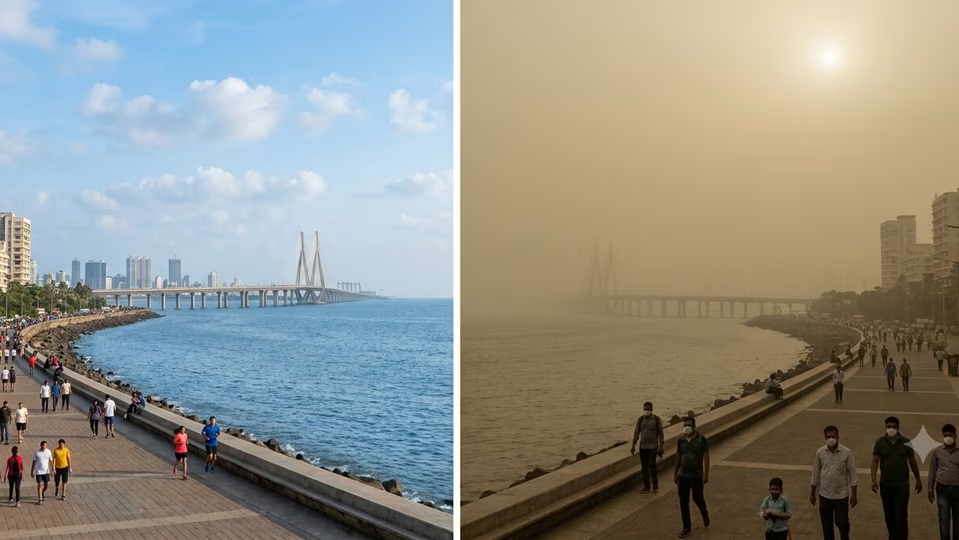
As Mumbai’s AQI deteriorates, with multiple places reporting high levels of pollution in recent days, the Brihanmumbai Municipal Corporation (BMC), popularly known as the Mumbai Civic Body, has upped its surveillance of building and redevelopment operations.
Since last year, the local body has taken steps to manage dust and pollution from building sites, including rules for suspending activity that violates pollution-control standards.
Here’s what purchasers, developers, and other real estate stakeholders should know about the BMC’s building limits and the circumstances under which work might be halted.
What is AQI, and why is it important?
The Air Quality Index (AQI) assesses air pollution levels and the potential health concerns connected with the air we breathe. In India, the Central Pollution Control Board (CPCB) classifies AQI readings as excellent (0-50), tolerable (51-100), moderate (101-200), poor (201-300), extremely poor (301-400), and severe (401-500). Higher levels suggest increased pollution and health hazards.
According to BMC officials, construction activities can pollute the air through dust generated by excavation, demolition, material handling, debris transportation, and vehicle movement on project sites. However, to address these causes, the BMC has mandated dust-control measures for construction and redevelopment projects, as well as increased monitoring and enforcement during periods of poor air quality.
What are the BMC’s policies regarding construction prohibitions due to poor air quality?
Over the last three years, the BMC has implemented a number of steps to address Mumbai’s deteriorating air quality situation. It has enforced AQI monitoring on construction sites, requiring real-time sensors and issuing compliance letters to disobedient builders. The city authority has published 28-point instructions for dust and pollution control, sent ward-level flying squads to enforce the rules, and threatened to halt building and industrial activity if the AQI exceeds 200.
According to the BMC’s air pollution mitigation strategy, construction activity limits are based on the severity and persistence of pollution levels. The civic body’s standard operating procedure for implementing the Graded Response Action Plan (GRAP), announced in November 2025, stipulates that Stage IV measures will be implemented if Mumbai’s city-level or local area-specific AQI exceeds 200 for three consecutive days.
According to the Mumbai-based NGO Praja Foundation, which conducts civic research, the city’s Air Quality Index (AQI) rapidly worsened between 2019 and 2022, rising from 92 in 2019 to 125 in 2022. However, during the last two years, the AQI has risen above 300 and 400 on multiple occasions.
How does a worsening AQI impact homebuying and construction activity?
According to a real estate developer, AQI levels have an impact on home-buying decisions, especially when a project is located near industries, industrial areas, or power plants. However, they point out that cyclical worsening in AQI during winter has a minimal influence on demand in specific neighborhoods since it is viewed as a broader, national phenomena rather than a location-specific concern.
“A homebuyer in Worli may wish to upgrade to a newer or better home in the same neighborhood, whilst someone in Borivali may opt to relocate to another property in the area. In some circumstances, homeowners may transfer due to respiratory illnesses caused by low air quality, opting for places with a higher air quality index. However, such occurrences are uncommon because transferring to a different neighborhood after living at the same location for a long time is difficult,” said a developer who did not want to be identified.
However, developers understand that poor air quality creates obstacles to construction activity, potentially slowing work and hurting project timetables.
“Developers have a moral responsibility to address air pollution through measures such as water sprinkling and the installation of AQI sensors. Compliance may account for 0.1% to 0.3% of total building costs, and certainly less than 1%. Navi Mumbai had clear skies 15 days ago, but conditions have subsequently deteriorated. While pollution-control measures do not considerably increase building prices, construction activity suspensions can result in increased expenses due to delays,” said Dinesh Doshi, a Navi Mumbai-based developer and president of NAREDCO Raigad, the apex body of real estate developers.

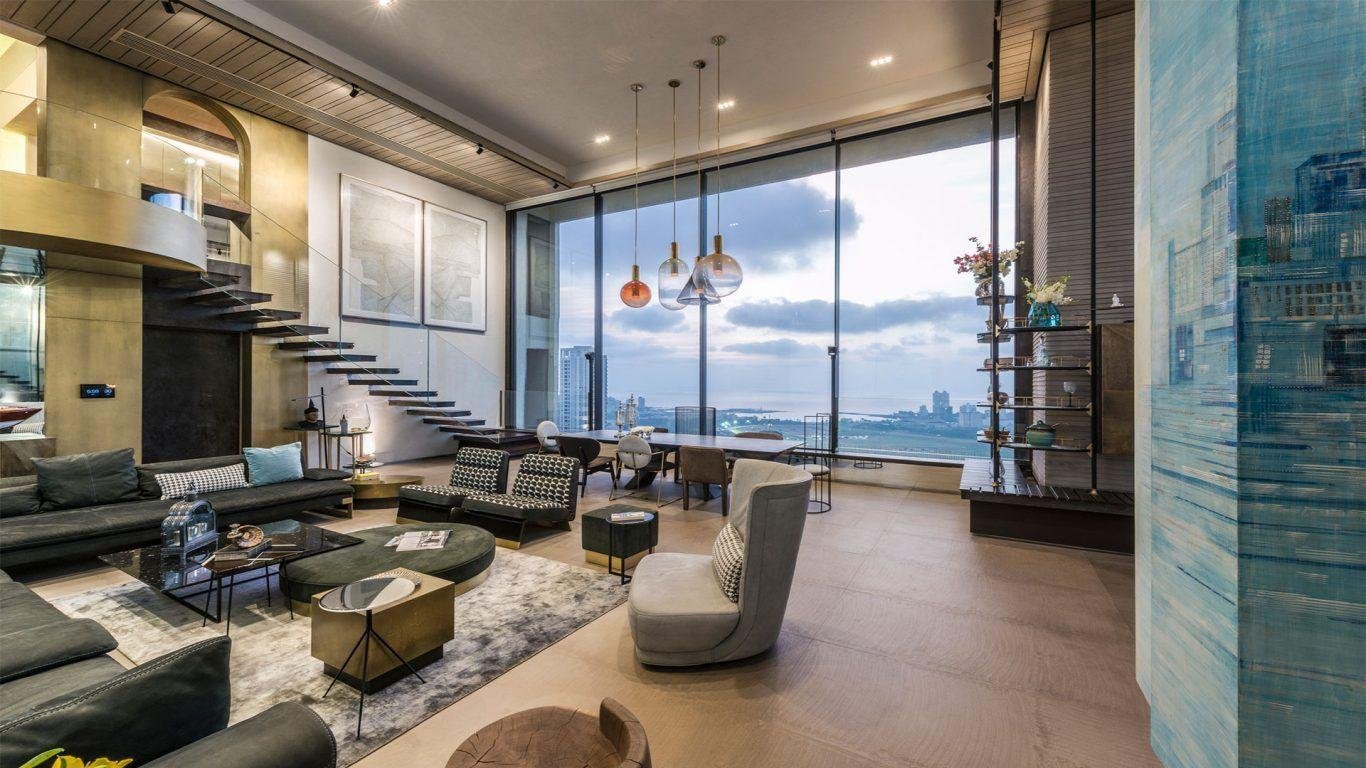
Pharmaceutical company Gufic Private Limited has purchased a luxury duplex apartment in Lodha Developers’ under-construction Lodha Avalon project on Juhu Tara Road, Mumbai, for ₹236.33 crore. According to property registration documents accessed through real estate intelligence platform Zapkey, the transaction was registered on October 21, 2026. The deal adds to the growing number of high-value residential property purchases in Mumbai’s luxury housing market.
19,694 Sq. Ft. Duplex with 10 Parking Spaces
The luxury duplex is located on the 14th floor of one of the towers at Lodha Avalon and has a carpet area of approximately 19,694 sq. ft. The purchase price works out to around ₹1.20 lakh per sq. ft. The apartment also comes with 10 dedicated car parking spaces. Gufic was represented in the transaction by its director Vipula Jayesh Choksi, while the seller was V Hotels Limited. The company reportedly paid approximately ₹14.18 crore in stamp duty for the transaction.
Lodha Avalon Attracts More ₹100 Crore-Plus Buyers
The latest purchase adds to a series of expensive residential transactions at Lodha Avalon. In July 2026, Mehul Shah, founder and chairman of pharmaceutical company Encube Ethicals, and his wife Niti Shah purchased an apartment in the project for more than ₹106 crore. In August, businessman Ravi Kishorilal Jhunjhunwala and his wife Sarita Jhunjhunwala acquired another apartment for ₹113.42 crore. In 2025, directors of financial consulting firm Sahastraa Advisors also purchased a property in the development for approximately ₹106 crore.
Juhu Continues to Attract Ultra-Luxury Homebuyers
Juhu remains one of Mumbai’s established premium residential locations, attracting business owners, corporate promoters and celebrities. Its coastal setting, established social infrastructure and proximity to commercial and entertainment hubs make it an attractive destination for luxury homebuyers. The ₹236.33 crore Gufic transaction highlights the demand for large-format residences in premium Mumbai neighbourhoods, where individual apartment purchases are increasingly crossing the ₹100 crore mark.
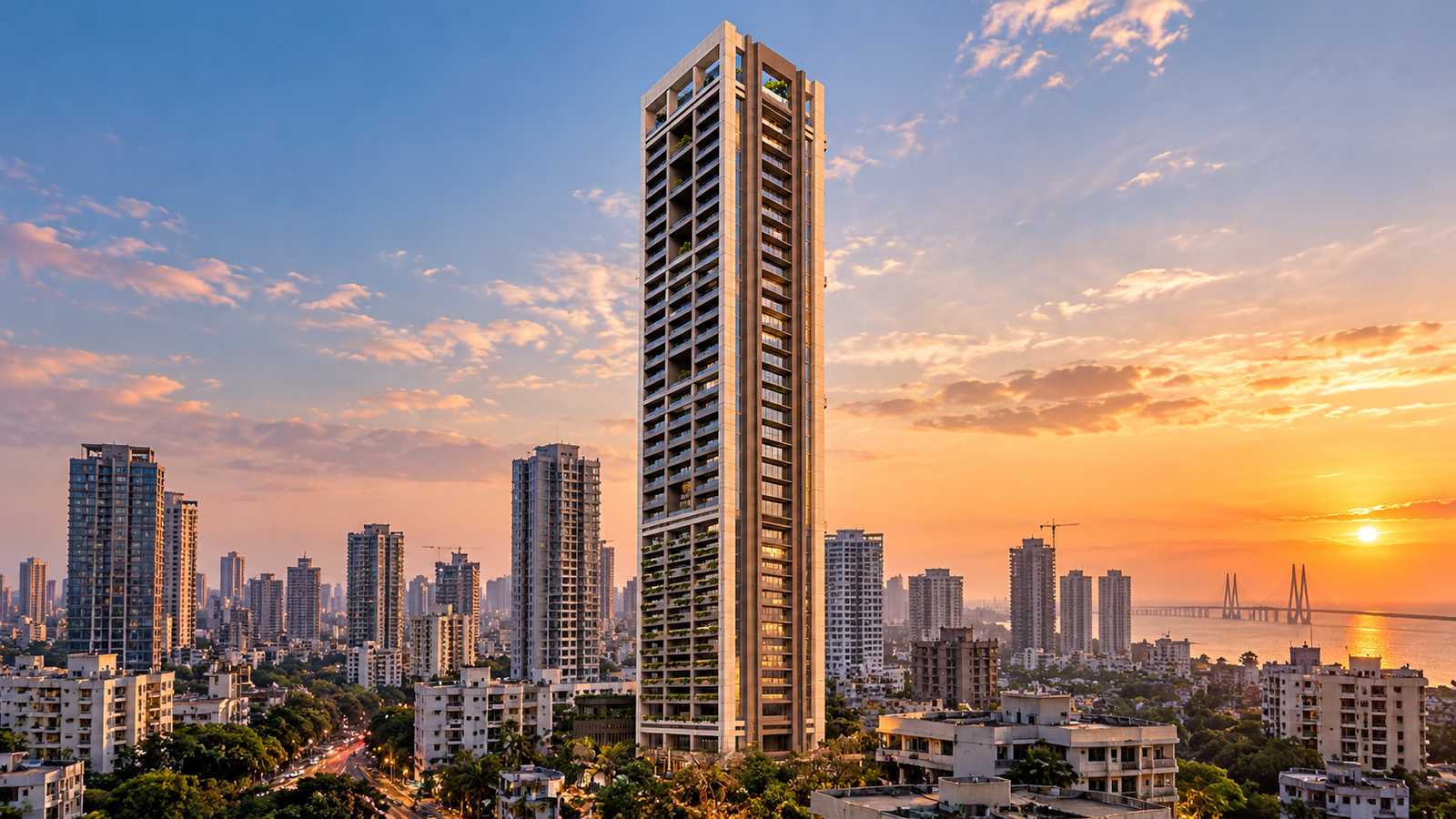
In the first half of FY27, from April to September 2026, the top ten luxury residential developments in Mumbai saw registered home sales worth ₹6,116 crore over 496 transactions. According to a survey by Lighthouse Luxury, backed by property registration intelligence platform Zapkey, Naman Xana had the highest average transaction value (roughly ₹152 crore per home), while Godrej Trilogy Seafront had the highest total sales value.
Over a six-month period, three residences at Naman Xana sold for a total of ₹456 crore, with an average transaction value of ₹152 crore per home. The property has the highest average ticket size among Mumbai’s top ten luxury residential buildings reviewed by the research.
Naman Xana, an ultra-luxury residential tower in Mumbai’s Worli Seaface, was designed by Talati & Partners LLP and developed by the Shree Naman Group. According to Business Standard, the project rose to national notoriety after breaking records in India’s premium residential property market.
Godrej Trilogy Seafront leads Mumbai’s luxury home sales.
Godrej Trilogy Seafront in Worli emerged as Mumbai’s leading luxury residential project in terms of sales value during the first half of FY27. The development sold 54 homes worth ₹1,199 crore between April and September 2026, according to the report.
Oberoi Elysian sold 67 homes for ₹899 crore, while Rustomjee Crown saw 51 deals totaling ₹622 crore.
During the six-month period, the top ten projects registered 496 transactions totaling ₹6,116 crore. The ranking was based on the total value of registered home sales, not the number of units sold.
The top ten luxury projects generated ₹6,116 crore in sales.
Godrej Trilogy Seafront has 54 registered sales, with an average transaction value of ₹22.2 crore. Oberoi Elysian had an average transaction value of ₹13.4 crore, while Rustomjee Crown registered ₹12.2 crore.
Prestige Nautilus reported 18 house sales worth ₹571 crore, with an average transaction value of ₹31.7 crore. This was the second-highest average among the ten projects, following Naman Xana.
Lodha The Park recorded 76 transactions totaling ₹563 crore, with an average transaction value of ₹7.4 crore. Runwal Raaya sold ₹550 crore in 36 homes.
Naman Xana recorded three transactions of ₹456 crore, with an average value of over ₹152 crore per residence.
Oberoi Sky City and Bombay Realty Island City Center each had registered sales of ₹422 crore. With sales of ₹412 crore, Godrej Reserve rounded out the top ten.
The average sale value varies throughout Mumbai’s premium projects.
The numbers show the disparity in average transaction values across Mumbai’s top luxury residential buildings. Naman Xana averaged ₹152 crore per transaction, compared to ₹31.7 crore at Prestige Nautilus and ₹22.2 crore at Godrej Trilogy Seafront.
Oberoi Elysian had an average sale value of ₹13.4 crore, while Rustomjee Crown averaged ₹12.2 crore. Oberoi Sky City had the lowest average of ₹6.7 crore, followed by Godrej Reserve at ₹5.7 crore.
The study includes registered residential selling transactions in Mumbai priced at ₹5 crore or more between April and September 2026.
The given prices reflect the recorded consideration for the properties, excluding stamp duty, registration fees, and GST. Data may be changed as delayed registrations are recorded.
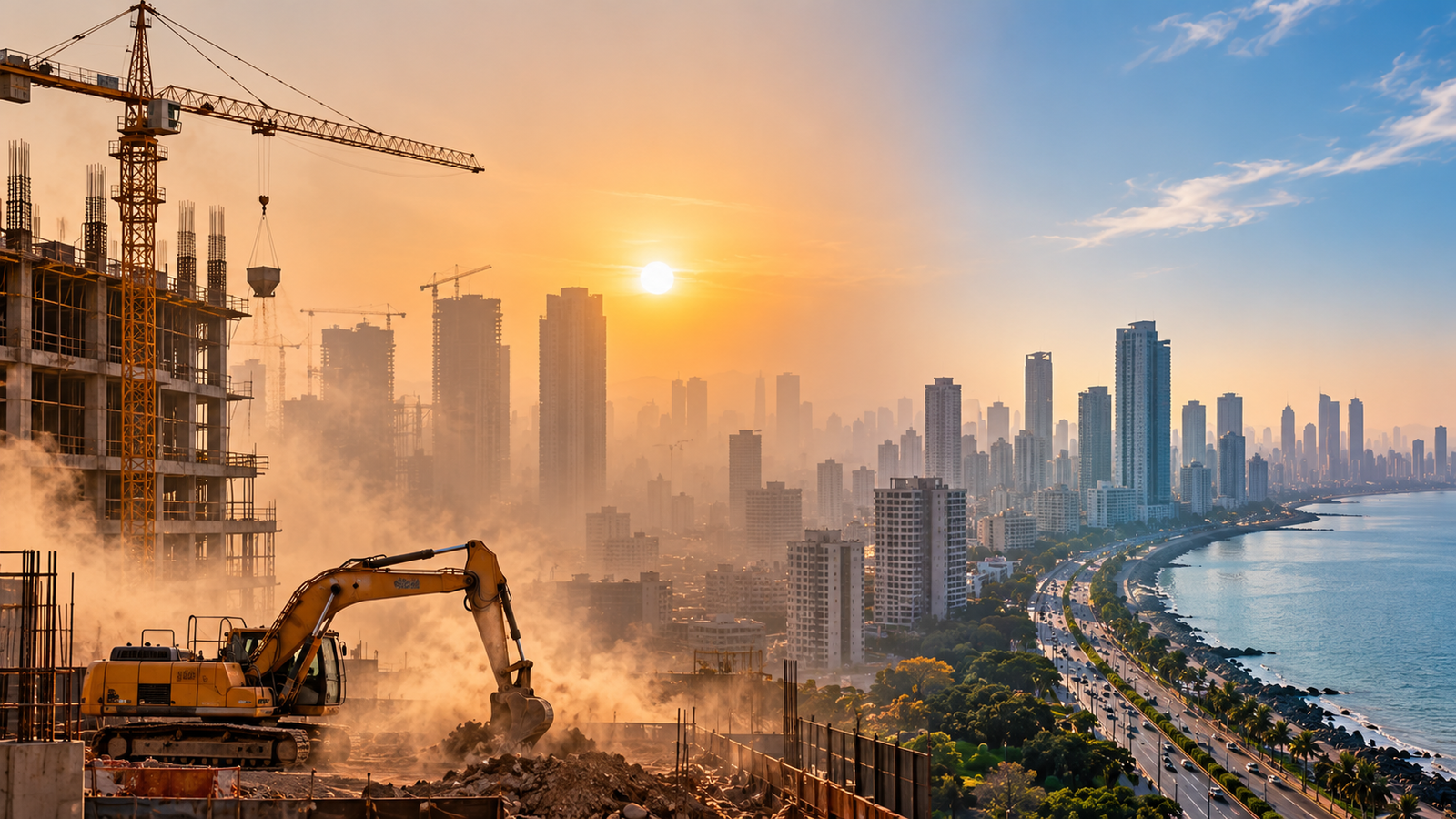
Maharashtra Minister Ashish Shelar has proposed a one-day weekly suspension of construction and demolition activities across Mumbai as part of measures to tackle rising air pollution.
The recommendation was made in a letter to BMC Commissioner Ashwini Bhide, highlighting the need for stronger pollution-control measures ahead of the winter season.
The proposed weekly construction shutdown has not been implemented.
Why Has a Weekly Construction Shutdown Been Proposed?
Construction activity is one of several sources of particulate pollution in Mumbai.
Dust generated from excavation, demolition, material handling and construction debris can contribute to poor air quality, particularly when pollution-control measures are inadequate.
The minister’s proposal aims to reduce dust-generating activity and strengthen environmental compliance.
What Other Measures Have Been Suggested?
Along with the weekly construction pause, the minister recommended several measures to improve Mumbai’s air quality.
These include:
- A Mumbai-specific Graded Response Action Plan (GRAP)
- Regular road washing and mechanised cleaning
- Anti-smog guns at suitable locations
- Stricter vehicle-emission checks
- Improved construction-site monitoring
- Action against illegal dumping and waste burning
- Dedicated public complaint helplines
The recommendations also call for stronger coordination between government departments across the Mumbai Metropolitan Region.
Construction-Site Monitoring Under Scrutiny
Mumbai’s construction-site pollution monitoring systems have recently faced questions over the accuracy of their readings.
Approximately 3,166 construction-site sensors are connected to the BMC’s monitoring dashboard.
Environmental organisations have raised concerns about discrepancies between some site-level displays and official air-quality data.
Independent audits and better sensor calibration could help improve the reliability of pollution monitoring.
What Could This Mean for Mumbai’s Real Estate Sector?
If a weekly shutdown is introduced, developers and contractors may need to adjust construction schedules.
The impact would depend on the scope of the restrictions, exemptions and implementation rules.
Developers may also face greater scrutiny over dust suppression, debris handling and environmental compliance.
However, no official weekly shutdown has been implemented based on the reported proposal.
What Happens Next?
The BMC will need to assess the recommendations before deciding whether to introduce additional restrictions.
Any formal policy would require clear operating guidelines, enforcement responsibilities and communication with affected stakeholders.
The proposal highlights the growing importance of balancing Mumbai’s construction activity with the need for cleaner air.

Pharma company buys Mumbai luxury duplex for over ₹236 crore

Maharashtra Bars Society Members from Becoming Developers

Mumbai’s Floating Billboards Spark Controversy

43,000 Homes Unsold in Navi Mumbai Amid Buyer Slowdown

Bengaluru Tops Housing Price Growth at 14.5% in Q3 2026

Vijayta Raheja Applauds India’s ₹4 Lakh Crore Urban Vision at ET Maharashtra Business Summit
-
 Real Estate News7 months ago
43,000 Homes Unsold in Navi Mumbai Amid Buyer Slowdown
-
 Commercial Real Estate6 days ago
Bengaluru Tops Housing Price Growth at 14.5% in Q3 2026
-
 Real Estate News6 months ago
Vijayta Raheja Applauds India’s ₹4 Lakh Crore Urban Vision at ET Maharashtra Business Summit
-

 New Projects & Launches7 months ago
K Raheja & IHG Team Up to Elevate Powai’s Hospitality Landscape
-
 Real Estate News7 months ago
Mumbai’s Largest MHADA Redevelopment Drive Set to Transform 923 Acres
-
 Global Real Estate7 months ago
Spanish Youth Hostel Group Considers London Real Estate Deals
-

 NRI Real Estate7 months ago
Will NRI Investments Drive Mumbai Housing?
-

 NRI Real Estate7 months ago
How NRIs Are Driving India’s Property Market?