
Mumbai Real Estate
Jamnabai Narsee International School to Open New Juhu Campus in ₹800 Crore Lease Deal

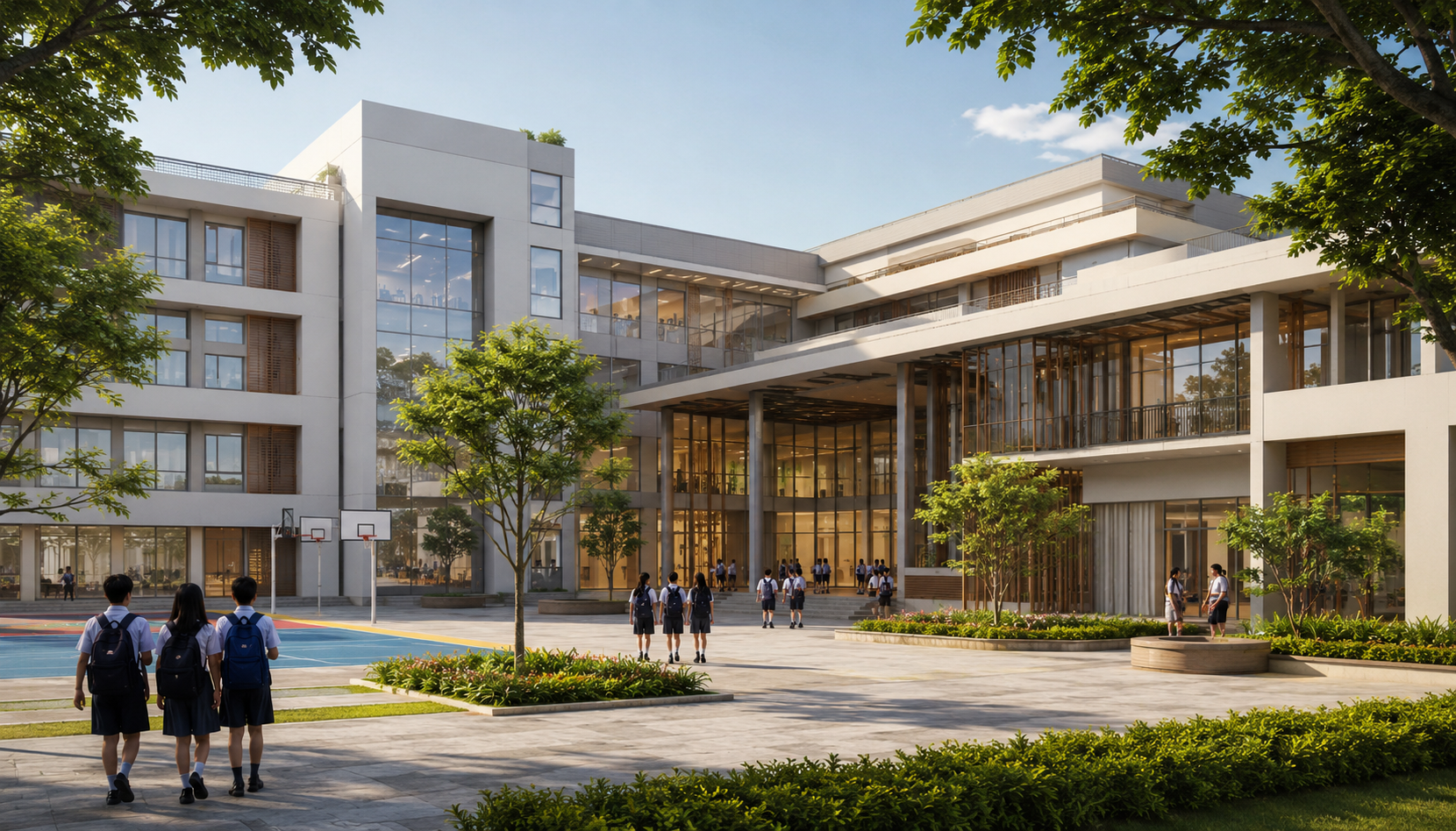
Jamnabai Narsee International School (JNIS) plans to considerably extend its reach in the city, the school has signed a 30-year leasing arrangement worth ₹800 crore to establish a new 300,000-square-foot campus in Juhu. This is one of the largest real estate deals in the Indian education sector.
The new location would likely help Jamnabai Narsee International School expand its presence in Mumbai’s western suburbs.
30-year lease for a new Juhu campus.
According to sources in the Economic Times, the project will be erected on a 2.36-acre land in Juhu under a built-to-suit agreement with the Shri Bhanbai Nenshi Mahila Vidyalaya Trust.
Under this plan, the trust will build the campus to the school’s specifications before leasing the finished facility to Jamnabai Narsee International School for the following three decades.
The lease is estimated to be worth approximately ₹800 crore over 30 years.
Campus will cater to IB students from Kindergarten to Class XII.
The new campus has been developed with the comprehensive infrastructure required for an international school, including facilities suitable for the International Baccalaureate (IB) programme.
According to reports, the facility will include:
Modern academic blocks.
Dedicated Science and Learning Spaces
Indoor and outdoor sports infrastructure
Performing Arts Facilities
Student activities and collaborative learning areas
When the project is finished, the new campus will complement the school’s existing Juhu site while increasing capacity for students seeking an international education.
Although the school has yet to announce when the campus will open, this agreement is a significant step forward in its expansion goal.

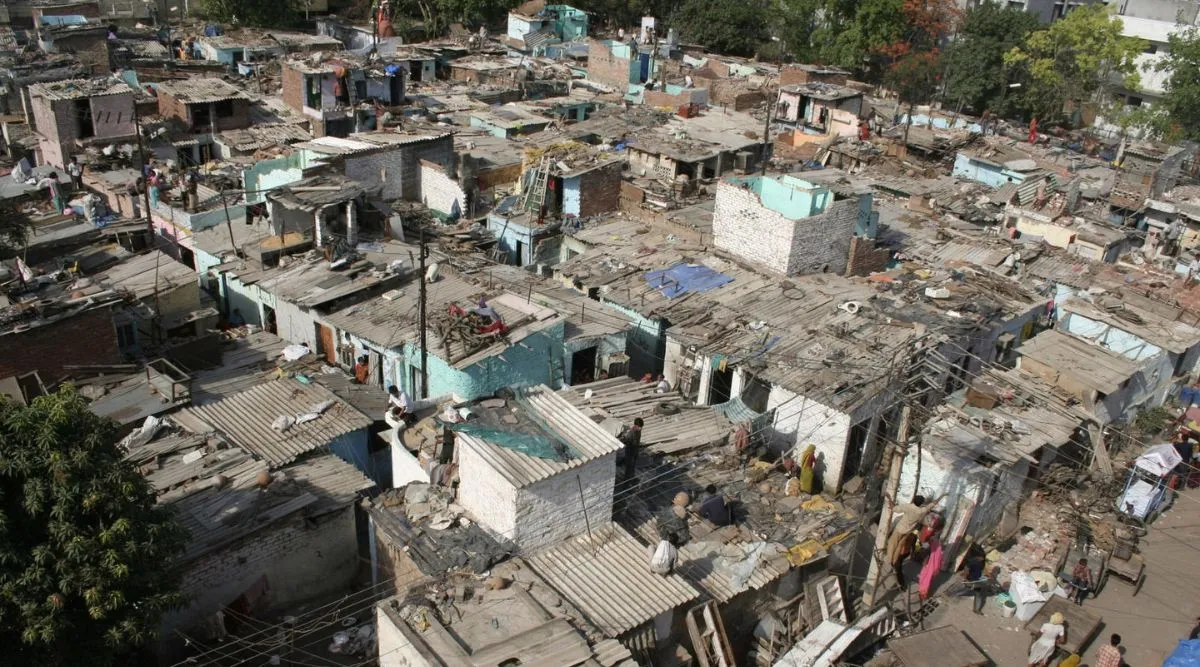
The rehabilitation component of the Dharavi redevelopment project began construction on October 12, 2026, with a bhoomi poojan ceremony held on a 22-acre railroad land lot near Matunga, Mumbai. The ceremony represented an important step toward the long-awaited transformation of one of Asia’s largest informal settlements.
Adani Navbharat Developers Private Limited (ANDPL), the project’s special purpose entity, will build 10 rehabilitation towers on the property, totaling 10,432 residences for qualifying citizens, as well as commercial and industrial units.
The business stated that the first five towers will be handed over to the Dharavi Redevelopment Project and Slum Rehabilitation Authority (DRP/SRA) in March 2029. Two more towers are projected to be delivered by August 2029, with the other three scheduled for August 2030. The staggered handover timeframe will dictate when eligible homeowners can move into their new houses at the Matunga property.
Here are five crucial facts about the rehabilitation component of the Dharavi redevelopment project.
1) Eligible residents will obtain 350 sq ft homes
Under the in-situ rehabilitation initiative, qualified Dharavi residents would receive 350-square-foot dwellings. The Matunga development would also comprise over 10,000 residential, commercial, and industrial units designed to accommodate companies and livelihood activities in addition to residential restoration. The project is designed to provide formal housing while also allowing for Dharavi’s substantial informal economy.
2) Towers will feature 37–39 floors.
Each rehabilitation tower is expected to contain 37 to 39 floors, 10 to 12 passenger elevators, and two specialized fire elevators. Two extra elevators will be installed in commercial and industrial buildings. According to an October 12 announcement from Adani Group, planned amenities include a kindergarten, community hall, podium gardens, sit-out areas, society offices, and houses of worship.
3) A 10-year maintenance commitment.
ANDPL has stated that it will maintain the buildings and common infrastructure for the first ten years following handover. Furthermore, 10% of the commercial space in each rehabilitation building will be set aside to produce cash for the maintenance of shared infrastructure.
4) Project completion timeframe
The Dharavi redevelopment project timeline differs in two significant ways: the rehabilitation component has a seven-year deadline from the initial commencement certificate, but the complete redevelopment project, including the selling component, has a 17-year timeline. The Adani Group has set an August 2029 timetable for the first five towers to be built as part of the rehabilitation component on the 22-acre Matunga site.
5) Key Statistics
The Dharavi redevelopment project covers around 600 acres, of which 296 acres will be redeveloped. Adani Navbharat Developers Private Limited is implementing the project, while the Maharashtra government owns a part. The anticipated investment amount is ₹3 lakh crore. Dharavi’s population is expected to be over one million, and the redevelopment plan calls for the construction of 1.25 lakh to 1.5 lakh rehabilitation homes.
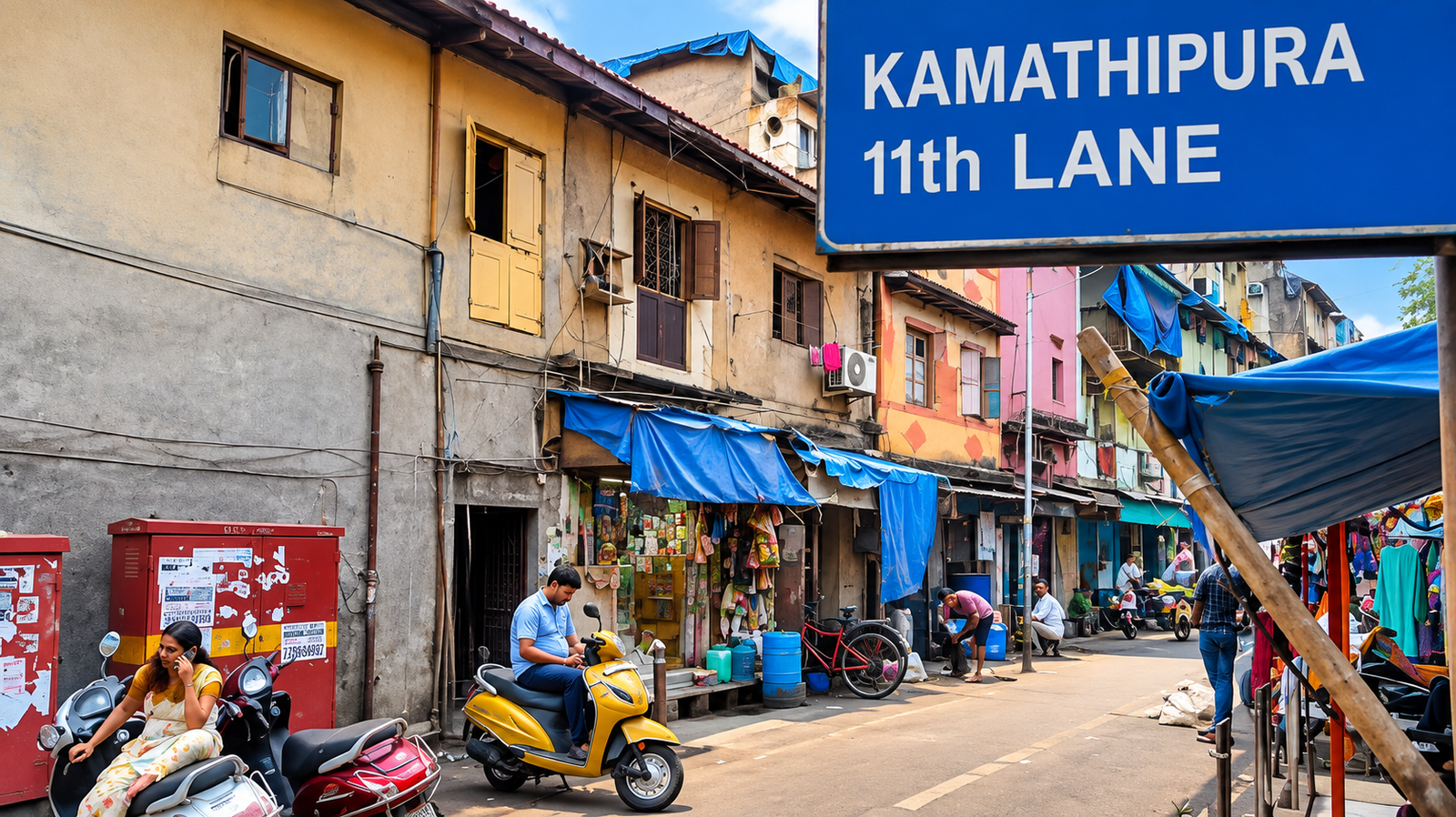
For a neighborhood long associated with Mumbai’s red-light district and its dense, aging buildings, Kamathipura’s proposed redevelopment promises a fundamental shift: cramped homes of around 120 sq ft will give way to 500-sq-ft houses, open spaces, and modern amenities, with residents receiving financial assistance while construction is underway.
The 34-acre reconstruction proposal, which was presented to residents on Friday, includes a minimum monthly rent of Rs 25,000 for residential and commercial tenants, as well as relocation fees and other rehabilitation incentives. The rent will be paid two years in advance, with an additional year’s payment payable by check, according to officials. Larger commercial properties will earn higher rent.
The consent process is set to start this month. Officials stated that inhabitants will be asked to abandon their homes within around six months to allow work to commence.
Kamathipura, one of Mumbai’s oldest and most distinctive neighborhoods, began as a working-class community and later became intimately identified with the city’s red-light district. Its densely packed buildings, limited lanes, and aging structures have made reconstruction a long-standing demand, but attempts only got traction in 2023 before slowing again.
The new concept, developed by the Pune-based Goel Ganga Group, envisions approximately 24 high-rises linked by refuge grounds. Homes of around 500 square feet are suggested, which is more than four times the size of the roughly 120-square-foot homes that many locals now live in. Green and open areas are also planned surrounding the buildings.
The redevelopment is being carried out under the Construction & Development Agency (C&DA) model, in which the developer covers the expense of redevelopment and rehabilitation while receiving a piece of the site for sale.
47 percent of the 34 acres will be used for selling structures, including nine towers. The remaining area will be used to provide rehabilitation services for inhabitants, landlords, and the MHADA. More than 8,000 residential and commercial buildings are slated for rehabilitation, accounting for approximately 39% of the total area. An extra structure will be built for MHADA’s houses.
MHADA vice-president and CEO Sanjeev Jaiswal presented the strategy, which highlighted interactions with the Kamathipura Vikas Samiti as well as resident demands.
Aside from larger residences and rent assistance, the package answers requests for relocation fees, additional elevators, and parking, among other amenities. Landlords will be paid rent during the redevelopment phase.
“Our goal is to complete the rehabilitation buildings in six to eight years, after which the sale buildings will be ready based on market demand,” said Anup Khandelwal, director of Goel Ganga Group.
Jaiswal admitted that relocating residents would cause disturbance, but stated that removing the land was required for redevelopment.
“Displacement always causes disruption, but only after the area is cleared can redevelopment begin,” he said, asking neighbors to approve the PAAA agreements.
He stated that the project’s goal was to establish a planned neighborhood rather than simply restoring ancient structures. “The redevelopment project will be taken forward on the principles of citizens’ participation, transparency and dialogue,” Jaiswal stated.
The project is planned to be completed in four or five stages. MP Arvind Sawant, MLA Amin Patel, and other authorities and public representatives attended Friday’s presentation.
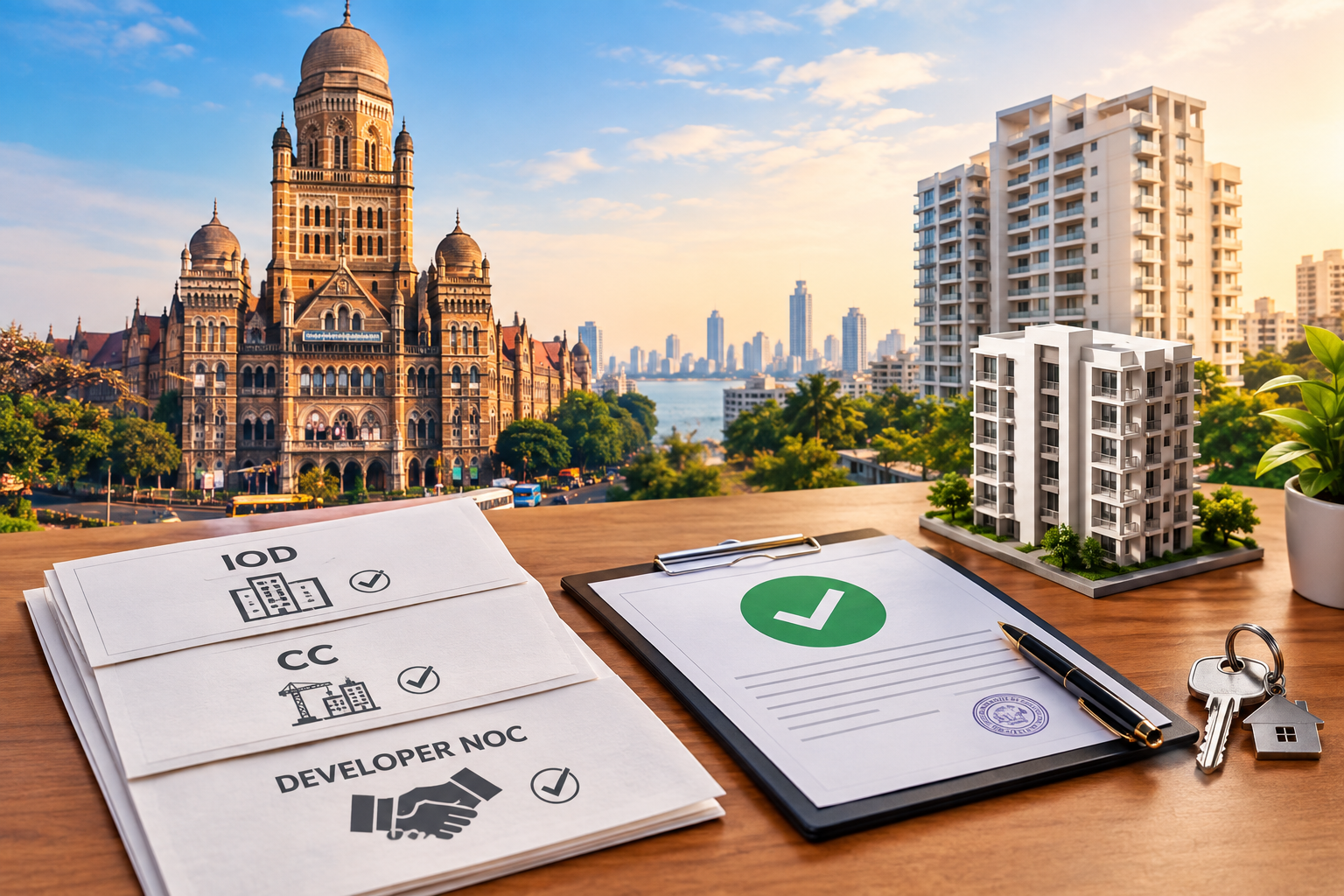
The Mumbai Civic Body, also known as the Brihanmumbai Municipal Corporation (BMC), clarifies in its new Occupation Certificate (OC) amnesty SOP that housing societies cannot seek relief simply because their buildings lack an OC; valid valid Intimation of Disapproval (IOD) and Commencement Certificate (CC), as well as the developer’s NOC, remain key requirements, according to the Mumbai Civic Body’s circular.
Housing societies wishing to get an OC under the Brihanmumbai Municipal Corporation’s (BMC) amnesty policy must first establish that the building has the necessary approvals for its original construction, including an IOD and CC. The BMC’s Standard Operating Procedure (SOP) also demands a NOC from the developer or original construction application as part of the process, making these documents critical for societies looking to formalize their OC status.
The explanation is essential for thousands of Mumbai flat owners who live in buildings without an OC, as the amnesty is not intended to be a blanket method to regularize buildings regardless of approval history. In other words, a building’s eligibility is not determined by the absence of an OC. Before applying for the plan, housing societies must prove that the project received all necessary permissions throughout construction.To verify authenticity, the building for which an OC application is made under this scheme must have a valid IOD, an authorized plan, and a CC, according to the BMC.
The BMC further stated that if the housing society submits an application, a NOC from the owner or developer who initially submitted the development project or who has development rights is required. If the owner or developer does not give the NOC, the BMC stated in its circular that a notice will be issued to them under the Mumbai Municipal Corporation (MMC) Act of 1888.
The circular says that housing societies that are unable to present NOC or authorization letters from the prior owner or developer have submitted a letter to Maharashtra requesting that the MMC Act, 1888, be amended.
What is BMC’s amnesty program for OCs?
The BMC’s proposed amnesty scheme aims to bring relief to thousands of Mumbai housing societies that do not have a valid Occupation Certificate. The BMC plan allows eligible housing societies to receive an OC by paying prescribed charges, which are decided by elements such as the building’s form and size, as well as the nature and extent of permissions or breaches.
The plan is intended to help thousands of housing societies in Mumbai. Currently, almost 12 lakh residents live in nearly 25,000 residential complexes in the city without an OC.
Furthermore, the BMC’s condition specifies a deadline for applying under the OC plan. The proposed system will only apply to buildings occupied prior to November 17, 2016. Housing societies will be required to show papers such as property tax receipts or electricity bills to prove that the building was occupied prior to the deadline.

Ranbir Kapoor Rents Pune Trump Towers Flat for ₹4.63 Lakh/Month

AI to Drive APAC Office Demand Growth

MahaRERA Recovers ₹369 Crore from Developers, Mumbai Leads

43,000 Homes Unsold in Navi Mumbai Amid Buyer Slowdown

Vijayta Raheja Applauds India’s ₹4 Lakh Crore Urban Vision at ET Maharashtra Business Summit

K Raheja & IHG Team Up to Elevate Powai’s Hospitality Landscape
-
 Real Estate News6 months ago
43,000 Homes Unsold in Navi Mumbai Amid Buyer Slowdown
-
 Real Estate News6 months ago
Vijayta Raheja Applauds India’s ₹4 Lakh Crore Urban Vision at ET Maharashtra Business Summit
-
 New Projects & Launches6 months ago
K Raheja & IHG Team Up to Elevate Powai’s Hospitality Landscape
-
 Real Estate News6 months ago
Mumbai’s Largest MHADA Redevelopment Drive Set to Transform 923 Acres
-

 NRI Real Estate7 months ago
Will NRI Investments Drive Mumbai Housing?
-
 Global Real Estate7 months ago
Spanish Youth Hostel Group Considers London Real Estate Deals
-

 NRI Real Estate7 months ago
How NRIs Are Driving India’s Property Market?
-

 Real Estate News7 months ago
John Abraham Firm Renews Bandra Rent at ₹12L/Month