


 Why Mumbai Top Cops Visit Dargahs Annually
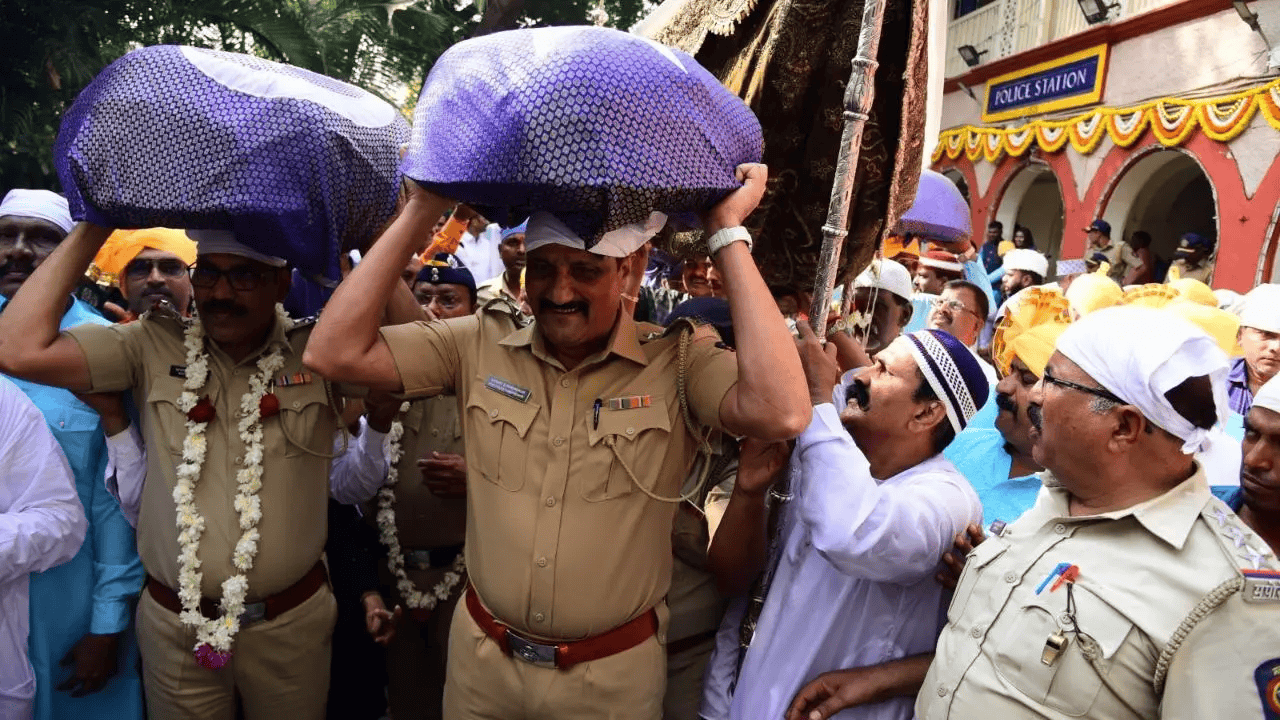
Every year, as Urs begins at Mahim Dargah, a tableau plays out on Mumbai’s streets, with a police band in front, uniformed policemen behind, and senior police officers carrying a green chadar as they travel towards the 600-year-old shrine of Hazrat Makhdoom Ali Mahimi.
Table of Contents
While it appears to be a religious ceremony performed by a secular force, the custom dates back to colonial Bombay, the policing of large public fairs, and the city’s unique relationship with its Sufi saints.
While most government departments discreetly abandoned the ceremonial and religious customs they had inherited from the British, a few exceptions persisted, mainly at dargahs like Mahim and Dongri’s Rehman Shah Baba.
The legacy of Mahim Dargah
The Mahim Dargah of Hazrat Makhdoom Ali Mahimi is one of Mumbai’s oldest and most historically significant Islamic shrines, dating back over six centuries. Long before Mumbai became a metropolis, this coastal dargah served as a spiritual center for sailors, traders, intellectuals, and villages along the western coast.
The saint was of Arab heritage, and his forefathers are thought to have migrated in India around AD 860 (AH 252) to escape the persecution of Hajjaj ibn Yusuf, the powerful and dreaded governor of Basra. Makhdoom Ali Mahimi, who was born in India some five centuries later, had rigorous instruction in Islamic law and theology before becoming the faqih, or law officer, for Mahim’s Muslim community. He died in 1431, and shortly after, the local people built a mosque and shrine in his honor. Over the decades, the temple has evolved into one of Mumbai’s most important pilgrimage sites.
The city police’s relationship with the shrine
The Mumbai Police’s history with the Mahim Dargah predates the contemporary agency. Long before a professional police system was established, the Bhandari Militia, an indigenous force drawn mostly from the Bhandari people of coastal Maharashtra, maintained peace and order on the islands of Bombay. They were the region’s first police, security guards, and night watchmen, and their ties to the shrine appear to have continued throughout the British era.
While there are no public records to explain the origins of this relationship, local mythology indicates that numerous early chowkis were built near where the saint previously lived or lectured to his disciples. There are also rumors that these early law enforcement officers believed they were being assisted by an unseen power when cracking down on criminals and smugglers in the area.
The first written mention of the police’s involvement in the Dargah comes from S M Edwardes, Bombay Police Commissioner from 1909 to 1916. He keeps records of both the Urs and the police’s active participation. He adds: “The three chief processions are that of the Bombay Police which takes place about noon on the first day of the fair; that of the Nawab of Janjira, about 3 pm on the same day; and lastly the shrine-procession which takes place about 12 o’clock on the same night.”
The Gazetteer of Bombay City and Island (1910) also records the police role in the ceremonies: “In the police procession, which starts from the Mahim Police-chauki, the trays are carried by the Sunni Musalman officers of the corps, and a few sepays at the head of the procession perform on the long sword and fence with one another, as they move along.”
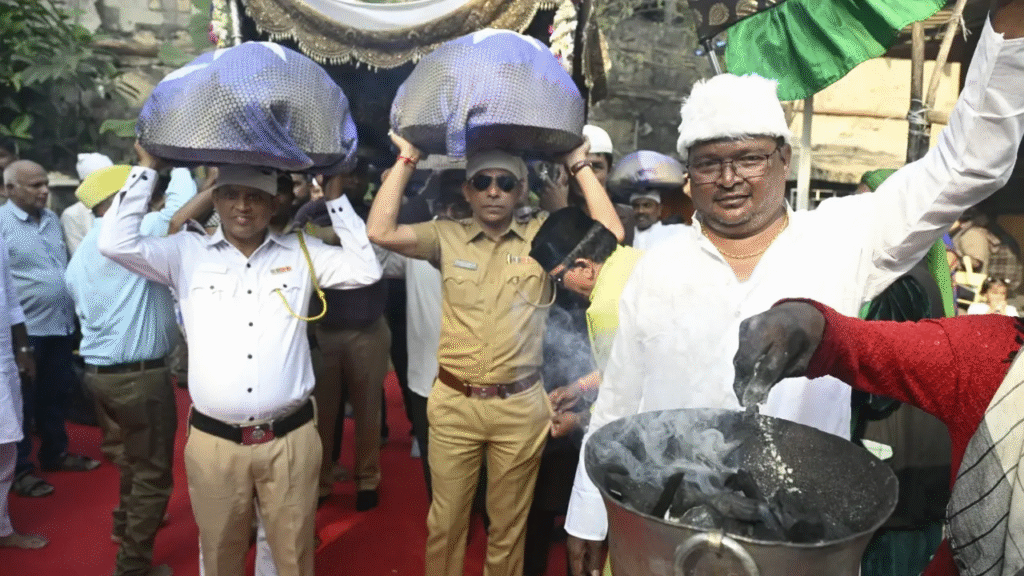
This custom has continued to the present day. Within the Mumbai Police, a dedicated trust now manages the offering, with workers contributing Rs 25 each to purchase ceremonial items for the Dargah.
Mumbai police’s relationship with other Dargah
Mahim Dargah is not the only place where the Mumbai Police perform ceremonial procedures. A similar custom exists at the Dargah of Haji Rehman Shah Baba in Dongri, which is an important Sufi shrine dedicated to Abdul Rehman Shah Baba. The ascetic is thought to have been born in Salem, Madras Presidency, before coming to Bombay in the nineteenth century. His origins are still debated: some legends identify him as a legal official, while others present him as a hafiz-e-Quran.
In Dongri, he lived as a traveling Sufi mendicant, and various legends surround him, including one in which the police were apparently unable to apprehend him despite repeated protests from residents. Although there is no written record to support these claims, it is widely assumed that the former Bombay Police began paying tribute to the saint following his death in 1915, in recognition of his local impact and the societal veneration he commanded.
The practice has endured into the present period. Senior officers from the jurisdiction typically participate in the annual Sandal ceremony, and in October of this year, the Mumbai Police Commissioner personally conducted the rites at the Rahman Shah Baba Dargah, offering the ceremonial chadar on behalf of the force.
What explains this participation?
The Mumbai Police’s presence at the city’s dargahs is more about the evolution of Bombay than religion. For decades, shrines such as Mahim, Haji Ali, and Dongri’s Rehman Shah Baba were among the city’s most popular public spaces, attracting thousands of sailors, shopkeepers, and migrant workers to their annual Urs fairs. Managing large crowds necessitated constant police presence on the ground, dealing with everything from traffic and theft to fighting, stampedes, and coastal safety. Over time, the ongoing coordination with shrine committees became a tradition.
The location reinforced the intimacy. The original police chowkis in Mahim and Dongri were literally close to the dargahs, therefore the local force was the first to respond to any issue during the fairs. The British administration encouraged such gestures, particularly in a city plagued by dockyard tensions and social outbursts. Maintaining goodwill with powerful neighborhood institutions was viewed as a means of keeping the peace.




No Comments