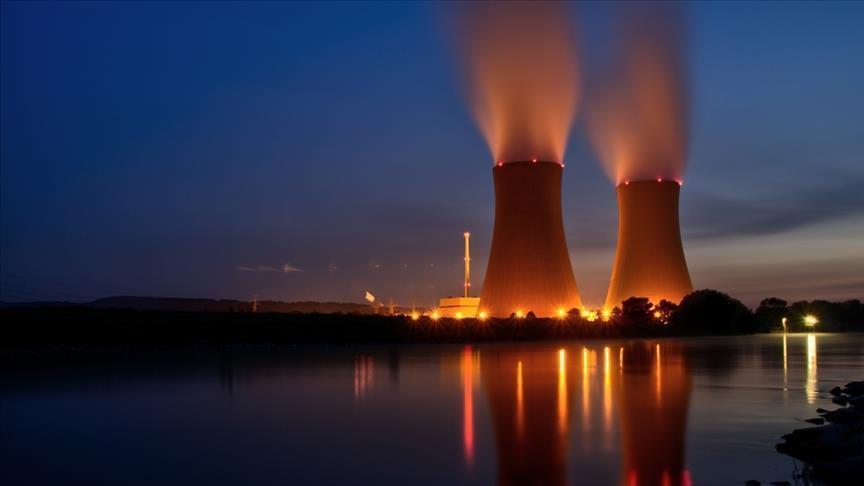
The United Kingdom was the origin of commercial nuclear energy, but it today generates only a fraction of its electricity from it; major efforts are ongoing to change that.
The country once had more nuclear power plants than the United States, USSR, and France combined. It was a global manufacturer until 1970, but has not built a new reactor since Sizewell B in 1995.
Today, the country is ranked as the most expensive area in the world to build nuclear projects, rather than as a leader in atomic energy.
According to the most recent International Energy Agency data, nuclear energy will account for only 14% of the United Kingdom’s power supply in 2023, behind its European rivals and well behind leader France at 65%.
There are plans to change this and have nuclear power provide a quarter of the UK’s power by 2050. Nuclear is regarded as an appealing bet gas because it is a low-carbon, consistent energy source that can serve as a baseload to supplement intermittent sources such as renewables.
“There’s a very clear momentum that has been observed,” Doreen Abeysundra, founder of Fresco Cleantech, told CNBC. It is partly due to geopolitical concerns, which have pushed energy security and independence to the forefront of public minds.
However, the United Kingdom’s Nuclear Regulatory Taskforce advocated for immediate revisions after detecting “systemic failures” in the country’s nuclear framework. It discovered that fragmented regulation, faulty legislation, and insufficient incentives caused the United Kingdom to fall behind as a nuclear superpower. The administration has committed to following the taskforce’s recommendations and is expected to offer a plan to do so within three months.
Going big – or small
The United Kingdom is dividing its bets between tried-and-true major nuclear plants and smaller, next-generation reactors known as small module reactors (SMRs).
Rolls-Royce, a British business, has been chosen as the country’s preferred partner for SMRs, which are effectively containerized nuclear reactors that can be constructed in factories. Many use passive cooling techniques, which supporters believe make them safer and more cost-effective.
Environmentalists have long criticized nuclear power for its radioactive waste and disasters such as Chernobyl. Windscale, the United Kingdom’s first commercial nuclear facility, melted down in 1957, causing the country’s worst nuclear catastrophe in history.
Most SMRs rely on tried-and-true light water reactor technology, such as the planned large-scale nuclear station Sizewell C, which has “shrunk down,” according to Abeysundra.
Other designs, called as “advanced” reactors, involve more experimentation. For example, those that alter the cooling solution or solvent, which is commonly employed in the separation and purification of radioactive elements.
The first SMR in the United Kingdom will be built at Wylfa, Wales, but no timetable for completion has been provided. The location will initially host three SMRs and eventually expand to include more.
In September, the Netherlands struck an agreement with the United States to strengthen business connections in nuclear energy and ease licensing for companies looking to build on the other side of the Atlantic.
However, “the first point is, there is not now a single SMR actively producing power under four revenues. “They will all come at best in the 30s,” says Ludovico Cappelli, portfolio manager of Listed Infrastructure at Van Lanschot Kempen.
While SMRs are a “game changer” due to their capacity to power individual companies or small communities, their commercialization is still a long way off, he said. From an investing sense, “that is still a bit scary,” he noted.
To ensure the substantial baseloads required to offset the intermittent nature of renewables, “we’re still looking at big power stations,” said Paul Jackson, Invesco’s EMEA global market strategist.
SMRs “probably” have a role—”they can clearly be more nimble”—but it will take time to roll them out, Jackson said, casting doubt on the UK’s potential to be a nuclear leader, given France and China are already well ahead.
Great British Energy-Nuclear, a government body in the United Kingdom, plans to identify sites for another large-scale nuclear facility after acquiring one in Gloucestershire, in the west of England, and one in Wales.
“We are reversing a legacy of no new nuclear power being delivered to unlock a golden age of nuclear, securing thousands of good, skilled jobs and billions of pounds in investment,” a representative for the United Kingdom’s Department for Energy Security and Net Zero told CNBC.
“Sizewell C will deliver clean electricity for the equivalent of six million of today’s households for at least six decades, and the UK’s first small modular reactors at Wylfa will power the equivalent of three million homes, bringing energy security,” according to the announcement.
Innovation in funding
The United Kingdom has a great legacy to build upon. It pioneered new funding arrangements to make-scale nuclear projects investable, reducing their reliance on direct government funding, such as a Contract for Differences, which was utilized for Hinkley Point C.
e largThe system provides a fixed price for power generated over a lengthy period of time, reducing the risk of investing in an industry infamous for going over schedule and budget. Hinkley Point C was initially estimated to cost £18 billion (more than $24 billion), but the cost has gradually increased.
“That fixes one part of the equation, the price risk,” Cappelli said of nuclear projects. However, the second risk is building delays.
The Regulated Asset Base (RAB), which was originally utilized for nuclear at Sizewell C, aims to address this. Investors are compensated from the day they write a cheque for a nuclear plant, rather than when it begins operations. Sizewell C is anticipated to cost around £38 billion to develop.
Private sector investors are growing interested in next-generation nuclear as a means of meeting rising energy demands from AI, resulting in a slew of new companies attempting to build out plants. Perhaps the most well-known is Oklo, a U.S. company that went public through a Special Purpose Acquisition Company (SPAC) created by OpenAI’s Sam Altman.
Newcleo, the U.K.’s advanced modular reactor hopeful that employs lead for cooling, will relocate its headquarters from London to Paris in 2024 as part of a deliberate expansion of its European reach. At the time, it told World Nuclear News that it still planned to have a commercial reactor operational in the United Kingdom by 2033, but the company has subsequently cut back its British ambitions.
Meanwhile, First Light Fusion and Tokamak Energy are based in the United Kingdom. They both focus on nuclear fusion, the technique of creating power by fusing atoms, albeit this technology has yet to leave the laboratory. Fission, the process by which atoms are split, is responsible for all of today’s nuclear power. In June, the United Kingdom announced a £2.5 billion investment in the world’s first fusion prototype.
The next generation of engineers
The United Kingdom faces issues in gaining access to relevant talent, which is critical for efficiently growing programs. The country is lauded for its world-class colleges and technical know-how, “but that is very much book knowledge,” according to Cappelli of Van Lanschot Kempen.
“What we need is real on-the-ground expertise, and that we are probably lacking for the simple reason that we haven’t been doing it for a very long time,” added the minister.
Abeysundra believes the United Kingdom stands apart in one area: its thinking. “There is so much knowledge, innovation, and that can-do attitude, which I don’t see as much in other nations,” she said, citing the United Kingdom’s pioneering role in the Industrial Revolution and the introduction of offshore wind energy.
The U.K. government positioned nuclear energy as a vital component of the future clean energy workforce in its Clean Energy Jobs Plan, which was unveiled in October, while its national nuclear skills roadmap, slated to launch in 2024, focuses on apprenticeships, PhDs, and upskilling mid-career workers. Industry-led initiatives such as the Energy Skills Passport help oil and gas personnel learn green skills.
Securing the supply chain
The supply chain, on the other hand, may be the most challenging issue.
Uranium, the fuel used in nuclear reactions, is dominated by only four countries, including Russia. According to the World Nuclear Association, global uranium demand might increase by roughly one-third by 2030 and more than double by 2040, increasing dependency on a small number of countries and putting pressure on developers.
The United Kingdom government has earmarked funds to strengthen the supply chain and has pledged to prohibit the purchase of nuclear fuel from Russia by 2028. Sizewell C’s fuel will come from European or “Western suppliers,” according to Cappelli.
However, for him, it raises the question: how secure is nuclear energy? “We have to build nuclear power plants, but we need to build the value chain,” she said.
Workers, experience, and financing are essential for nuclear energy, but the supply chain is also critical, he explained. Otherwise, there will be “the same issues that we had with gas,” referring to the United Kingdom’s reliance on a single provider. Instead of gas, it will contain uranium.




 UK Pushes for Nuclear Revival Despite Major Challenges







No Comments