
Locality Insights
Largest cricket stadiums in India by capacity

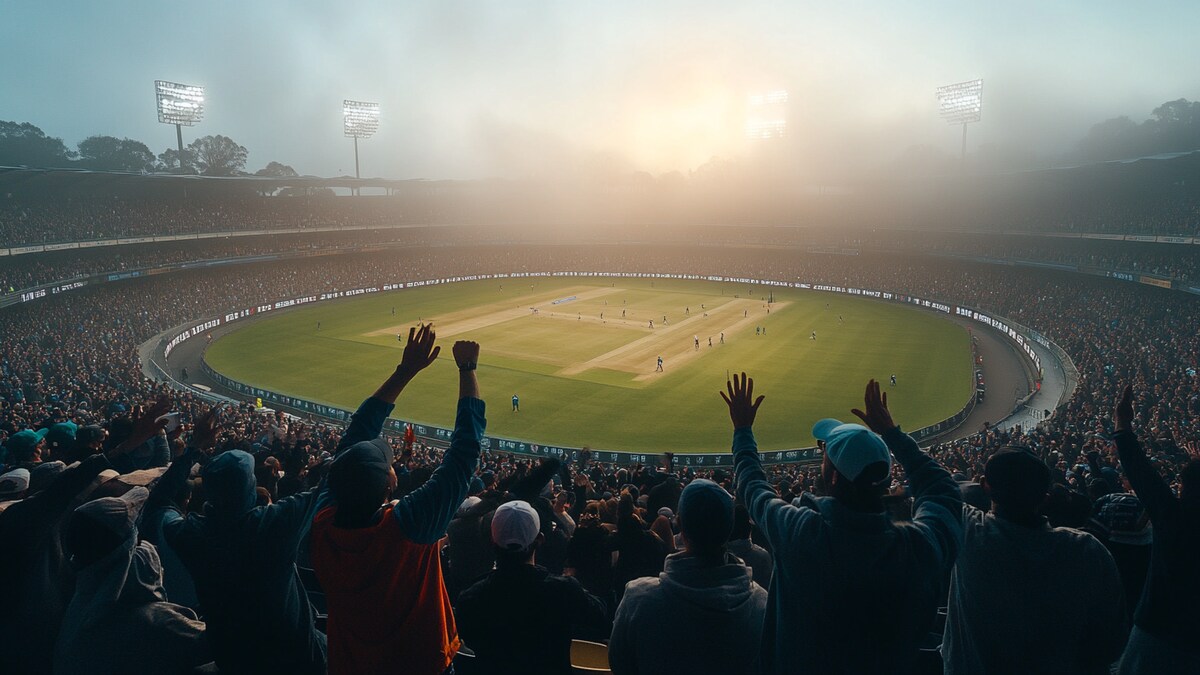
Cricket’s enormous popularity in India has resulted in the construction of some of the world’s largest stadiums, notably the Narendra Modi Stadium in Ahmedabad, which can accommodate 1,32,000 people. With over 50 international venues, including the renowned Eden Gardens, Wankhede, and Chepauk, India tops the cricket infrastructure. On that point, here is a comprehensive list of cricket stadiums in India, along with information on upcoming ones.
India has a long history of sports, ranging from hockey and kabaddi to wrestling and boxing; the country has welcomed and enjoyed all sports. However, nothing compares to cricket’s immense appeal. Cricket maintains a particular place in the hearts of every Indian, with matches taking place all year round, from international events to the Indian Premier League.
Want to know where the major cricket events take place? Continue reading to find out which are India’s largest cricket venues by capacity!
What are the largest cricket grounds in India?
Many cricket grounds, including Eden Gardens and Motera Stadium, have been renovated and expanded throughout the years to suit an increasing number of sports aficionados. The scale has grown to the point where India now has some of the largest cricket venues in terms of capacity.
Here is the list of India’s biggest stadiums:
| Rank | Stadium | Location | Capacity | Home teams |
| 1 | Narendra Modi Stadium | Ahmedabad, Gujarat | 132,000 | Gujarat Titans; Gujarat cricket team |
| 2 | Eden Gardens | Kolkata, West Bengal | 68,000 | Bengal; Kolkata Knight Riders |
| 3 | Shaheed Veer Narayan Singh Intl. Stadium | Nava Raipur, Chhattisgarh | 65,000 | Chhattisgarh; Delhi Capitals (alt. venue) |
| 4 | BRSABV Ekana Cricket Stadium | Lucknow, Uttar Pradesh | 50,000 | Uttar Pradesh; Lucknow Super Giants |
| 5 | Greenfield International Stadium | Thiruvananthapuram, Kerala | 50,000 | Kerala |
| 6 | JSCA International Stadium Complex | Ranchi, Jharkhand | 50,000 | Jharkhand |
| 7 | Barabati Stadium | Cuttack, Odisha | 45,000 | Odisha |
| 8 | Vidarbha Cricket Association Stadium (Jamtha) | Nagpur, Maharashtra | 44,904 | Vidarbha |
| 9 | MCA International Stadium | Gahunje (Pune), Maharashtra | 42,700 | Maharashtra |
| 10 | Barsapara (ACA) Cricket Stadium | Guwahati, Assam | 40,000 | Assam; Rajasthan Royals (alt. venue) |
| 11 | Rajiv Gandhi International Cricket Stadium | Hyderabad, Telangana | 39,200 | Hyderabad; Sunrisers Hyderabad |
| 12 | M. A. Chidambaram Stadium (Chepauk) | Chennai, Tamil Nadu | 38,000 | Tamil Nadu; Chennai Super Kings |
| 13 | Arun Jaitley Stadium | New Delhi | 35,200 | Delhi |
| 14 | M. Chinnaswamy Stadium | Bangalore, Karnataka | 35,000 | Karnataka; Royal Challengers Bengaluru |
| 15 | Wankhede Stadium | Mumbai, Maharashtra | 33,108 | Mumbai; Mumbai Indians |
| 16 | Holkar Stadium | Indore, Madhya Pradesh | 30,000 | Madhya Pradesh |
| 17 | Saurashtra Cricket Association (Niranjan Shah) Stadium | Rajkot, Gujarat | 28,000 | Saurashtra |
| 18 | Dr. YS Rajasekhara Reddy International Cricket Stadium | Visakhapatnam | 27,500 | Andhra |
Key data about some of India’s most famous cricket grounds
Cricket fields are often measured in terms of spectator seating capacity. Read on to learn more about India’s largest cricket stadiums.
Narendra Modi Stadium, Ahmedabad
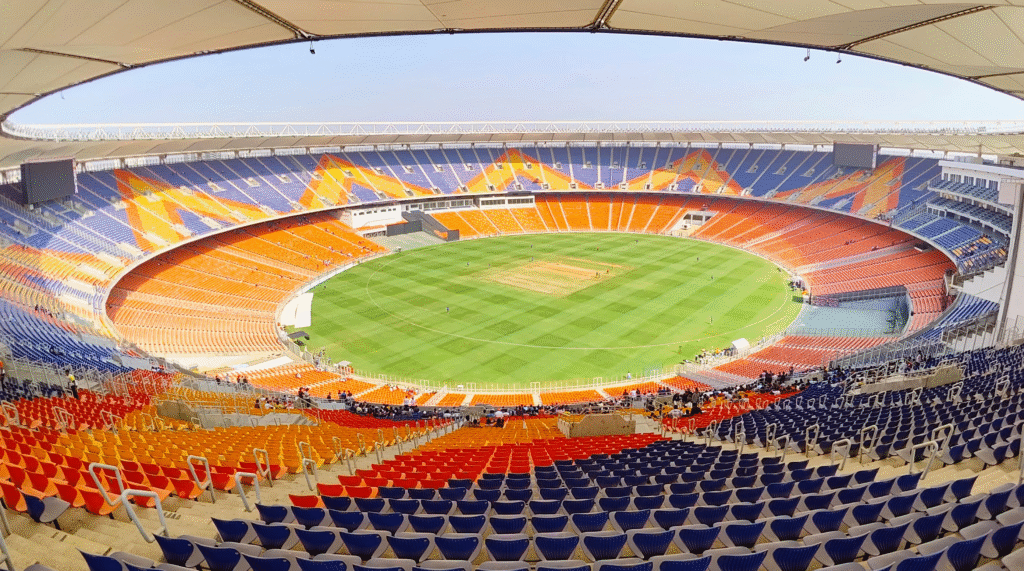
The Narendra Modi arena, formerly known as Sardar Patel Stadium or Motera Stadium, is India’s largest cricket arena. The Motera stadium, built in 1983, was dismantled in 2015 and rebuilt, with a reopening scheduled for 2020. It is also the world’s largest cricket stadium, having surpassed Melbourne Cricket Stadium.
The Narendra Modi Stadium in Ahmedabad has a capacity of 1.32 lakh spectators with 49,000 seats, whereas the Melbourne Cricket Ground can accommodate 1 lakh people.
The stadium has a circular roof over all of the stands, four dressing rooms, 76 corporate boxes, and a parking lot that can hold up to 3,000 cars. The stadium’s playing field is 180 metres long and 150 metres wide, with a 360-degree LED scoreboard showing live scores, replays and commercials.
Other notable features of the stadium include a cricket museum, library, and indoor cricket academy.
Eden Gardens, Kolkata
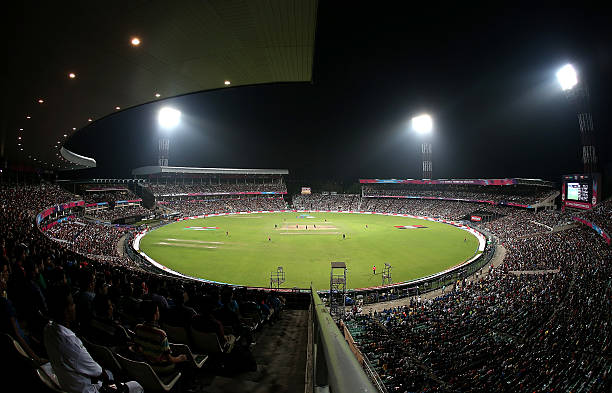
Established in 1864, Eden Gardens in Kolkata is the oldest and the second-largest cricket stadium in India, with a capacity of 68,000 people. Historically, its capacity was expanded to 100,000 from 40,000 during the 1987 World Cup and later reduced for safety reasons. It was revamped again in 2011 for the ICC (International Cricket Council) 2011 World Cup. The capacity was then fixed at 68,000 from the previous capacity near 94,000.
Eden Gardens Kolkata has had various restorations over the years, with the most recent occurring in 2020. The stadium has four stands, including the legendary B.C. Roy Clubhouse, which provides panoramic views of the playing field. It has modern amenities such as floodlights for day-night matches, a high-tech scoreboard, and a media area that can seat approximately 80 journalists.
Shaheed Veer Narayan Singh International Cricket Stadium, Chhattisgarh
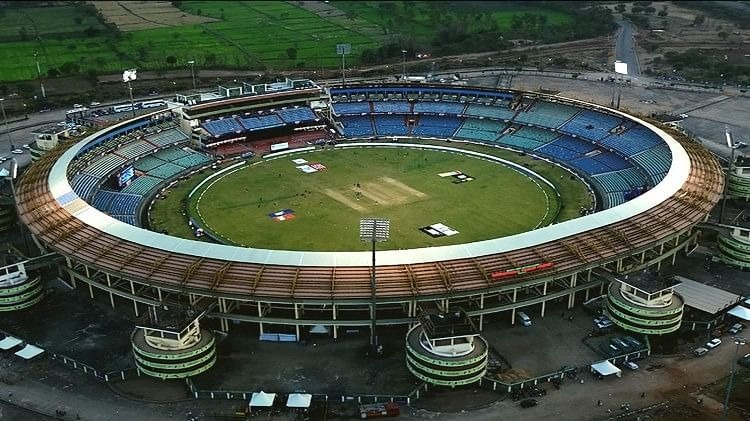
Shaheed Veer Narayan Singh International Cricket Stadium in Naya Raipur has a seating capacity of around 65,000, making it India’s third largest cricket stadium and the fourth largest in the world. It was inaugurated in 2008 and is named after Veer Narayan Singh Binjhwar, a Chhattisgarh freedom fighter.
The stadium is known for its enormous boundary dimensions and was named India’s 50th international cricket venue in 2023. It routinely hosts domestic and IPL matches and serves as the Delhi Capitals’ secondary home ground.
Greenfield International Stadium, Trivandrum
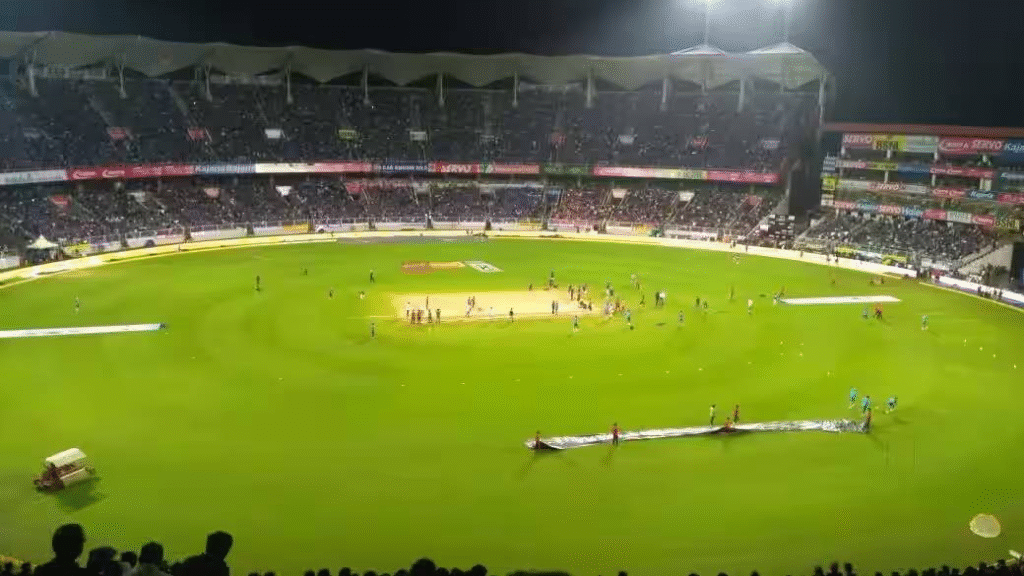
Previously known as the Trivandrum International Stadium, the Greenfield International Stadium is a multi-purpose venue that holds both cricket and football competitions. The stadium, located in Thiruvananthapuram, Kerala, can accommodate around 50,000 people at one time.
It is India’s first Design, Build, Operate, and Transfer (DBOT) outdoor stadium, sprawling across 36 acres. The arena, built to FIFA and ICC standards, is divided into four zones: the North Zone for cricket, the East Zone for football, the South Zone with shopping malls and a food court, and the West Zone, which includes an Olympic-size swimming pool as well as volleyball, squash, table tennis, and basketball courts. The stadium also emphasises environmentally friendly maintenance practices by providing extensive greenery and rainwater collection facilities.
Ekana Cricket Stadium, Lucknow
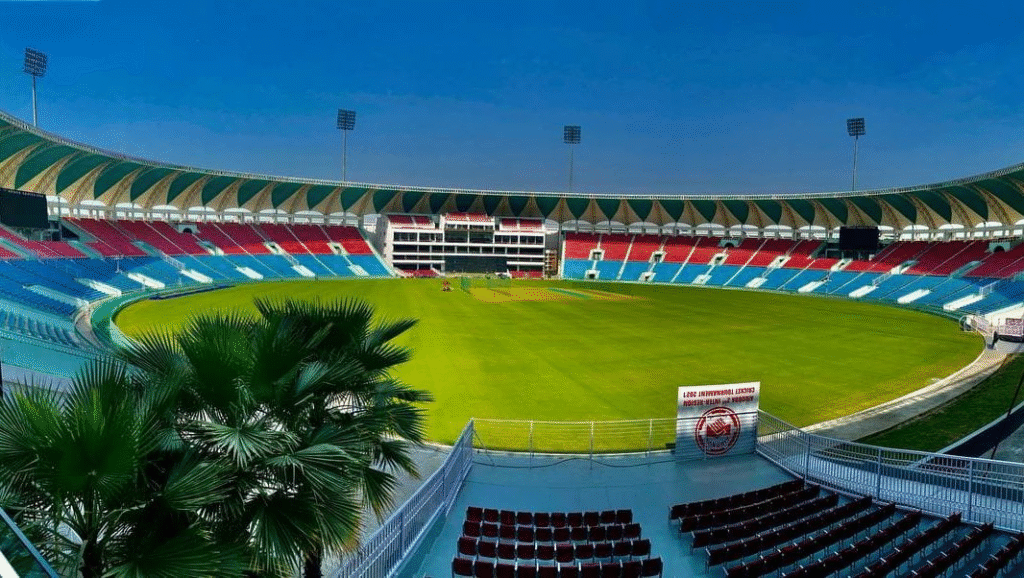
Ekana Cricket Stadium was developed in 2017 in Lucknow. It was later renamed as Bharat Ratna Shri Atal Bihari Vajpayee Ekana Cricket Stadium in 2018 to honour the late Atal Vihari Bajpayee, former Prime Minister of India. Presently, it is the third-largest international cricket stadium in India, with a seating capacity of 50,000.
As of July 2025, the stadium has hosted one test match, nine ODIs, and six T20 matches.
JSCA International Cricket Stadium, Ranchi
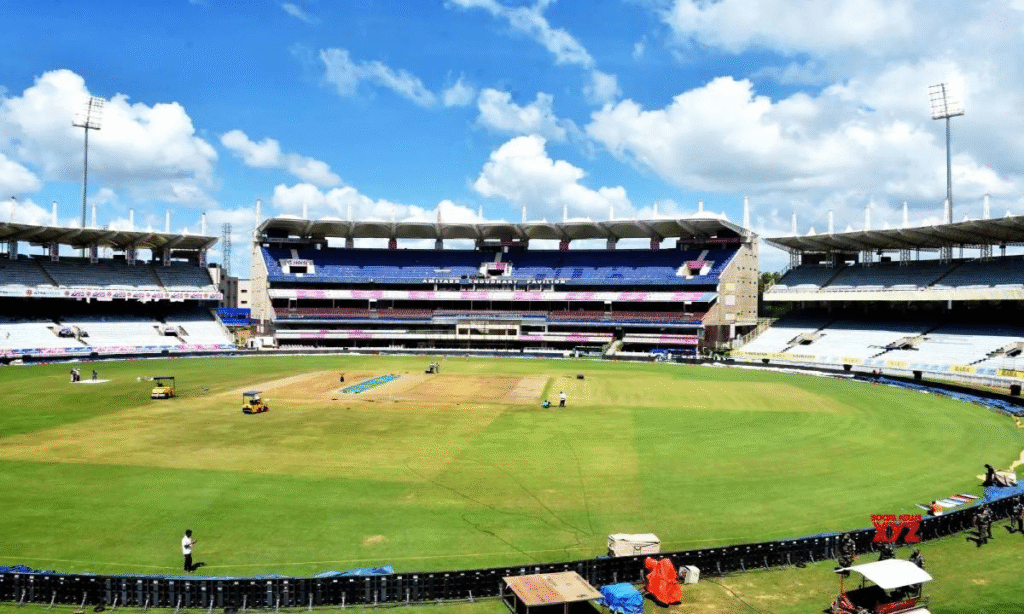
The Jharkhand States Cricket Association (JSCA) International Cricket Stadium in Ranchi has a 50,000-seat capacity and 76 corporate boxes. It is uniquely placed, with hills on the east and west sides providing spectacular vistas.
The stadium opened in January 2013 and hosted its maiden ODI match between India and England on January 19, 2013. The stadium went on to hold seven more Indian Premier League matches.
The best thing about the JSCA International Stadium is that the turf is designed so that no shadow may fall on any of the nine pitches before 4:45 PM. The stadium is conveniently positioned near Birsa Munda Airport and is well-connected across Ranchi.
Barabati Stadium, Cuttack
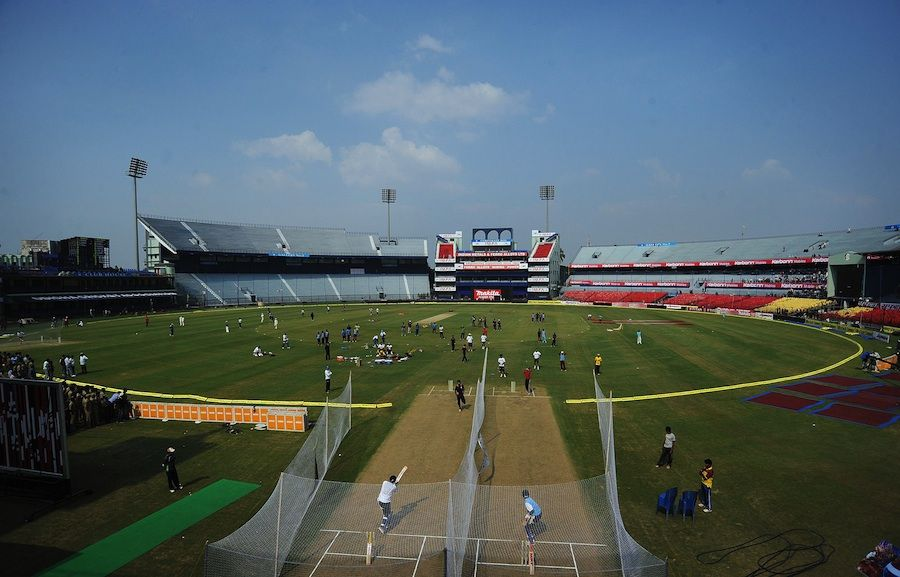
The Odisha Cricket Association owns and operates Barabati Stadium in Cuttack, which serves as the Odisha Cricket team’s home stadium. Established in 1958, it has a seating capacity of around 45,000 people as of 2025.
It is also one of India’s oldest cricket venues, having hosted various touring teams, including the Marylebone Cricket Club (MCC), West Indies, and Australians, prior to holding its first international match in 1982.
Vidarbha Cricket Association Stadium, Nagpur
The Vidarbha Cricket Association venue in Nagpur is India’s largest cricket venue by pitch area. It features 80-yard straight and 85-yard square bounds. The stadium was inaugurated in 2008 to host the first international match between India and Australia in November of that year.
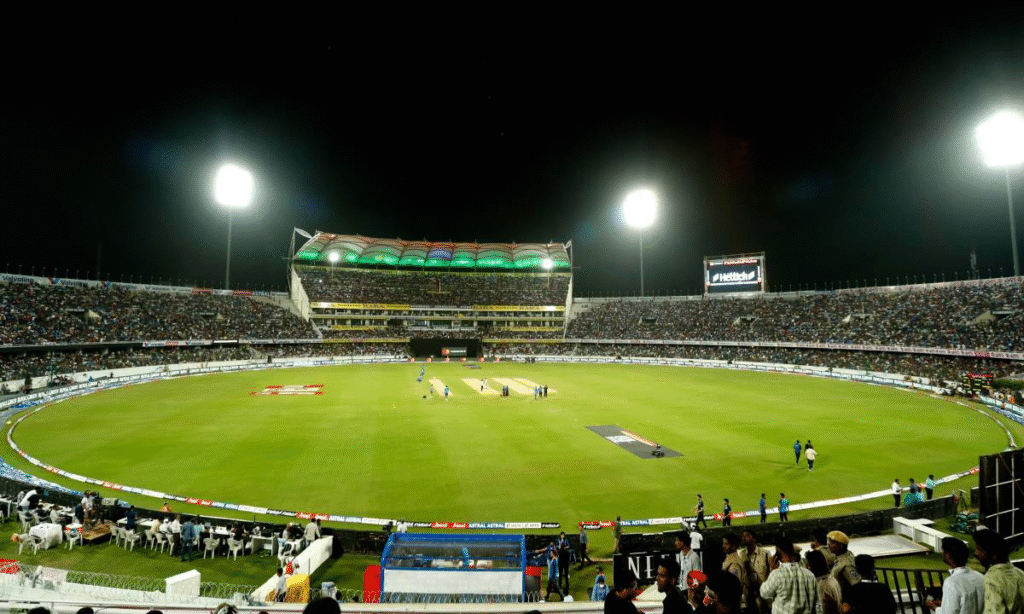
Rajiv Gandhi International Cricket Stadium, Hyderabad
The Rajiv Gandhi International Cricket Stadium in Hyderabad, popularly known as Uppal Stadium, spans 16 acres of land and can accommodate approximately 39,000 spectators at once. Built in 2003 by architect Sashi Prabh, it has two ends: Pavilion End and North End, also known as VVS Laxman End.
As of August 2025, the stadium, known for its flat, batsman-friendly pitch, had hosted six Tests, ten ODIs, and three T20Is. It is home to both the Hyderabad Cricket Team and the Sunrisers Hyderabad IPL franchise.
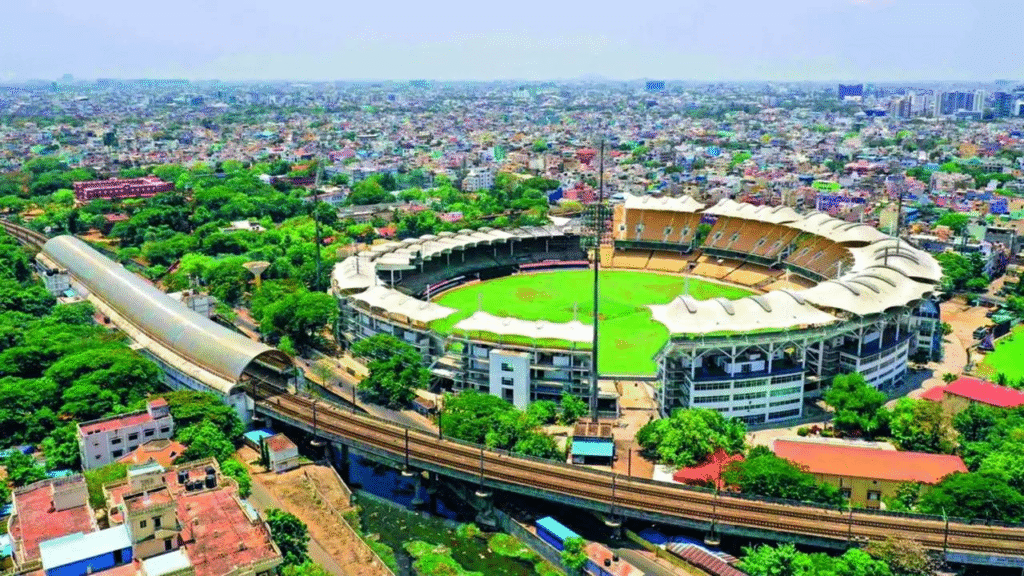
Chepauk Stadium, Chennai
Chepauk Stadium (M.A. Chidambaram Stadium) in Chennai, constructed in 1916, is India’s second oldest cricket stadium, following Eden Gardens in Kolkata. It currently seats roughly 38,000 people, following improvements conducted before to the IPL 2023, which included the construction of a new pavilion named after former Tamil Nadu Chief Minister M. Karunanidhi.
The stadium held its first Test match on February 10, 1934, as well as other notable events such as India’s maiden Test victory over England in 1952. The outfield was rebuilt before the 2025 T20 World Cup to improve playing conditions.
The pitch remains spin-friendly and sluggish, which benefits bowlers. The arena is the home ground of the Chennai Super Kings in the Indian Premier League. Plastic bans, cloth bags and banners, and segregated wet and dry trash bins are among the eco-friendly innovations introduced during renovations.
M. Chinnaswamy Stadium, Bangalore
M. Chinnaswamy Stadium in Bangalore has a seating capacity of around 35,000 people, making it one of India’s top cricket stadiums. It was inaugurated in 1969 and named after Mangalam Chinnaswamy, a former BCCI president and long-time KSCA (Karnataka State Cricket Association) chairman. It now hosts international and IPL games.
It is the Royal Challengers Bengaluru team’s home ground. It is known for its short boundaries and true bounce, and it also includes rooftop solar, rainwater harvesting, and a sub-air drainage system.
Wankhede Stadium, Mumbai
Wankhede Stadium in Mumbai is one of India’s most renowned cricket stadiums, valued more for its history and electrifying atmosphere than size. It opened in 1974 and was considerably refurbished for the 2011 World Cup, reducing capacity from almost 45,000 to approximately 33,000 and adding modern seats, enhanced floodlights, and state-of-the-art changing rooms.
Its beachside position near the Arabian Sea frequently aids swing bowlers, and evening dew can shape limited-overs chases. Wankhede has hosted historic events, such as the 2011 ICC Cricket World Cup Final and Sachin Tendulkar’s farewell Test in 2013.
Saurashtra Cricket Association Stadium, Rajkot
The Niranjan Shah Stadium, also known as the Saurashtra Cricket Association Stadium or the Khandheri Cricket Stadium, is located in Rajkot, India. Completed in 2009, this is Gujarat’s first solar-powered cricket stadium, having a seating capacity of around 28,000. It is part of a larger sports complex that also houses badminton, basketball, and volleyball courts.
The stadium staged its inaugural international match, an ODI between India and England, in January 2013. It served as the home stadium for the Gujarat Lions, an IPL team. The stadium has since hosted numerous ODIs, T20Is, and Test matches, including the India-Australia ODI in September 2023. It was renamed Niranjan Shah Stadium in 2024.
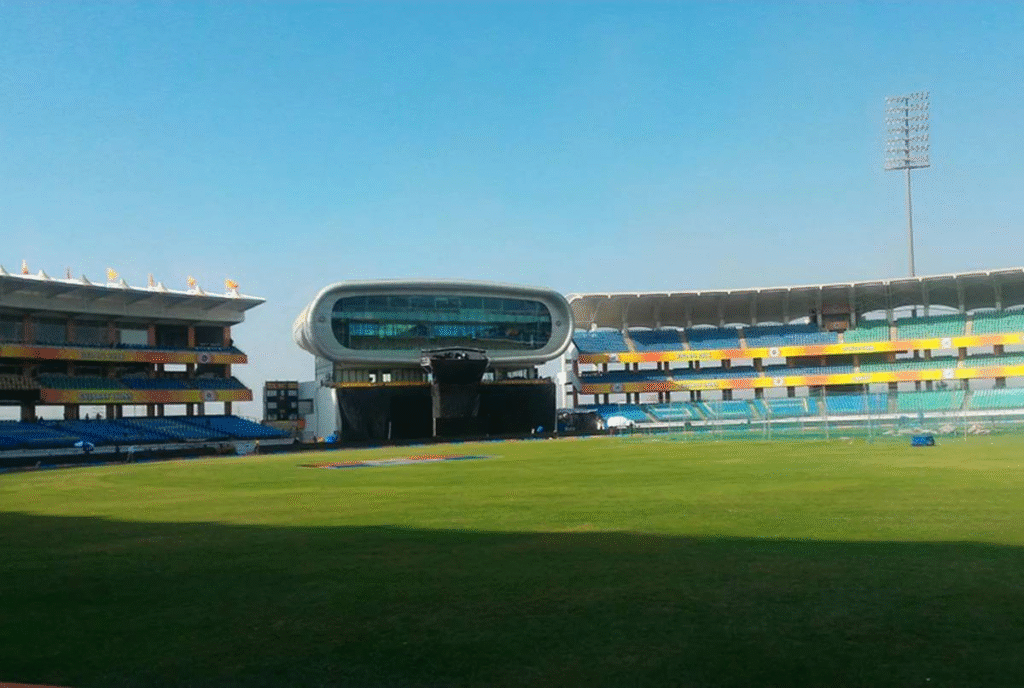
Cricket stadium in Noida
The proposed Noida International Cricket Stadium in Sector 150 will cover roughly 38 acres and have a seating capacity of 35,000 to 40,000 spectators. The Uttar Pradesh Cricket Association (UPCA) has accepted this project, which aspires to be Uttar Pradesh’s fifth international-level cricket stadium once completed.
The stadium’s design adheres to ICC and BCCI requirements, with a playing diameter of around 137.6 metres. The development is part of the larger Sports City effort near the Noida-Greater Noida Motorway, which includes significant business organisations such as Tata, Birla, Hero Group, and Eldeco.
Despite the approvals, building has been delayed since the Noida Authority has yet to approve the layout plans. In addition, legal processes involving the principal developer, ATS Homes, are still ongoing.
ATS Homes has launched a lawsuit to ensure that the project’s requisite land is allocated on schedule. As of mid-2025, the project’s timeframe is unknown and dependent on regulatory and judicial judgements.
As legal obstacles to the projected Noida International Stadium are cleared, India is poised to add another major cricket site to its list. Meanwhile, Andhra Pradesh has unveiled plans for a huge stadium in Amaravati, which is expected to be the country’s largest once completed.

Thane’s real estate market is booming, with people flocking to acquire properties. Because of its excellent connectivity and infrastructure, selecting a reputed builder is becoming increasingly vital today. The best builders offer premium, mid-range, and low-cost housing, as well as stunning designs that ensure your investment is completely secure. The best list of Thane’s top ten builders and developers may connect you with reliable builders who fit your lifestyle and needs. You can start working on purchasing your dream home and investment opportunity in Thane right away.
Top 10 Builders and Developers in Thane
Here is a list of Thane’s greatest builders and developers, known for excellent construction, on-time delivery, and dependable residential developments, to assist homeowners and investors in selecting the right developer:
1) Rustomjee Constructions
Rustomjee Group, founded in 1995 by Boman R. Irani, is a notable real estate developer in the Mumbai Metropolitan Region (MMR). They are well-known for their meticulous design and environmentally friendly construction, having completed over 300 projects ranging from residential townships to luxury high-rises and commercial spaces.
| Attribute | Details |
| Builder Name | Rustomjee Constructions [1] |
| Headquarters | 702, Natraj, M.V. Road Junction,Western Express Highway, Andheri (East),Mumbai – 400 069 |
| Years of Experience | 30 years |
| Notable Thane & Mumbai Projects | Uptown Urbania La Familia / Rustomjee Crown / Rustomjee Verdant Vistas / Rustomjee Crescent / Rustomjee Belle Vue / Uptown Urbania La Vie |
| Project Category | Residential / Plots / Commercial / Townships |
| Price Range | On Request (premium segment) |
| Possession Status | 2 & 3 bed homes starting at ₹3.33 Cr++ / Rustomjee Vista Bay |
| Amenities | Clubhouse, pool, gym, sports courts, gardens, jogging track, kids’ play area |
| Safety & RERA Compliance | RERA registered (verify on Maha RERA portal) |
| Project Segments | 2, 3 & 4 BHK apartments, Penthouses & residential plots |
| Contact | Phone: +91 22 6111 6111Email: sales@rustomjee.com / nri@rustomjee.com |
2) Godrej Group
Godrej Properties brings the Godrej Group’s innovation, sustainability, and excellence ideals to the real estate market. Godrej Properties’ 123-year legacy of excellence and trust is blended with a dedication to modern architecture and technology in all of its projects. This is the best builder in Thane. Over the years, Godrej Properties has received more than 250 accolades and awards. Our organisation has consistently been at the forefront of the environmental sustainability movement. These initiatives are Godrej Ascend, Godrej Emerald Vista, and Godrej Exquisite.
| Attribute | Details |
| Builder Name | Godrej Properties [2] |
| Headquarters | Mumbai – Unit No. 5C, 5th Floor, Godrej One, Pirojshanagar, Vikhroli East, 400 079 |
| Years of Experience | 30+ years |
| Notable Ghaziabad Projects | Godrej Wave City, Godrej Siddharth Vihar, Godrej Plots Siddharth Vihar |
| Project Category | Residential / Plots / Township |
| Price Range | On Request (premium segment) |
| Possession Status | Wave City: ~2029+Siddharth Vihar: Pre-launch |
| Amenities | Clubhouse, pool, gym, sports courts, gardens, jogging track, kids’ play area |
| Safety & RERA Compliance | RERA registered (verify on UP RERA portal) |
| Project Segments | 2, 3 & 4 BHK apartments, residential plots |
| Contact | Phone: +91 22 6169 8500Email: marketing@godrejproperties.com |
3) Kalpataru Group
Kalpataru Group, India’s premier real estate developer, was founded in 1969. It has successfully launched several important projects, setting new standards in the real estate market. The company’s distinctive strategy focuses on developing residential and commercial properties that have future value for clients. This builder is well-known in Thane. The Group’s defining characteristics are quality, honesty, humility, and openness. It aims to be recognized for its innovative, high-quality, and deliberately designed living places.
| Attribute | Details |
| Company Name | Kalpataru Ltd [3] |
| Headquarters | Kalpataru Ltd, 101, Kalpataru Synergy, Opp. Grand Hyatt, Santacruz (E), Mumbai – 400 055 |
| Years of Experience | 50+ years (established 1969) |
| Notable Ghaziabad/Noida Projects | Kalpataru Vista – Sector 128, Noida (close to Ghaziabad region) |
| Project Category | Residential (Premium 3 & 4 BHK) |
| Price Range (sq ft.) | ₹5.7 Cr‑₹7.6 Cr+ (3 & 4 BHK) |
| Possession Status | Under Construction / Ongoing (Possession around June 2025) |
| Booking Amount | On Request (contact sales) |
| Amenities + Specifications | Golf‑course views, clubhouse, pool, gym, kids’ play area, landscaped gardens, 24×7 security |
| Safety & RERA Compliance | RERA Registered (UPRERAPRJ14980) |
| Project Segments | 3 & 4 BHK apartments + duplexes |
| Total Projects | 100+ projects (India nationwide) |
| Under Construction Projects | Kalpataru Vista – Sector 128 (Noida) |
| Upcoming Projects | No official projects in Thane; upcoming residential projects planned in Noida/NCR region |
| Contact | Phone: +91‑22‑3064 5000Email: sales@kalpataru.com |
4) Hiranandani Group
Hiranandani Group is a prominent top developer in Thane with over 40 years of experience. Since its founding in 1978, the Hiranandani Group’s success has been built on the confidence of the people, and their unshakable faith motivates us to continue aiding others. Numerous families who have built a future with us can attest to the value they have added to their lives. They use technological advancements in our real estate projects to assure perfection and precision in all aspects, because they recognize the power of technology. Our ultimate goal is to give people a fantastic experience.
| Attribute | Details |
| Company Name | Hiranandani Group [4] |
| Headquarters | Olympia, Central Avenue, Hiranandani Business Park, Powai, Mumbai – 400076 |
| Phone | +91 22 2576 3600 |
| sales@hiranandani.net | |
| Website | https://hiranandani.com/ |
| Years of Experience | 40+ years |
| Notable Thane Projects | Hiranandani Estate (Ghodbunder Road)Hiranandani Westgate (Waghbil) |
| Project Category | Residential Townships & Premium Apartments |
| Price Range (sq ft.) | ~₹95 L – ₹8 Cr+ (1–4 BHK) |
| Possession Status | Under Construction / Ongoing (Westgate ~Dec 2029) |
| Booking Amount | On Request |
| Amenities + Specifications | Clubhouse, swimming pool, gym, sports courts, landscaped gardens, kids’ play areas, jogging track |
| Safety & RERA Compliance | RERA Registered (verify specific RERA numbers before booking) |
| Project Segments | 1, 2, 3 & 4 BHK apartments |
| Total Projects | Multiple townships across Mumbai, Thane, Navi Mumbai, Pune & Chennai |
| Under Construction Projects | Hiranandani Estate (Ghodbunder Road), Hiranandani Westgate (Waghbil) |
| Upcoming Projects | No official upcoming projects in Thane; new projects planned in Mumbai, Navi Mumbai, Pune, & Chennai |
| Contact | Phone: +91 22 2576 3600Email: sales@hiranandani.net |
5) Runwal Developers
With a proven track record of 51 completed projects and over 10,000 satisfied families, the business has always prioritized the “customer” in all project design, planning, and implementation. The Runwal Group currently owns and operates Mumbai’s largest retail mall complex, R City Mall, R Mall, and R Odeon, which covers more than 2 million square feet of G.L.A. The Runwal Group specializes in luxury, premium, and large-format township residential projects.
| Attribute | Details |
| Company Name | Runwal Developers / Runwal Group [5] |
| Headquarters | Runwal & Omkar Esquare, 5th Floor, Eastern Express Highway, Sion (East), Mumbai – 400022 |
| Phone | +91 22‑61133000 |
| corporate@runwal.com | |
| Website | https://www.runwal.com/ |
| Years of Experience | 45+ years (since 1978) with 65+ projects delivered across Mumbai MMR & Pune |
| Notable Thane Projects | Runwal One Thane West (1 & 2 BHK, Manpada)Runwal Gardens (Dombivli East township) |
| Project Category | Residential Apartments & Integrated Townships |
| Price Range (sq ft.) | Runwal One Thane: ~₹69 L‑₹1.1 Cr+ (1 & 2 BHK)Runwal Gardens: ~₹38 L‑₹1.8 Cr (1‑3 BHK) |
| Possession Status | Runwal One Thane West: Under Construction (Dec 2028)Runwal Gardens: Possession ongoing/varies by tower |
| Booking Amount | On Request / Contact Sales |
| Amenities + Specifications | Clubhouse, gym, swimming pool, landscaped gardens, jogging track, play areas (varies by project) |
| Safety & RERA Compliance | RERA Registered (e.g., Runwal One Thane West RERA: P51700046298) |
| Project Segments | 1, 2 & 3 BHK residential |
| Total Projects | 65+ landmarks delivered across Mumbai, MMR & Pune |
| Under Construction Projects | Runwal One Thane West; Runwal Gardens (selected phases) |
| Upcoming Projects | No official upcoming projects in Thane; new launches planned in Mumbai & Pune regions |
| Contact | Phone: +91 22‑61133000Email: corporate@runwal.com |
6) Tata Housing Development Company Ltd.
With the fastest growth rate since 2006, TATA Housing has become one of India’s top real estate development companies. With an emphasis on residential, commercial, and retail property development, Thane’s real estate developers operate in a number of industries. The company is renowned for its meticulous property management, ethical and transparent business practices, and excellent building work. It has worked with internationally recognized designers and architects. In India, TATA Housing was the first company to build commercial real estate.
| Attribute | Details |
| Company Name | TATA Housing [6] |
| Headquarters | Homi Modi St, Kala Ghoda, Fort, Mumbai, Maharashtra – 400001 |
| Phone | +91 (22) 6665 8282 |
| info@tata.com | |
| Website | https://www.tata.com/business/tata-housing |
| Years of Experience | 20+ years in real estate development |
| Notable Thane Projects | Tata Eureka Park (Kolshet, Thane West) |
| Project Category | Residential Apartments & Townships |
| Price Range (sq ft.) | ~₹90 L – ₹4 Cr+ (1–4 BHK) |
| Possession Status | Under Construction / Ongoing |
| Booking Amount | On Request / Contact Sales |
| Amenities + Specifications | Clubhouse, swimming pool, gym, landscaped gardens, jogging track, kids’ play areas |
| Safety & RERA Compliance | RERA Registered |
| Project Segments | 1, 2, 3, & 4 BHK residential |
| Total Projects | Multiple projects across Mumbai, Thane, Pune, and other regions |
| Under Construction Projects | Tata Eureka Park (Thane West) |
| Upcoming Projects | No official upcoming projects in Thane; new projects planned in the Mumbai and Pune regions |
| Contact | Phone: +91 (22) 6665 8282Email: info@tata.com |
7) Raunak Group.
They are a well-known and recognized builder and developer in Thane and Mumbai, having been in operation since 1980. Our primary goal is to continue providing our clients with the greatest possible experience from the moment they begin the home-buying process until they retire.
They have completed several township projects over the years. They have completed projects totaling over 59,58,787 square feet and are now working on projects that will add 44,19,277 square feet.
| Attribute | Details |
| Company Name | Raunak Group [7] |
| Headquarters | Plot No.1, Mohan Mill Compound, Ghodbunder Road, Thane (W) – 400607 |
| Phone | (+91) 22‑25847000 |
| info@raunakgroup.com | |
| Website | https://raunakgroup.com/ |
| Years of Experience | 35+ years |
| Notable Thane Projects | Raunak Bliss (Thane West), Raunak City (Ghodbunder Road) |
| Project Category | Residential Apartments & Townships |
| Price Range (sq ft.) | ~₹60 L – ₹3 Cr+ (1–3 BHK) |
| Possession Status | Raunak Bliss: Under ConstructionRaunak City: Ongoing |
| Booking Amount | On Request / Contact Sales |
| Amenities + Specifications | Clubhouse, swimming pool, gym, landscaped gardens, jogging track, kids’ play areas |
| Safety & RERA Compliance | RERA Registered |
| Project Segments | 1, 2 & 3 BHK residential |
| Total Projects | Multiple residential projects in the Thane and Mumbai regions |
| Under Construction Projects | Raunak Bliss, select towers of Raunak City |
| Upcoming Projects | No official upcoming projects in Thane; other upcoming projects in the Mumbai region |
| Contact | Phone: (+91) 22‑25847000Email: info@raunakgroup.com |
8) Regency Group.
The Regency Group’s Chairman and Managing Director, Mr Mahesh Agarwal, its founder and predecessor, leads the company professionally.
Thane’s real estate businesses operate with a focus on quality, quantity, and efficiency, earning them an enviable reputation. If you are looking for a house in Thane, you should speak with a home loan specialist to assess your eligibility.
| Attribute | Details |
| Company Name | Regency Group [8] |
| Phone | +91 0251‑6161000 |
| Website | https://regencygroup.co.in/ |
| Years of Experience | 30+ years |
| Notable Thane Projects | Regency Towers, Regency Heights (Thane West) |
| Project Category | Residential Apartments & Townships |
| Price Range (sq ft.) | ~₹50 L – ₹2 Cr+ (1–3 BHK) |
| Possession Status | Under Construction / Ongoing |
| Booking Amount | On Request / Contact Sales |
| Amenities + Specifications | Clubhouse, swimming pool, gym, landscaped gardens, jogging track, kids’ play areas |
| Safety & RERA Compliance | RERA Registered |
| Project Segments | 1, 2 & 3 BHK residential |
| Total Projects | Multiple residential projects across Thane and the surrounding regions |
| Under Construction Projects | Regency Towers, Regency Heights |
| Upcoming Projects | No official upcoming projects in Thane; new projects planned in nearby regions |
| Contact | Phone: +91 0251‑6161000 |
9) Cosmos Group.
The organization, founded in 2000 by Mr. Suraj Parmar, Mr. Pradip Chopra, and Mr. Manish Mehta, takes pleasure in its integrity, excellence, and exceptional work. The Group’s founders have 30 years of construction experience and have created townships in Virar, Vasai, Thane, and Nallasopara. Their remarkable work has earned them widespread recognition in a variety of sectors.
| Attribute | Details |
| Company Name | Cosmos Group [9] |
| Headquarters | B‑183/184, G.I.D.C., Sector‑25, Near Madhur Dairy, “K” Road, Gandhinagar – 382025 |
| Phone | 9324183942 |
| cspaliwal@cosmosgroup.in | |
| Website | https://www.cosmosgroup.in/ |
| Years of Experience | 30+ years |
| Notable Thane Projects | Cosmos Kalpataru (Thane West), Cosmos Palms (Ghodbunder Road) |
| Project Category | Residential Apartments & Townships |
| Price Range (sq ft.) | ~₹50 L – ₹2 Cr+ (1–3 BHK) |
| Possession Status | Under Construction / Ongoing |
| Booking Amount | On Request / Contact Sales |
| Amenities + Specifications | Clubhouse, gym, swimming pool, landscaped gardens, jogging track, kids’ play areas |
| Safety & RERA Compliance | RERA Registered |
| Project Segments | 1, 2 & 3 BHK residential |
| Total Projects | Multiple residential projects across Thane and the surrounding regions |
| Under Construction Projects | Cosmos Kalpataru, Cosmos Palms |
| Upcoming Projects | No official upcoming projects in Thane; new projects planned in other regions |
| Contact | Phone: 9324183942Email: cspaliwal@cosmosgroup.in |
10) Rosa Group.
All of the Rosa Group’s homes are built on the firm premise that “meeting client expectations is simply the first step; exceeding them is our endeavour” in a world where construction is largely about producing beautiful structures. To stay up with business trends and technology, the best machinery, most effective workers, qualified colleagues, and efficient equipment are utilized and regularly improved. Rosa Group is a building company that pioneered the concept of interconnected master-planned communities. The Group has changed Thane’s real estate industry.
| Attribute | Details |
| Company Name | Rosa Group (Rosa Realty Group) [10] |
| Headquarters | Rosa Manhattan, Next to Rosa Royale, Near Hiranandani Estate, Ghodbunder Road, Thane West – 400607 |
| Phone | +91 8767607607 |
| sales@rosagroup.in | |
| Website | https://www.rosagroup.in |
| Years of Experience | Founded in 2009; 15+ years in real estate |
| Notable Thane Projects | Rosa Manhattan, Rosa Sephora, Rosa Royale |
| Project Category | Residential Apartments & Luxury Townships |
| Price Range (sq ft.) | ~₹1.70 Cr – ₹2.05 Cr (2–3 BHK units at Rosa Manhattan, Ghodbunder Road) |
| Possession Status | Mix of Ready-to-Move and Under Construction projects |
| Booking Amount | On Request / Contact Sales |
| Amenities + Specifications | Clubhouse, landscaped gardens, gym, swimming pool, jogging track, kids’ play areas |
| Safety & RERA Compliance | All projects are RERA Registered |
| Project Segments | 2 & 3 BHK luxury apartments |
| Total Projects | 8+ residential projects in Thane |
| Under Construction Projects | Rosa Manhattan, Rosa Sephora |
| Upcoming Projects | New launches planned in Thane’s Ghodbunder Road and Bhayandarpada region |
| Contact | Phone: +91 8767607607Email: sales@rosagroup.in |
How to Choose the Best Builder in Thane?
Choosing the right builder is crucial for ensuring high-quality construction, timely delivery, and long-term value. Here are the key factors to consider:
Step 1: Check the UP RERA Registration for the project’s approval status and developer reputation.
Step 2: Consider the contractor’s track record of completing tasks on time.
Step 3: Evaluate construction quality, including materials, construction, and project completion.
Step 4: Determine a construction company’s financial health to avoid project delays.
Step 5: Consider the project’s position in respect to public transportation choices such as Metro lines, roads, schools, and offices.
Step 6: Compare the prices to the features and specifications provided by the facility.
Step 7: Clearly record all payments, reception deadlines, and other legal matters.
Step 8: Analyze client feedback and comments to identify consumer satisfaction and recurring issues.
Step 9: Determine the resale value/rental returns dependent on the construction company’s reputation.
Step 10: Evaluate service quality in terms of maintenance and warranty.
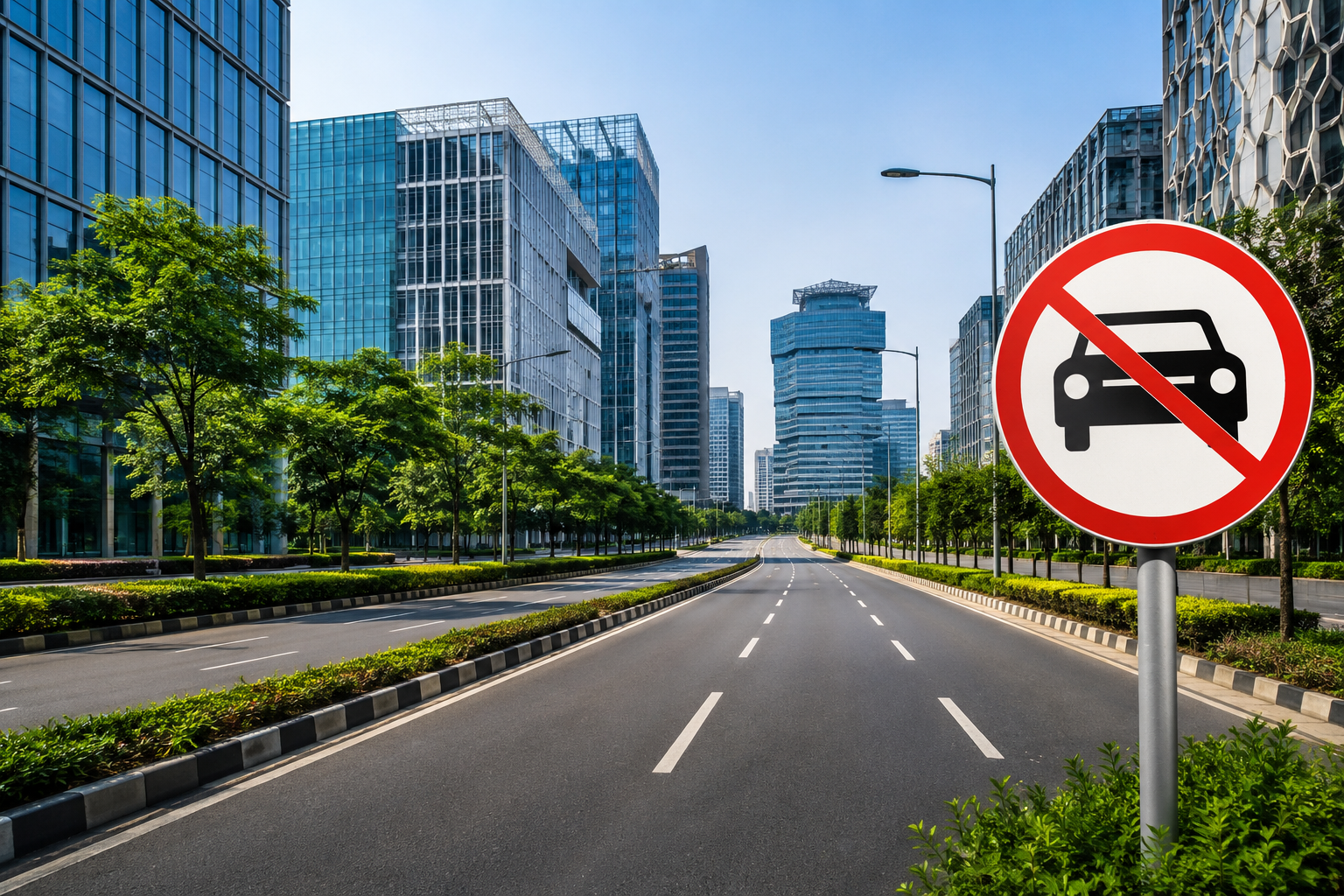
Mumbai’s Bandra Kurla Complex (BKC) is preparing to launch a new program aimed at decreasing congestion and encouraging sustainable travel. Every Friday will be designated as ‘Public Transport Day’, with approximately 200,000 professionals encouraged to take the train, metro, or bus instead of driving their own cars. The program, a first-of-its-kind initiative centered on a major corporate district, will begin this week, on June 12.
Why was Friday chosen?
Around 90 BKC-based firms and organisations have shown their support in principle to the initiative. It is being implemented by the Mumbai Metropolitan Region Development Authority (MMRDA) in collaboration with BEST, Mumbai Metro Rail Corporation Limited (MMRCL), the Traffic Police, auto-rickshaw unions, and WRI India, according to the Hindustan Times (HT).
According to authorities, Fridays were chosen because work schedules are often more flexible near the end of the week, making employees more ready to try other transport options. Mondays were avoided since commuters are normally under more strain to get to work on time.
The MMRDA has also directed almost 2,000 employees and contract workers to engage in the campaign.
How long will the trial last?
Officials stated that the program will be rigorously watched for at least three to four months. During this time, authorities will assess difficulties every week and implement changes as needed.
The move comes after surveys and stakeholder consultations conducted in recent weeks. According to the findings, 82% of commuters would consider taking public transportation if services were more reliable, convenient, and well-connected.
What issues are commuters most concerned about?
According to feedback obtained during conversations, the most pressing issues concern last-mile connectivity from Aqua Line metro stations, pedestrian amenities within BKC, a lack of shade for pedestrians, and the need for more regular BEST bus services.
“Getting out of the metro station is quick, but finding a shared auto or a feeder bus to cover the remaining one to two kilometers inside BKC is a daily nightmare,” an executive from a big financial firm told HT.
“If last-mile connectivity isn’t smooth, people will naturally return to their vehicles. There is a need for robust bus services with frequencies of 5-10 minutes instead of the current 20-25 minutes.”
Why do so many commuters still use private vehicles?
According to MMRDA officials, poor last-mile connectivity remains a significant barrier.
“There are challenges with last-mile connection in BKC, therefore 52% of visitors still rely on personal cars, taxis, and auto-rickshaws. Furthermore, more than half of BKC’s 200,000 employees spend more than two hours commuting each day. We will also consult with the auto-rickshaw unions to ensure that this plan is effective,” an MMRDA official told HT.
According to studies provided during debates, 52% of commuters still rely on private vehicles, taxis, and auto-rickshaws, while only 25% use public transportation on a daily basis.
Experts cited poor last-mile connections from Aqua Line stations and insufficient pedestrian infrastructure as major causes for low public transportation usage.
What upgrades are planned?
Authorities and partner agencies have been working with BKC businesses to find urgent and long-term solutions.
Dedicated turning facilities for BEST buses at major junctions are one of the concepts being considered to increase service efficiency. Officials are also looking into whether internal roadways on large office campuses may be made pedestrian-friendly to provide shorter walking routes.
Urban mobility experts indicated that boosting walkability will be critical to the initiative’s success. They observed that walking in BKC is uncomfortable due to the broad concrete expanses and lack of tree protection, especially in hot weather.
Planners have proposed shaded pedestrian pathways, more tree cover, and better connections between metro stations and office buildings.
“There are long-term plans such as all-weather footpaths as well wherein we can have shades with plants overarching the roofs, mist blowers and plain footpath among other things,” an urban planner stated.
How will you persuade staff to participate?
Officials and corporate representatives have also explored incentives for behavioral change. Regular public transportation users could benefit from reward systems, recognition programs, and travel expense compensation.
“Meaningful change starts with each of us. My entire staff and I have committed to supporting this initiative by taking public transportation on Fridays. Dr Sanjay Mukherjee, metropolitan commissioner of MMRDA, told HT that even little changes can dramatically cut congestion and pollution.
Walking Project’s programme manager, Vedant Mhatre, applauded the effort, saying it might assist enhance both public transportation utilization and walking conditions in BKC.
“The project acknowledges the need to shift more trips to public transportation. We hope it will also provide an opportunity to make basic but significant changes to BKC’s walking infrastructure, such as safer junctions, better walking corridors, improved shading, and increased pedestrian comfort. These steps can considerably improve the experience of walking and taking public transportation. We are thrilled that MMRDA has taken the lead on this endeavor, and the Walking Project is eager to contribute feedback, suggestions, and practical improvements.”
Introduction
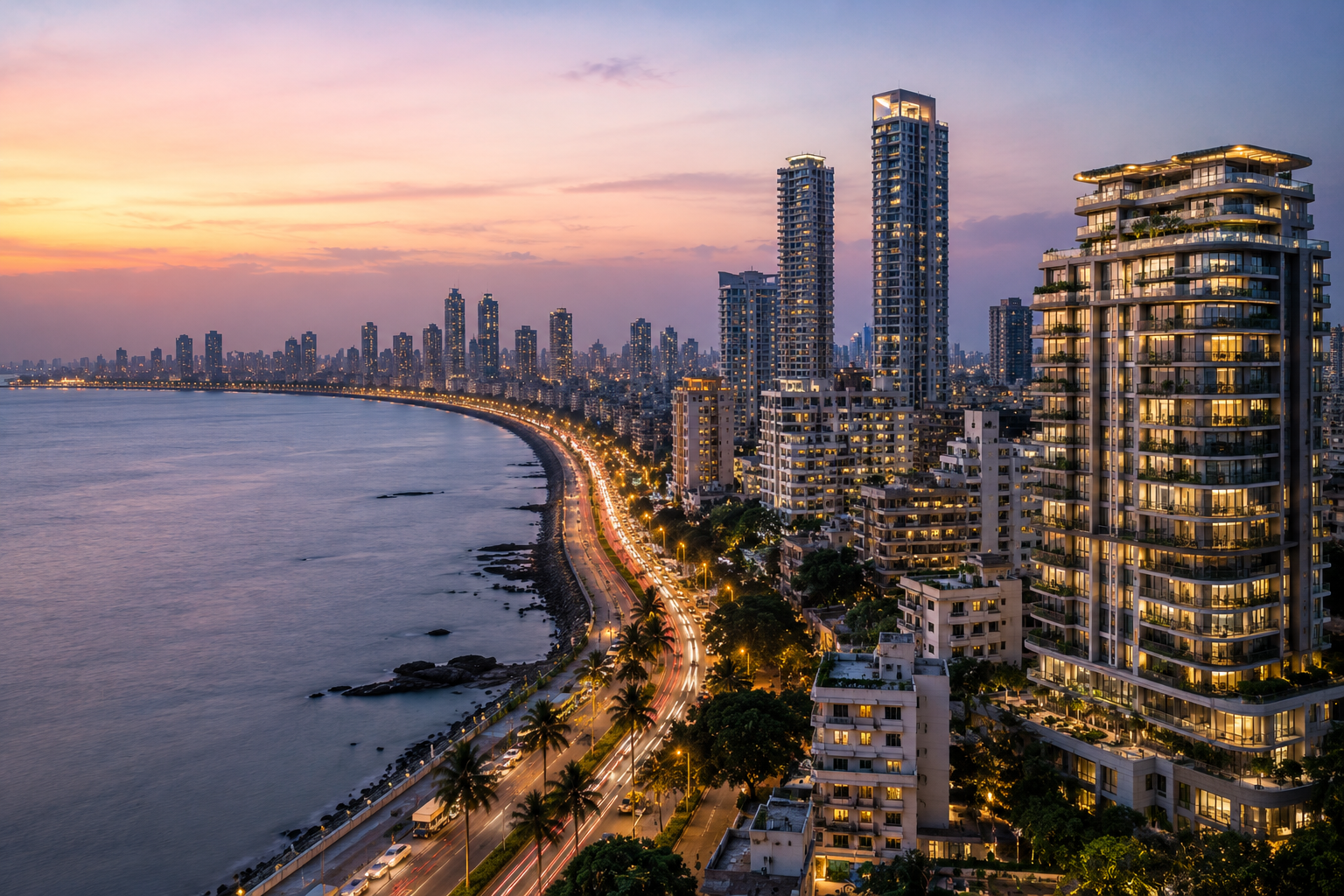
Mumbai offers a variety of options, from luxury real estate to mass housing constructions. The city offers housing options for people of all income levels and strikes the perfect mix between elegance and reality. Mumbai’s inexpensive cost of living, abundant employment opportunities, and advanced infrastructure make it a desirable destination for prospective homebuyers. If you’re looking for a home in a posh part of Mumbai, here are some of the city’s most expensive neighborhoods.
Top 7 Posh Areas in Mumbai.
These are the top seven posh areas in Mumbai where buying a home can be quite expensive. However, the quiet surroundings and sea views from high-rise buildings are worth the cost.
Juhu
Juhu, sometimes known as Bollywood’s Beverly Hills, is an upmarket enclave in Mumbai’s western suburbs. There are a range of independent builder levels and low-rise structures. The Arabian Sea to the west offers spectacular views of nature. Furthermore, the neighborhood has exceptional connection, superb infrastructure, and first-class amenities.
Malabar Hill
Malabar Hill is another affluent suburb in Mumbai’s southern zone. Aside from being a prominent residential community. It is the most expensive site in Mumbai, situated on the city’s southern tip and offering views of the Arabian Sea on three sides. The primary attractions are Seaside Chowpatty and the Hanging Gardens. Furthermore, the area has a wide range of social amenities and world-class physical infrastructure.
Cuffee Parade
Cuffe Parade, located at Nariman Point in the city’s south end, was constructed on 75,000 square metres of land on Colaba’s western bank. Today, it is one of Mumbai’s most affluent neighborhoods. Maker Towers, the World Trade Center, and the Taj President Hotel are among the region’s residential and business high-rises. What identifies it as a luxury neighborhood in Mumbai is the presence of first-rate amenities and well-maintained infrastructure.
Bandra West
Bandra West is another Mumbai VIP area with a wide range of property options. It is especially well-known for its famous homes. In addition to being a rich district in Mumbai, it is a popular entertainment destination, having a variety of high-end restaurants, discotheques, and nightclubs. Furthermore, it is well connected to Worli by the Bandra-Worli Sea Link and has excellent medical services and schools.
Pali Hill
Palli Hill is an upscale area named after the Pali village in Bandra. It runs across Naushad Ali Road (previously Carter Road) and has a variety of complexes, restaurants, and bungalows with steep and shallow sides. Furthermore, it boasts cutting-edge infrastructure and convenient access to all modern facilities.
Worli
Worli, one of Mumbai’s four peninsulas, is a well-connected neighborhood in southern Mumbai. It is home to several celebrities. The region is surrounded by high-rise buildings with panoramic views of the Bandra-Worli Sea Link, the Race Course, and the Arabian Sea. Aside from being Mumbai’s most upscale neighborhood, it is home to a diverse range of commercial establishments, including restaurants, nightclubs, and shopping malls. Its proximity to commercial centers makes it a popular choice for office workers.
Colaba
Colaba is another popular residential neighborhood in Mumbai. It is a separate district that acts as the city’s art and cultural center. Colaba is a heritage district that includes high-end boutiques, museums, theatres, art galleries, and colonial structures. Aside from its excellent connectivity, Colaba is home to some of the top educational and healthcare institutions.
The Most Expensive Areas in Mumbai: Real Estate Prices
Mumbai is a booming metropolis with a steady demand for real estate. Scarce land resources due to surrounding water bodies aggravate competition and drive up housing prices. Real estate prices in Mumbai are higher in areas with scenic views, entertainment attractions, and commercial districts. Homebuyers must pay higher prices for properties in areas with adequate infrastructure, public facilities, transit networks, and convenient access to highways and airports.
Price Trend of Posh Areas in Mumbai
While Mumbai is one of the most expensive cities in India to buy a home, some areas have exorbitant real estate prices. Cuffe Parade, Pali Hill, Bandra, Malabar Hill, and Colaba are some of Mumbai’s most expensive suburbs. However, high real estate prices may not always indicate a healthy property market. The Mumbai property market has slowed in recent years due to the pandemic and the economic downturn. Despite this, a premium neighbourhood in Mumbai continues to entice wealthy investors and buyers with its unique features. These neighborhoods offer class and distinction, which many homeowners are ready to pay for.

SRA Removes Malvani Builder After 17 Years

Hyderabad Property Registrations Drop 15% in September 2026

Ratnagiri to Get Maharashtra’s Fifth Film City

43,000 Homes Unsold in Navi Mumbai Amid Buyer Slowdown

Vijayta Raheja Applauds India’s ₹4 Lakh Crore Urban Vision at ET Maharashtra Business Summit

K Raheja & IHG Team Up to Elevate Powai’s Hospitality Landscape
-
 Real Estate News6 months ago
43,000 Homes Unsold in Navi Mumbai Amid Buyer Slowdown
-
 Real Estate News6 months ago
Vijayta Raheja Applauds India’s ₹4 Lakh Crore Urban Vision at ET Maharashtra Business Summit
-
 New Projects & Launches6 months ago
K Raheja & IHG Team Up to Elevate Powai’s Hospitality Landscape
-
 Real Estate News6 months ago
Mumbai’s Largest MHADA Redevelopment Drive Set to Transform 923 Acres
-

 NRI Real Estate7 months ago
Will NRI Investments Drive Mumbai Housing?
-
 Global Real Estate7 months ago
Spanish Youth Hostel Group Considers London Real Estate Deals
-
 NRI Real Estate7 months ago
How NRIs Are Driving India’s Property Market?
-

 Real Estate News7 months ago
John Abraham Firm Renews Bandra Rent at ₹12L/Month